For shaved head scalp micropigmentation, the right SMP shade is usually chosen by matching the overall contrast between your skin, remaining hair and desired stubble effect, not by selecting a colour from a chart. I assess your skin tone, natural hair colour, hair loss pattern and preferred hair length before deciding on dilution and density.
Why the shade is not chosen from hair colour alone
When clients ask me about the right SMP colour for a shaved head, they often expect a simple answer such as black, brown or grey. In practice, a natural result depends on the relationship between the pigment, your skin and the short hair that remains.
Scalp micropigmentation is designed to create the appearance of tiny hair follicles. On a closely shaved head, those impressions need to sit convincingly among your existing stubble. A colour that looks suitable in a bottle or on a swatch can look too strong once it is placed across a scalp.
Your skin tone affects how the pigment is perceived. So do undertones, natural hair colour, the amount of hair you retain and the way your scalp is likely to be groomed. I assess these together rather than treating shade selection as a separate step.
The intended finish matters too. A shaved SMP look is planned to resemble a deliberate close haircut. Density SMP, by contrast, is placed between existing hairs to reduce the contrast created by thinning. The same person may need a different approach for each type of treatment.
How I assess an SMP shade match
At consultation, I look at your scalp in person and discuss how you want to wear your hair. I want to understand whether you plan to shave closely, use a rotary or foil shaver, or keep a little more stubble. Your usual hair length helps determine how visible the impressions need to be.
I also consider your natural hair colour, the pattern of recession, the crown and the amount of hair still present. Someone with dark hair and a light scalp may need a carefully controlled contrast. Someone with lighter hair may need a softer-looking result so the impressions do not appear too prominent.
This does not mean choosing a pigment that is simply the same colour as your hair. The aim is for the scalp and follicle impressions to read naturally together at ordinary viewing distance. Pigment dilution and the spacing and density of impressions are part of the SMP shade match.
I prefer to assess this personally rather than make a decision from photographs alone. Images can be affected by lighting, camera settings and hair length. If you are considering treatment, you can first read my overview of how scalp micropigmentation works, then bring your questions to consultation.
Should shaved head SMP be darker than your hair?
Usually, I would not try to make a shaved head look darker than the hair you naturally have. Overly dark work can create obvious contrast against the scalp, particularly when the hair is shaved very close or when the hairline is viewed from the side.
That does not mean the result should be faint. It needs enough definition to resemble short follicles, but the impression should be built through appropriate shade, dilution and density. A natural appearance comes from the whole design, not from using the strongest possible pigment.
The hairline is especially important. I plan its edge with the rest of the scalp so it does not look like a solid drawn line. The shape, softness and gradual change in density all influence whether the finished result looks like a shaved haircut.
If you retain hair around the sides and back, I need to consider how the treated area will meet it. If your remaining hair is very light, grey or uneven, that may alter the way we plan the shade and density. I would rather adjust the recommendation during assessment than promise one formula suits everyone.
What about grey hair, changing hair or different skin tones?
Grey hair does not automatically mean you need a grey pigment. The correct decision depends on the colour of the hair that remains, your skin tone and the shaved length you intend to maintain. A single grey-looking shade may not create the most natural follicle effect.
Hair can also continue to change after treatment. If your pattern of loss is progressing, I consider how the design may look as more hair becomes thinner or disappears. A plan that works only for today's hair length may be less practical if you later choose a closer shave.
SMP can be planned across a wide range of skin tones. The important point is that pigment choice is not separated from technique. Dilution, impression size, spacing and density all contribute to the final contrast. I consider how your skin is likely to heal and hold colour as part of deciding the treatment plan.
For women, the goal is often different because thinning may be diffuse rather than a fully shaved style. If you are considering density work rather than a shaved finish, my guide to choosing an SMP practitioner for women explains the questions I recommend asking.
How should you compare shaved SMP results?
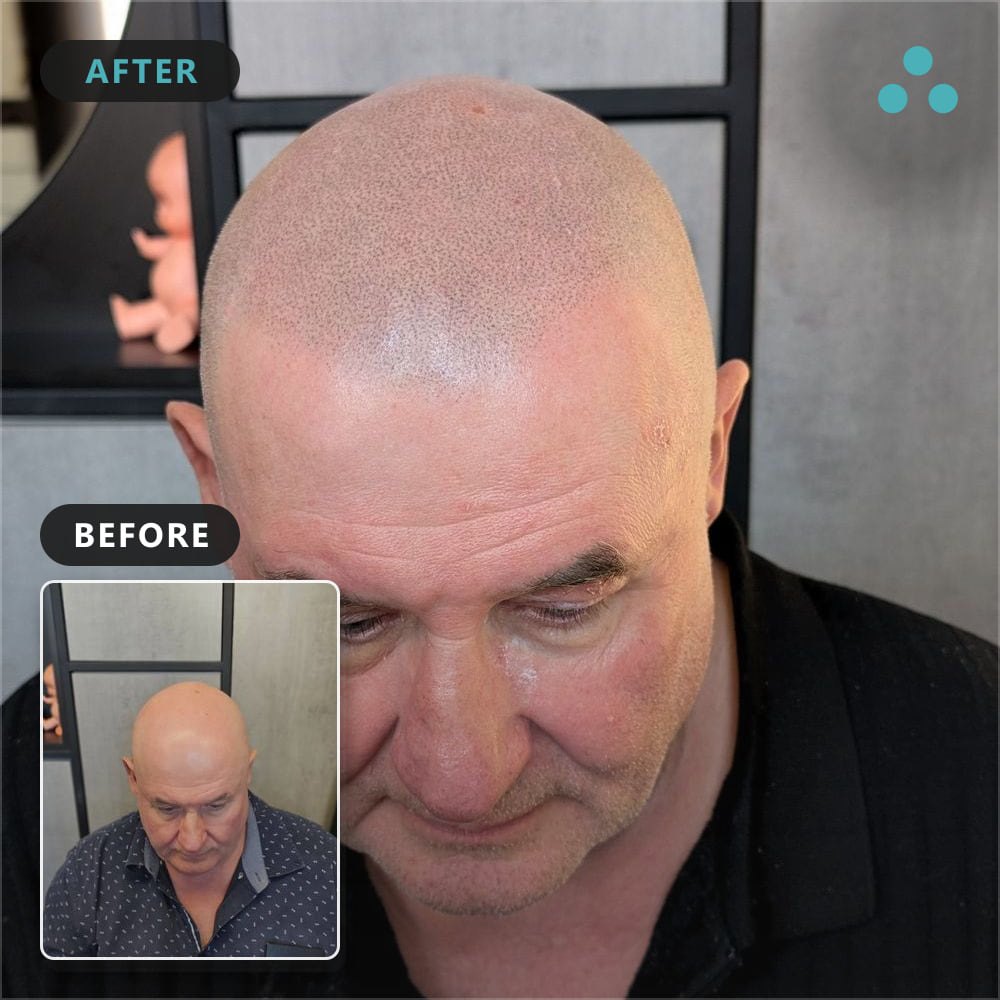
When looking at examples, match the starting point rather than choosing the after photo you like best. Look for a similar skin tone, hair colour, recession pattern, crown and intended hair length. A result designed for a very close shave may not be a useful comparison if you plan to keep a longer buzz cut.
Check the hairline from more than one angle, and look at the crown as well as the front. Lighting can make pigment appear heavier or softer than it is. I also recommend checking that photographs show settled work, because fresh SMP can look darker before the scalp heals and the tone softens.
Shade is only one part of the result. A suitable colour can still look unnatural if the hairline is too hard, the density is uniform or the treated area does not blend with the remaining hair. The overall plan should reflect your face, scalp, hair loss and grooming routine.
I see clients at the Perth studio, where I offer shaved scalp micropigmentation. If you are deciding whether the style suits you, you can read more about SMP for a shaved head before arranging an assessment.
If you would like me to assess your scalp, you are welcome to book a consultation when you are ready.
Frequently asked questions
Can I choose my SMP shade before the appointment?
You can have a preference, but I would not recommend choosing a final shade without an assessment. Your skin tone, natural hair, remaining stubble, scalp condition and intended hair length all affect how pigment will appear. I use those factors to guide the shade, dilution and density rather than relying on a colour name.
Will shaved head SMP match my hair exactly?
The aim is not always an exact colour match. SMP creates the appearance of tiny follicles, so the overall contrast between the impressions, skin and remaining hair is more important than matching one strand of hair. I assess how the result will read across the scalp at normal conversational distance.
What if I keep changing my hair length?
Tell me how you currently groom your hair and what you may do later. A very close shave can show the follicle impressions differently from a longer buzz cut. I can consider your likely grooming routine when planning the shade, density and hairline, although a treatment plan cannot predict every future change in hairstyle.
Can SMP be done if my hair is already grey?
Grey hair does not rule out treatment. The suitable approach depends on how much grey and darker hair you retain, your skin tone and whether you want a closely shaved appearance or added fullness. I assess the contrast in person, because a simple grey pigment is not automatically the most natural option.
Does skin tone limit the SMP shades available?
SMP can be planned for a wide range of skin tones. Skin tone affects how contrast is perceived, but it is only one part of the assessment. Pigment dilution, impression spacing, density and your existing hair also matter. I use the consultation to plan a result that is balanced rather than overly strong.
Can the colour be changed if it looks too dark?
Fresh SMP can look darker than the settled result while the scalp heals. That is why I do not judge the final shade immediately after a session. If you are concerned about colour or density, please tell me, as the appearance can soften as the work settles.