Choose a female SMP practitioner who regularly treats women, can show healed results similar to your hair loss, explains density and hairline design clearly, and assesses your scalp before recommending treatment. Ask who will perform the procedure, what training and infection control they have, how pricing works, and what support is provided afterwards.
What should I look for in a female SMP practitioner?
When someone asks me how to find the best scalp micropigmentation practitioner for female hair loss, I suggest looking beyond polished photographs and broad claims. The most important question is whether the practitioner understands the type of thinning or hair loss you are experiencing and can design the treatment around the hair you still have.
Female SMP commonly involves placing very small pigment impressions between existing hairs. The aim is to reduce the contrast between the scalp and hair, creating the appearance of fuller coverage. That requires a different approach from simply creating a shaved-head hairline.
Look for an artist who regularly works with:
- Diffuse thinning across the top or crown
- A widening part or visible scalp when the hair is worn up
- Hair loss after pregnancy or other changes
- Alopecia or patchy loss
- Scars from hair transplant surgery or injury
- Longer hair where the treatment needs to sit discreetly beneath existing hair
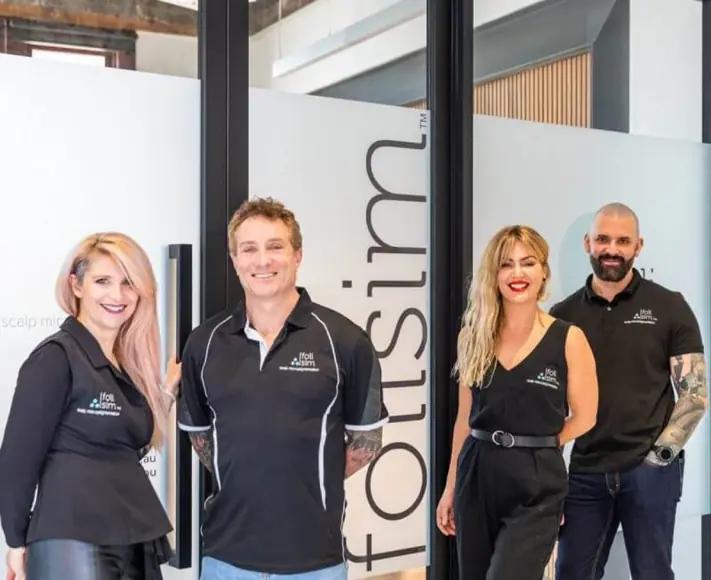
At Foli Sim, female SMP is a priority service, and my own work includes women’s hair loss, scar camouflage and density work on unshaved hair. I have worked in the hair industry for 42 years and have delivered SMP results for thousands of Australian clients. That experience matters because the design has to suit both the scalp today and the way the hair loss may present over time.
You can read more about how I approach scalp micropigmentation for women, including density work and the consultation process.
Why do healed results matter more than fresh photographs?
Fresh SMP can look very different from healed SMP. Immediately after treatment, the colour may appear stronger, and the scalp may show temporary redness. A useful portfolio should therefore include healed work, not only photographs taken straight after a session.
Ask to see examples that resemble your circumstances. A woman with diffuse thinning should look for density work through existing hair. Someone with a scar should look for scar camouflage. If your hair is light, fine or naturally low in contrast, ask to see results with a similar hair and skin combination.
It is also worth asking whether images show more than one angle. A realistic result should be considered from the front, sides and above, because women often notice thinning when looking down at their part or crown. Photographs should help you understand the practitioner’s style, rather than promise that your result will look identical.
During a consultation, I prefer to discuss what SMP can and cannot do. It creates the appearance of density. It does not grow hair or treat the medical cause of hair loss. If the pattern is unusual, patchy or changing, the cause should be considered before a permanent cosmetic decision is made.
Which questions should I ask a female SMP practitioner?
Taking a short list of questions to your consultation makes it easier to compare practitioners fairly. These are the questions I would ask:
- Who will personally perform my treatment?
- How often do you treat women with my pattern of hair loss?
- Can I see healed examples of similar density work?
- Will my existing hair need to be shaved?
- How will you match the pigment to my hair and skin tone?
- How will you design the treatment if my hair loss changes?
- How many sessions might I need, and what will each session involve?
- What aftercare will I receive?
- What are the total costs, including any later maintenance?
- What happens if I have concerns after the treatment?
The answer should be clear and specific, without pressure to book immediately. You should also know the name of the artist before treatment. At Foli Sim, you can request a particular practitioner, subject to availability, and the team will explain who is available at the studio you choose.
Prices are published on the Foli Sim website, so you can review the costs before deciding. Your final recommendation still depends on your scalp, hair loss pattern and the work required.
How can I assess safety and professionalism?
SMP is a cosmetic procedure involving a needle and pigment, so hygiene and professional standards deserve as much attention as the portfolio. Ask whether the studio has appropriate infection control procedures, whether the equipment is medical grade, and whether the premises are health-authority certified.
Ask about training and current infection control certification as well. A practitioner should be comfortable explaining their experience rather than becoming defensive about reasonable questions. It is also sensible to ask whether the business carries insurance and whether its policies are provided in writing.
At Foli Sim, anaesthetic is not used, and we advise against it. Your practitioner should explain what the treatment feels like, how to prepare, and what you should do afterwards. You should never feel rushed into proceeding before you understand those points.
A consultation should include an assessment of your scalp and the areas you want addressed. It should not be based only on a quick photograph or a standard package. We offer free video and phone consultations, which can be useful if travelling to a studio is difficult or if you would like an initial suitability discussion from home.
How should the treatment plan be personalised?
The best female SMP artist will not use the same design for every woman. The plan should account for your natural hair colour, skin tone, hair length, parting, styling habits and the pattern of your loss.
For some women, the work is focused on the crown or part line. For others, it may extend through larger areas of diffuse thinning. Some women want to continue wearing their hair long, while others prefer the flexibility of shaving or shortening it. Those choices affect how the density is planned.
Hairline design also needs care. A hairline that is too low, too sharp or too uniform can look out of place. I look at facial proportions and the way your natural hair grows, then plan a soft transition rather than a heavy painted edge. You can read about how I shape a natural-looking female hairline before your consultation.
If you are considering Foli Sim in Perth, I consult at the Fremantle studio, and you can read about the scalp micropigmentation clinic in Perth. Foli Sim also has studios in Melbourne and Sydney. The important point is knowing which practitioner will be treating you and whether their experience fits your needs.
What should happen after I choose an artist?
Once you have chosen a practitioner, you should receive a clear plan rather than a vague promise. The plan should explain the proposed areas, expected session structure, preparation, aftercare and price. The number of sessions varies according to the work required and is assessed during consultation.
Think about whether you feel heard. Hair loss can be personal, and you should be able to discuss your concerns without being pushed towards a style you do not want. A careful practitioner will explain the limits of the treatment and may suggest waiting or obtaining further advice if your situation is not suitable.
Finally, ask what support is available once the work is complete. Ask whether any guarantee is offered and make sure you understand its written terms before treatment. Make sure you understand the written terms of any guarantee before treatment.
If you would like to discuss whether female SMP suits your hair loss, you can book a private consultation without committing to treatment.
Frequently asked questions
Can women have SMP without shaving their hair?
It depends. Density work can be planned between existing hairs, so shaving is not automatically required. Whether your hair can remain unshaved depends on its length, density, texture and the areas being treated. Ask to see examples of work completed on hair similar to yours before making a decision.
How do I compare two female SMP artists fairly?
Ask both practitioners the same questions about training, healed results, experience with your type of loss, session planning, pricing, aftercare and who will perform the work. Comparing like with like is more useful than choosing based on a discounted price or the most dramatic before-and-after image.
Is SMP suitable if my hair loss is still changing?
It may not be appropriate to proceed immediately if your loss is rapidly changing or the cause is unclear. A consultation should consider the pattern and likely progression first. Your practitioner may recommend waiting or seeking medical advice before designing a longer-term cosmetic treatment.
What if I have alopecia or a scalp scar?
SMP can be considered for some forms of alopecia and for scar camouflage, but suitability depends on the condition of the skin, the stability of the loss and the scar itself. These cases need individual assessment. Ask to see healed examples involving a situation similar to yours.
Does the pigment colour match my natural hair?
The practitioner should choose and adjust pigment with your natural hair and skin tone in mind. The goal is usually to reduce scalp contrast, not create an artificial block of colour. Your consultation should cover how the shade and density will look in your usual hairstyle and lighting.
Is a consultation required before female SMP?
An assessment is important because female SMP is planned around your existing hair, scalp and pattern of loss. A consultation lets the practitioner discuss suitability, design, session requirements and price. Free video and phone consultations are available if attending a studio is difficult.