
Scalp Micropigmentation for Scars
Scalp micropigmentation for scars uses specialised pigment to mimic real follicles across and around scar tissue, softening the contrast that makes a scar stand out. This page covers scar camouflage for FUT strip scars, FUE dot patterns, surgical and injury scarring, what results are realistically achievable, how many sessions it takes and how your scar is assessed beforehand.
 Reviewed by Kate Dawes, Co-Founder & Managing Director, Foli Sim; Trichologist (IAT), 30+ years in hair loss · Last reviewed September 2026
Scar camouflage results
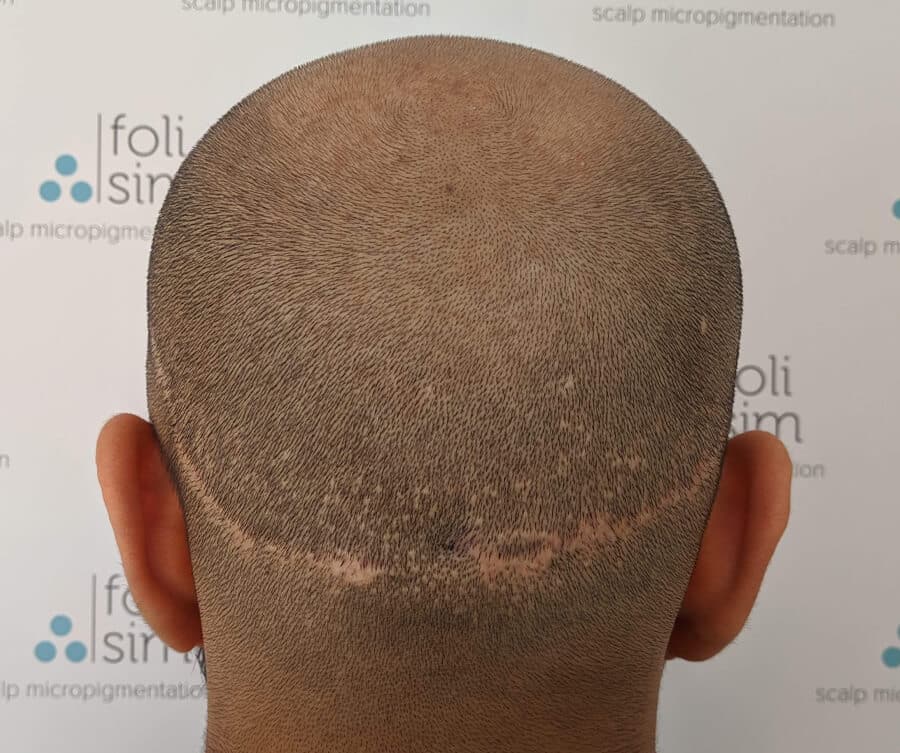
Before
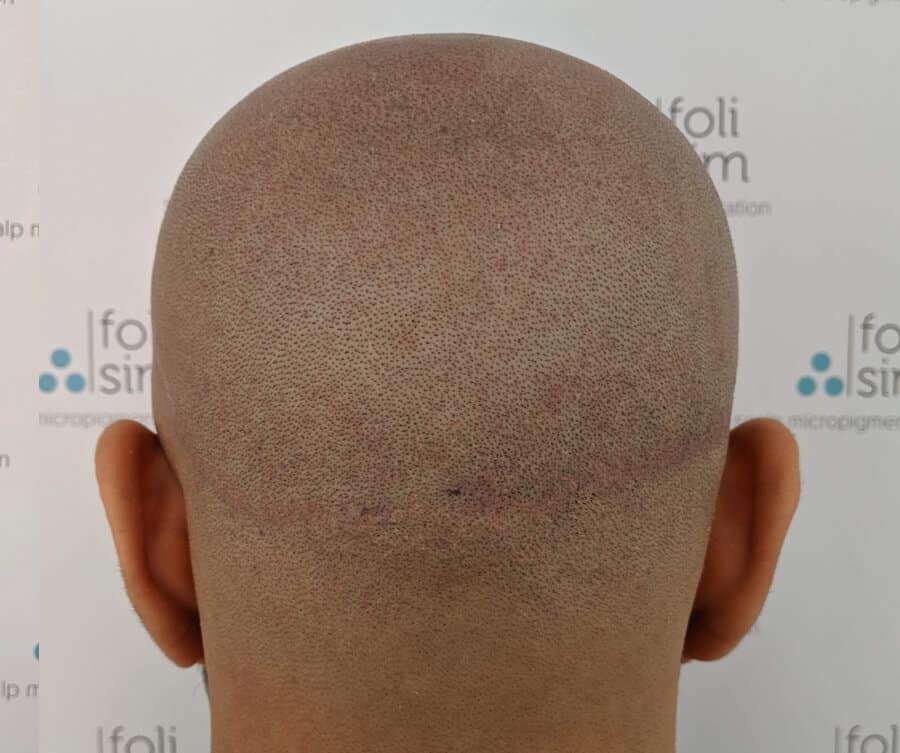
After
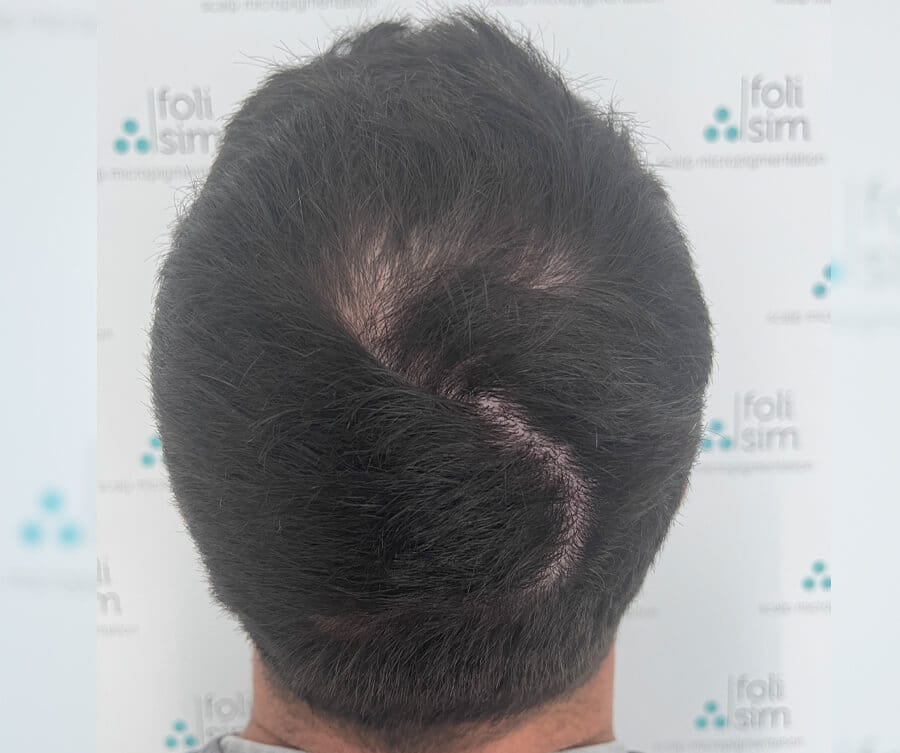
Before
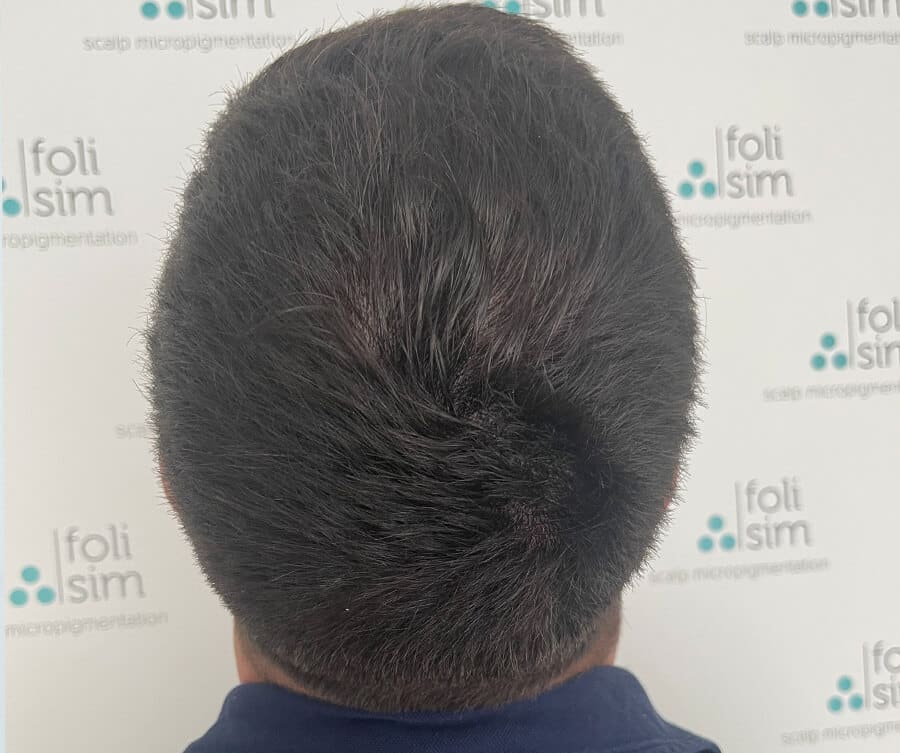
After
SMP For Scarring
Looking to conceal scars with Scalp Micropigmentation (SMP)? Our experienced team at Foli Sim is here to guide you through the process with expert care. We understand how scarring can affect your confidence and wellbeing. Our goal is to support you at every stage and answer any questions you may have.
SMP for scars offers an innovative and reliable solution for concealing marks on the scalp. We tailor each application to the scarred area and blend it with the surrounding scalp. This creates a natural, smooth and seamless result.
How SMP Works For Head Scar Camouflage
Scars on the scalp can form after injury, medical treatment or older hair transplants. Many people look for ways to reduce their visibility with long-term cosmetic solutions.
Temporary methods, such as hair pieces or makeup, rarely provide lasting or realistic coverage. SMP offers a better alternative. The treatment uses small, lifelike pigment deposits to replicate natural follicles and disguise scars. Unlike temporary options, SMP provides a durable, low-maintenance result that blends with your natural hair pattern.
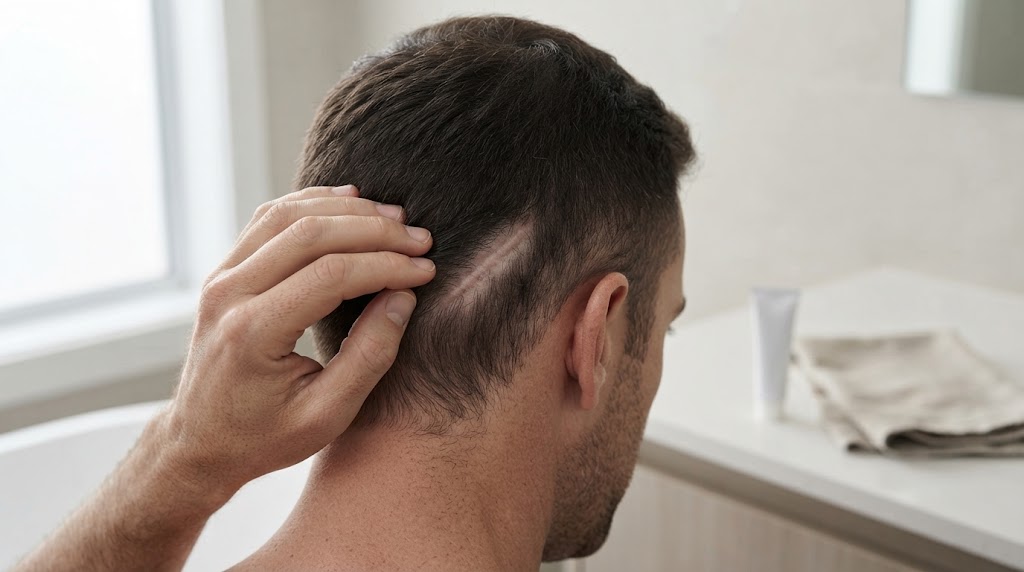
Scar Treatments
Concealing scars on the scalp with SMP is a common procedure that can reduce the visual appearance of the scar and restore your confidence and self-esteem.
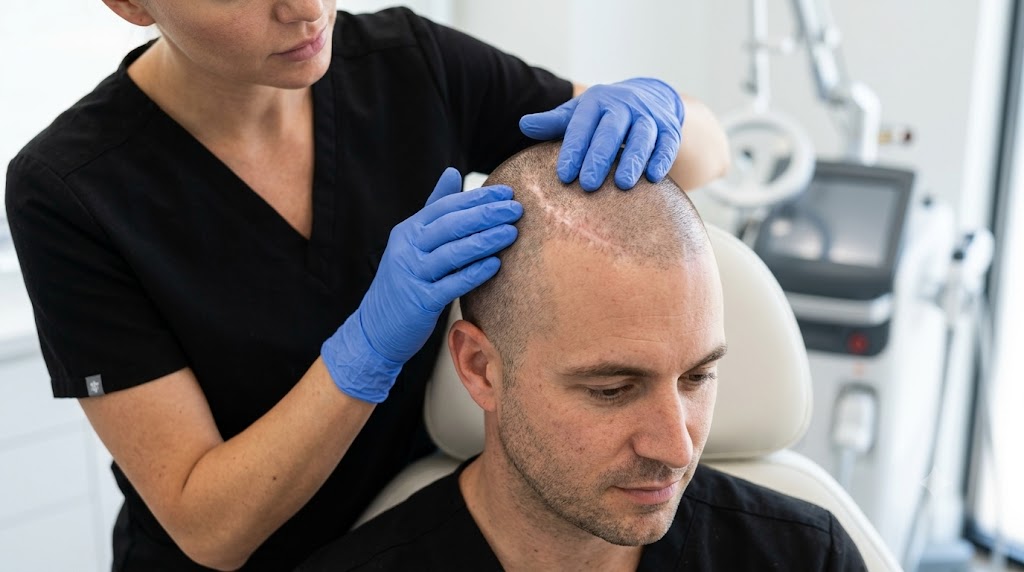
Which scars respond best to scalp micropigmentation?
Scalp micropigmentation for scars works on colour and contrast, not on the scar itself, so the scars that respond best are flat, pale and long settled, sitting where hair would otherwise grow. The cause matters less than the condition of the tissue. Most men who ask us about a scar have been growing their hair long enough to hide it, and want the freedom to cut it short again. The scars we see most often fall into a few groups.
- Transplant donor scars. The FUT strip line and the FUE dot pattern across the back and sides. These are covered in detail on our hair transplant scar page.
- Surgical scars. Lines or patches left by an operation on the scalp, where no follicles remain to grow back over the site.
- Injury scars. Marks from falls, sport and accidents, often carried since childhood and only noticed once the hair is clipped short.
- Burns. Treated with more care, because the texture of the tissue can vary from one part of the scar to another.
Scars that are raised, very wide or still recent and settling call for a more cautious conversation. Pigment cannot flatten a scar or change how it feels, and a scar that is still changing is hard to match well. Your artist will say so plainly at the consultation, and may suggest waiting before treating it.
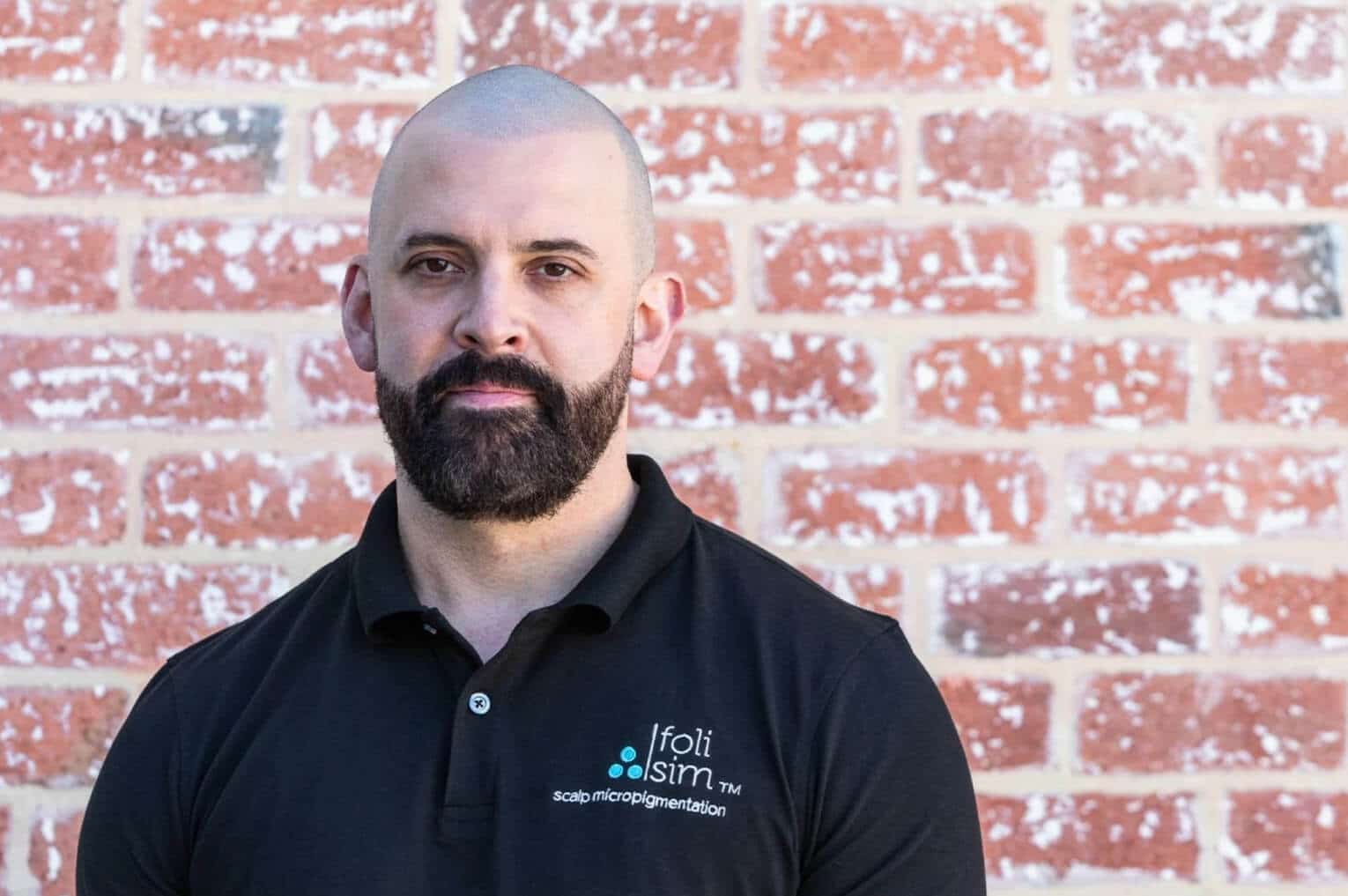
How is pigment worked into scar tissue differently?
A scalp scar tattoo uses the same method as the rest of SMP, with pigment placed in the upper dermis to replicate follicles, but the scar is never treated on its own. Pigment goes into the scar and into the healthy scalp on either side, so there is no hard edge for the eye to catch. The shade is matched to the hair and skin around the scar, never to the scar itself.
Because scar tissue takes pigment unevenly, the first pass is deliberately restrained. At the next visit the artist reads how each part of the scar has held its colour and works the areas that took less, leaving alone the areas that took more. The result is built up in layers across the course rather than forced in one sitting, which is why scalp micropigmentation for scars is slower and more considered than standard density work.
How you plan to wear your hair shapes the work too. Where the hair meets the pigment matters most, so your artist will talk through the clipper length you are likely to use day to day and blend the scar into the surrounding hair at that length. Scar camouflage that looks right at a number two guard is a different job from the same scar under longer hair.
What can you realistically expect from scar camouflage?
The honest measure is whether someone across a room, or behind you in a queue, can pick the scar out. Good scar camouflage means they cannot. Under a bright bathroom light with your face to the mirror, you will still know where it is. If that trade-off sounds fair, scalp micropigmentation for scars is likely to suit you. It also helps to be clear about what the treatment does not do.
- It does not grow hair or change the texture of the scar. The surface stays as it is; only its colour and contrast change.
- It does not lock you into one hairstyle, though it looks its best with hair worn short, where pigment and hair read as one surface.
- It is long-lasting rather than a one-off. Like all SMP it softens over the years, and treated scars can need a touch-up a little sooner than the rest of the scalp.
Before you commit, look at the scar cases in our before and after gallery, and ask for a free SMP mock-up so you can see how a treated scar might sit against your own hairline and skin tone. Both tell you more than any description on this page can.
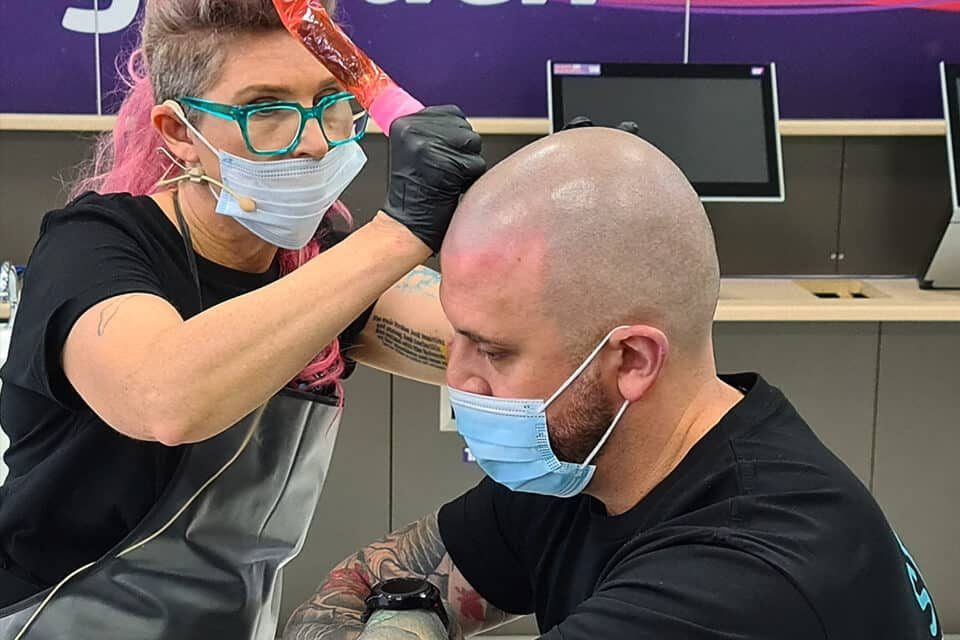
What is the timeline for scalp micropigmentation for scars?
It starts with a free consultation in person at Perth, Sydney or Melbourne, or by video or phone. For a scar, clear photographs in good light are usually enough for an initial evaluation, and your quote follows that rather than being read off a price list. You see the plan and the expected number of sessions before anything is booked.
The initial course runs across several appointments, spaced out so each pass can settle before the next. The first visit lays down a conservative base. Later visits build shade and fill the parts of the scar that held less pigment, and the last is a review where small adjustments are made and you agree the result is where it should be.
After that, the work looks after itself for years. When the scar starts to show a little more against the surrounding scalp, a touch-up session brings it back into line, and many men time this alongside a general refresh of their SMP. The scar is treated as part of the whole scalp from the first visit, so there is never a seam to hide later.
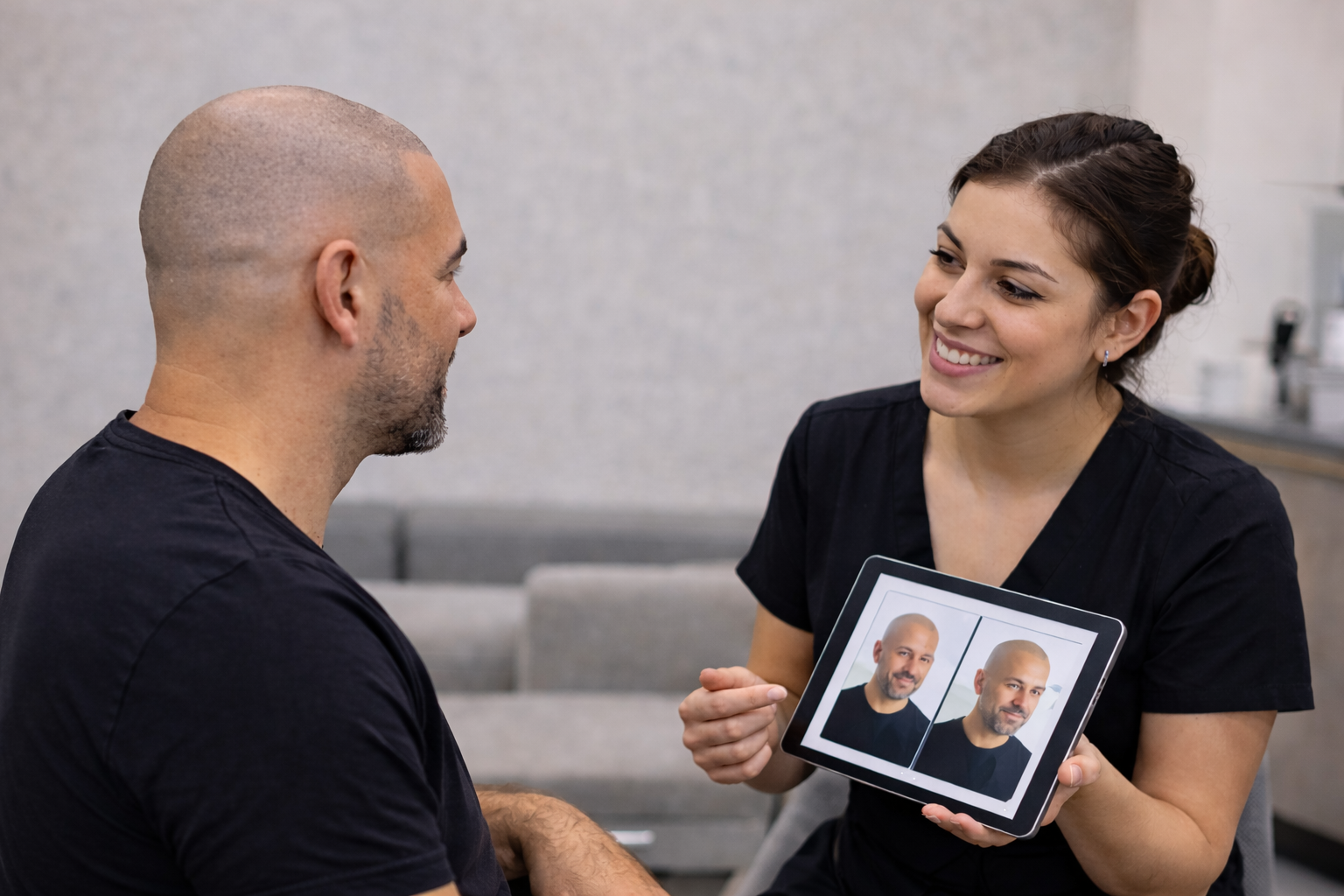
SMP for scar coverage: frequently asked questions
SMP for scarring uses specialised pigments to mimic real follicles and create a uniform scalp appearance. By adding coverage directly to the scar tissue, the treatment softens the contrast between the scar and surrounding skin, making the area far less noticeable.
SMP works extremely well on hair transplant scars. It can disguise linear FUT scars and the dot-like pattern left by FUE procedures. Many clients also use SMP to improve density after older transplants.
SMP is highly effective for covering Follicular Unit Extraction (FUE) scars. By matching the pigment to your natural hair colour and carefully applying it to the scarred areas, SMP blends the scars seamlessly with the surrounding hair. Likewise, SMP can also help with hair transplant enhancement, if you’d like assistance with more density work on your scalp.
Absolutely. If you’re disappointed with the outcomes of an older hair transplant, such as uneven hairlines or sparse-looking areas, SMP can offer a significant improvement by adding density and creating a more even, natural-looking hairline. By adding pigment to areas of scarring, this can help to eliminate the contrast between the scalp and hair follicles around it.
SMP provides many advantages:• A natural, realistic appearance• Long-lasting results• Little to no daily maintenance• A noticeable improvement in confidence
SMP for scars can last several years with minimal upkeep. You may choose an occasional touch-up depending on skin type, sun exposure and personal preferences.
SMP can conceal many types of scars, including those from surgery, injury, burns and transplants. Our practitioners assess the scar during your consultation and develop a tailored treatment plan.
To begin, simply contact our friendly team and schedule a free consultation. We provide a supportive, professional environment and will guide you through every step of the scar coverage process.
A linear FUT strip scar is one of the most frequently treated cases we see. Pigment is applied into and around the scar so the pale line no longer contrasts with the surrounding scalp, and the follicle pattern is continued across it to break up its outline. Results depend on the width, texture and colour of the scar, but most clients see the line become considerably harder to pick out, particularly with hair grown to a short length.
SMP is highly effective on the small circular scars left by follicular unit extraction. Because each FUE scar is tiny, the pigment can be matched to your natural hair colour and worked directly across the donor area to blend the dots with the surrounding hair. The scattered white-dot appearance that shows up when the hair is cut short becomes far less noticeable, which is why many clients treat the back and sides after a transplant.
It can help, but with more caution. Pigment addresses colour and contrast, not the shape of the scar, so a raised or keloid scar will still cast a shadow even after the tone is matched. Textured tissue also holds pigment less predictably and may need extra sessions. Your artist assesses the scar directly and will tell you honestly what improvement is realistic before you commit to anything.
Yes, and this is the main technical challenge of scar work. Scar tissue has a different structure to normal skin, so it accepts and holds pigment unevenly, sometimes absorbing more, sometimes less. Your artist works at lighter depth and builds colour gradually over multiple passes rather than trying to achieve full coverage at once, checking how each area healed before adding more.
Absolutely. If you are disappointed with the outcome of an older transplant, such as an uneven hairline or sparse-looking areas, SMP can offer a significant improvement by adding the appearance of density and creating a more even, natural-looking line. Adding pigment around the transplanted follicles reduces the contrast between the scalp and the hair around it, so the whole area reads as fuller and more consistent.
We aim for camouflage rather than erasure, and we would be cautious of anyone promising otherwise. SMP softens the contrast between the scar and the surrounding skin so it becomes far less noticeable, especially at conversational distance and with hair worn short. A wide, raised or heavily distorted scar may still be detectable under close inspection. Your consultation is where we set an honest expectation for your particular scar.
Sensation over scar tissue is different rather than uniformly worse. Some scars are numb and register very little, while the edges of a scar can be more sensitive than surrounding skin. Most clients describe the overall experience as uncomfortable but manageable, comparable to standard SMP. Breaks are taken whenever you want them, and your artist will check in with you as they move across different areas.
Scar work often needs more sessions than standard SMP because pigment retention in scar tissue is less predictable and colour has to be built gradually. Where a typical treatment runs two to four sessions, scar camouflage may need additional visits to reassess how the tissue held the pigment and to top up patchy areas. Your artist gives you an expected number at consultation so there are no surprises later.
SMP can conceal many types of scalp scarring, including marks from surgery, accidents, burns and transplants. What matters more than the cause is the condition of the tissue: its colour, texture, elevation and how mature it is. Our practitioners assess the scar during your consultation and develop a tailored treatment plan, and will tell you directly if a particular scar is unlikely to respond well.
SMP for scars is long-lasting and can hold for several years with minimal upkeep. Because scar tissue retains pigment differently to normal skin, treated scars sometimes fade a little sooner than surrounding SMP, so an occasional touch-up may be worthwhile depending on your skin type, sun exposure and personal preference. Protecting the area from strong sun with a hat or SPF makes a meaningful difference.
Your artist examines the scar in person or from clear photographs, looking at its width, colour, texture, elevation and age, and checks how the surrounding skin and hair will need to be matched. From that they outline what improvement is realistically achievable, how many sessions it is likely to take and a personalised quote. Consultations are free and available in person, by phone or by video. Call 1300 668 490 to arrange one.
Explore next
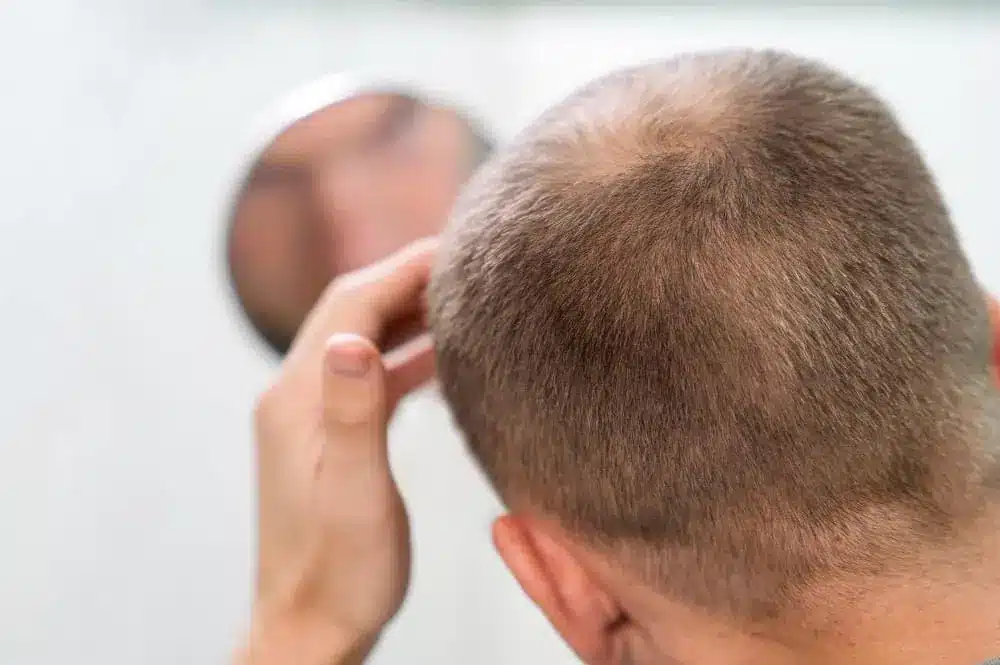
Hair transplant scar
A hair transplant scar showing through? Foli Sim blends FUE and FUT scars into the surrounding scalp with…
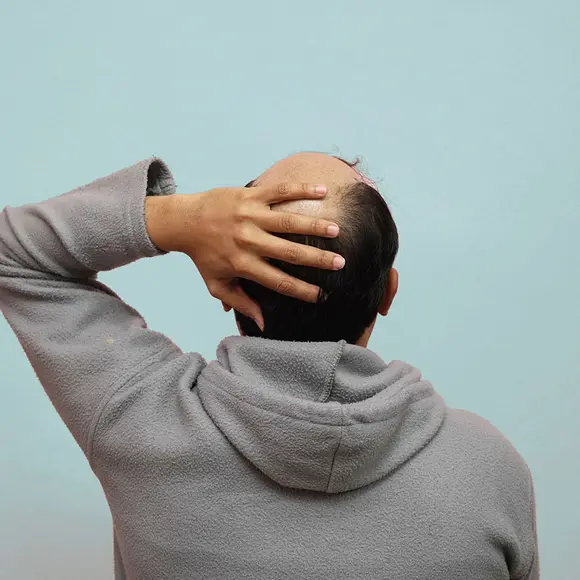
Hair transplant cost Australia
Hair transplant cost in Australia depends on grafts, technique, surgeon and follow-up.
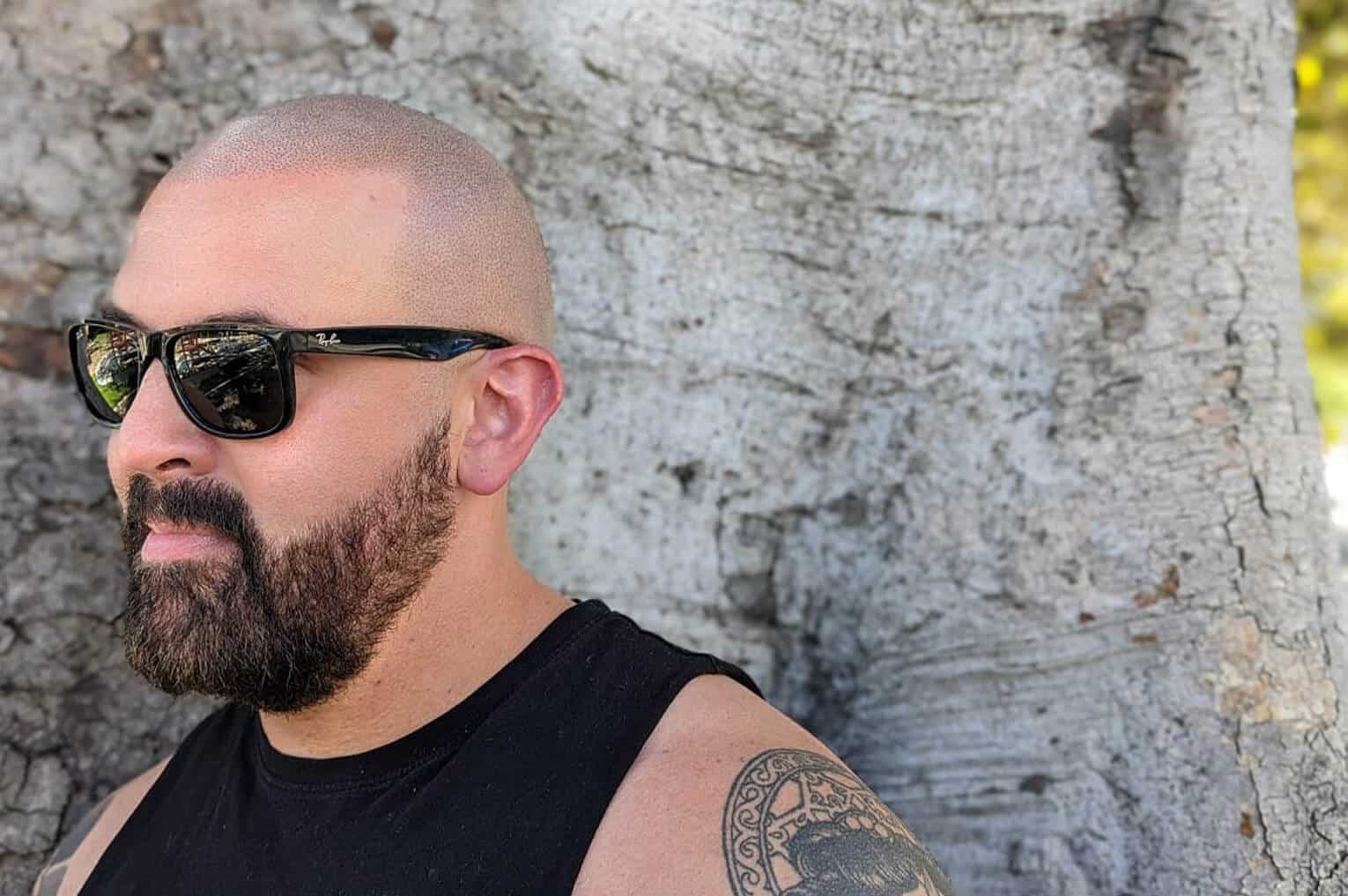
What is scalp micropigmentation
What is scalp micropigmentation? A non-surgical hair tattoo that replicates real follicles.
Scalp micropigmentation before and after
See real scalp micropigmentation before and after photos from Foli Sim: buzz-cut, thinning hair and scar…

Scalp micropigmentation cost
What drives scalp micropigmentation cost in Australia: coverage area, number of sessions and scarring.
SMP for alopecia
SMP for alopecia camouflages patchy loss and rebuilds a hairline where hair no longer grows.
Book free SMP consultation
Book a free SMP consultation with Foli Sim in Perth, Sydney or Melbourne, in person, by phone or video.

Book a free consultation
Tell us what you are dealing with and we will talk you through whether SMP is right for you, in person at Perth, Sydney or Melbourne, or by phone or video. No obligation, and no pressure.
Call us
1300 668 490Text or WhatsApp
0425 869 926Book online
Request a consultation
What our clients say
I had my original scalp micropigmentation done by Kelly at the North Melbourne clinic back in 2022, and I’ve been so happy with the results. It made my hair look noticeably thicker right away, and over the years, I’ve had so many people comment on how great and natural it looks. I’m back with Kelly for a touch-up now, and the service and attention to detail are just as top-tier as the first time. Highly recommend Kelly and the Foli Sim team if you're thinking about getting SMP done.
I want to give huge recognition to Shannon for the amazing work and care put in throughout my sessions. Shannon is a true artist with an incredible eye for detail. His professionalism, precision, and reassuring manner made the entire experience comfortable and stress-free. I would highly recommend Shannon and the team at Foli Sim if you are considering SMP.
Had an amazing experience with Nat at the Sydney studio. She made me feel completely comfortable and confident throughout the entire process. Nat is an absolute perfectionist, and the results speak for themselves: everything looks incredibly natural and perfectly tailored to me. Exceptional service from start to finish. For anyone looking for top-tier results, Foli Sim and Nat are the ultimate choice.
Thanks Kelly for a good job done on my SMP. Absolutely recommend Foli Sim. It is a professional service. Kelly is great artist & a nice human being. I wish her all the best for a good life & fulfilling career.
I cannot rate foli sim high enough, Tara did my hair and she absolutely smashed it, not only did we have good banter and laughs while the sessions were going my results speak for themselves! This has changed my life, my confidence!! I’m embarrassed by the before photos, but I can’t not post this to show some female results for Tara ♥️
I underwent a hair transplant that resulted in visible scars on my scalp, and over time, the transplanted hair began to fall out. Subsequently, I chose to shave my head, but the scars from the transplant were prominent, which diminished my confidence. After careful consideration, I contacted Folisim to explore their solutions for my baldness and scarring. Tara and Micheal was my point of contact and thoroughly explained the procedure, including how the scars would be concealed and the results I could expect. She was very patient and supportive throughout the process. As I traveled from a regional town to undergo my SMP treatment, Tara and Michael, were exceptionally accommodating. After the first session, I noticed a significant boost in my confidence as the visible scars on my scalp were effectively masked, giving the appearance of a freshly shaved head with a full head of hair. By the third session, I was amazed to see my original hairline restored so naturally that my colleagues began asking why I was shaving my hair when it appeared so thick and dense. This outcome reflects the high quality of the work Tara provided, which significantly increased my confidence. Had I been aware of Folisim and the SMP procedure earlier, I would have opted against a hair transplant. Overall, I highly recommend Folisim to anyone considering SMP without hesitation.