
What does hair thinning mean?
When I talk about hair thinning, I usually mean that the hair looks less dense than it used to. Individual strands may become finer, the parting may look wider, or more scalp may show through at the crown, temples or hairline. You may still have hair growing across the area, but there is less visual coverage.
Thinning can develop gradually. It may be most noticeable in bright light, when the hair is wet, or when it is tied back. Changes in hair texture, humidity and styling can also alter how much scalp is visible without representing a sudden change in the number of follicles.
Hair thinning is therefore a description of appearance and density, rather than a diagnosis. It can occur with inherited pattern changes, ageing, hormonal changes, illness, nutritional problems or ongoing strain from tight hairstyles and extensions.
What does hair loss mean?
Hair loss is the broader term. It can refer to increased shedding, broken hair, a receding hairline, a bald patch or follicles that are no longer producing visible hair. Some hair loss is temporary. Other forms are progressive or permanent.
The pattern provides useful clues. Gradual recession and crown changes can be associated with male pattern baldness. Diffuse thinning across the scalp can have a different cause. Round or sharply defined patches may need assessment for conditions such as alopecia areata. Scarring hair loss requires particular care because the follicles may be permanently affected.
It is also possible to have hair loss without immediately describing the hair as thin. For example, a distinct bald patch is hair loss, even though the surrounding hair may still have normal density.
How can I tell the difference between hair loss and thinning hair?
I would not rely on the number of hairs in a brush alone. Normal shedding varies, and a few extra strands do not establish the cause. Instead, I consider whether the change is continuing, whether the hair is growing back, and whether the pattern is diffuse, receding, patchy or associated with scarring.
Useful signs to note include:
- a widening part or increased scalp show-through
- progressive recession at the temples or hairline
- a thinner crown or reduced overall coverage
- round patches or sudden areas without hair
- itching, scaling, inflammation or scalp pain
- rapid shedding after illness, surgery, pregnancy or another major change
Photographs taken in similar lighting over several months can be more informative than comparing one day with another. If the change is sudden, patchy, painful, inflamed or continuing, speak with your GP or a dermatologist. Scalp micropigmentation is cosmetic camouflage, not a way to diagnose or treat the underlying reason for hair loss.
| Question | Hair thinning | Hair loss |
|---|---|---|
| What it means | The hair looks less dense than it used to | The broader term, covering shedding, broken hair, a receding hairline, a bald patch or follicles no longer producing visible hair |
| What it describes | Appearance and density, rather than a diagnosis | Some forms are temporary, others progressive or permanent |
| Example | A wider parting or more scalp showing at the crown, temples or hairline | A distinct bald patch, even if the surrounding hair still has normal density |
What can cause hair thinning and hair loss?
There is no single explanation for hair loss and thinning. Family pattern changes are common, but they are not the only possibility. Telogen effluvium can follow illness, surgery, pregnancy or substantial physical stress. Other possible contributors include hormonal imbalance, iron or vitamin deficiency, some medicines, immune-related conditions and diseases affecting general health.
For suspected female pattern hair loss, I recommend arranging blood tests before treatment. This helps exclude other diseases, metabolic conditions and hormone imbalances that can create a similar-looking pattern but require a different approach. Menopause may also affect density and texture, and my guide to SMP for menopause hair thinning explains how I approach that concern.
Repeated chemical processing, extensions and tightly pulled styles may also affect the hair shaft or place stress on the follicles. The right next step depends on the cause, so I do not treat a visual change as proof of one particular condition.
Can SMP help with thinning or lost hair?
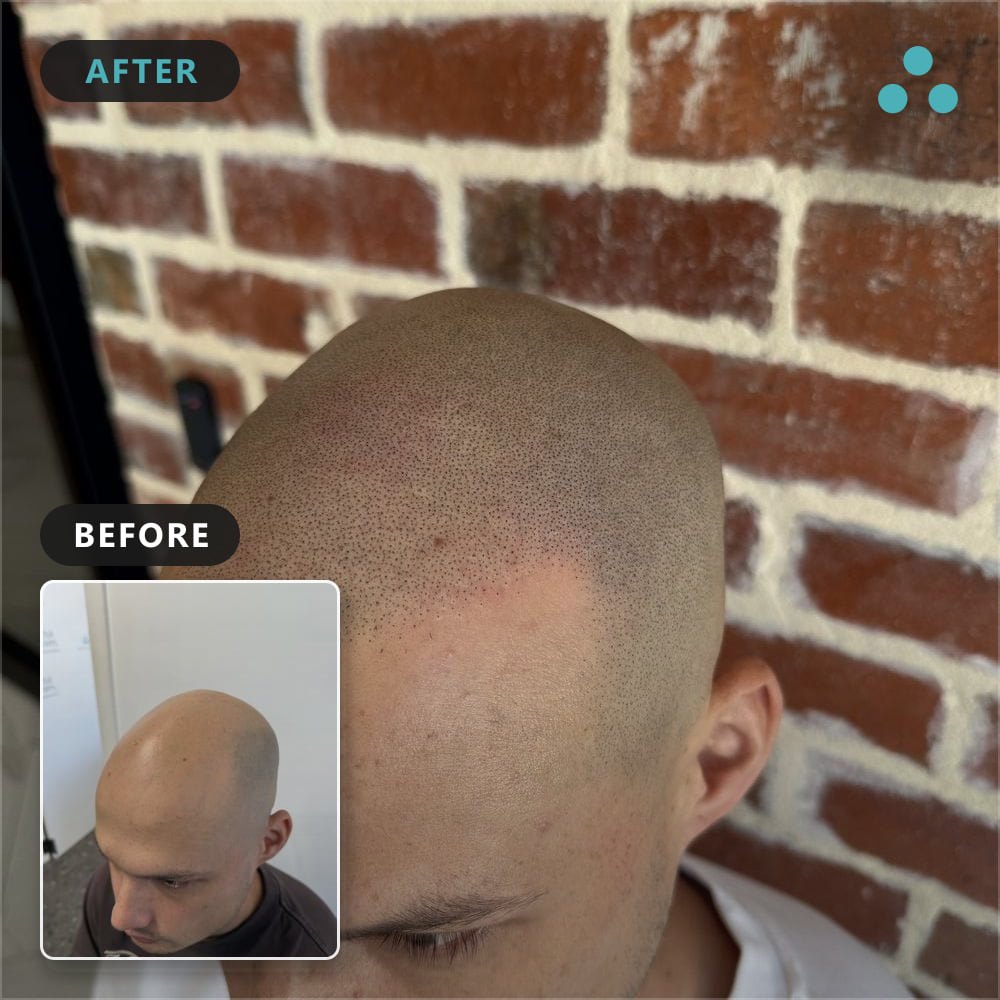
Scalp micropigmentation, or SMP, can reduce the contrast between the scalp and the remaining hair by placing tiny pigment dots in the scalp. This creates the visual impression of greater coverage. It does not grow hair, change natural hair growth or damage existing follicles.
SMP may be considered when thinning hair makes the scalp show through, or when hair loss has left a bald area, scar or patch. It can be performed between existing hair as well as across a shaved scalp, depending on the pattern and the result you want. The pigment is matched to your current hair colour, and expectations should include some scalp showing through rather than a painted or artificially dense finish.
Where hair remains, many clients keep it at a fine stubble length so the natural hair and pigment blend. With more advanced loss, a fully shaved style may be more consistent. I assess the hairline carefully because a poorly designed hairline is one of the clearest signs of an unnatural result.
A full course commonly involves more than one appointment, with the treatment area and your response determining the plan. SMP gradually fades over time, so touch-ups may eventually be appropriate.
What should I ask before choosing a practitioner?
Ask to see healed SMP work, not only freshly completed photographs. Look closely at hairline transitions, dot size, spacing and how the result blends into remaining hair. An experienced practitioner should explain limitations, possible risks and whether your pattern needs medical assessment first.
Tell the practitioner about active scalp conditions, keloid scarring, medicines or supplements that affect bleeding, pregnancy or breastfeeding, diabetes and immune-compromising conditions. Active eczema, psoriasis flare-ups and scalp acne should be addressed before treatment, and people prone to keloids should seek appropriate medical advice.
At Foli Sim, I am Kate Dawes, Founding Director and Leading Senior Practitioner. I have worked in the hair industry for 42 years and have delivered SMP results for thousands of Australian clients. I work from our Perth studio, with Foli Sim also serving Melbourne and Sydney. You can read more about scalp micropigmentation in Perth before arranging an assessment.
During a consultation, I can discuss whether your concern is primarily thinning, hair loss, or both, and whether visual camouflage is appropriate. If the underlying change has not been assessed, I will explain why that should come first. If you are considering options for living with the emotional effects, you may also find this guide to hair loss and self-image useful.
You are welcome to book a consultation so we can assess your pattern and discuss your options without pressure.
Frequently asked questions
Can hair thinning become permanent hair loss?
Yes, it can, depending on the cause. Some temporary shedding settles as the growth cycle recovers, while inherited pattern changes or scarring conditions may continue. A progressive change in density, recession or scalp visibility is worth assessing rather than assuming it will resolve on its own.
Is hair shedding the same as hair loss?
Not always. Shedding describes hairs leaving the scalp, and it can increase temporarily after illness, surgery, pregnancy or stress. Hair loss is broader and includes reduced growth, bald patches, recession and permanent follicle damage. The duration and pattern help distinguish temporary shedding from an ongoing problem.
Can stress cause thinning hair?
Physical or emotional stress can be followed by increased shedding in some people, often after a delay. That does not prove stress is the only cause, however. Illness, nutritional issues, hormonal changes and medicines can look similar, so persistent or marked shedding deserves professional assessment.
Does SMP stop hair loss from progressing?
No. SMP changes the appearance of the scalp but does not affect the biological process causing hair loss. Your natural hair may continue to change after treatment. I discuss this during consultation, including how future changes may affect blending, styling and the timing of any maintenance appointment.
Can SMP be used if I still have a lot of hair?
It may be suitable for some people with visible scalp show-through and remaining hair. Pigment can be placed between existing hairs to reduce contrast, but the result depends on hair colour, density, skin tone, pattern and future change. A consultation is needed to assess whether blending would look natural.
Should I see a doctor before booking SMP?
If hair loss is sudden, patchy, inflamed, painful or unexplained, arrange medical assessment first. Suspected female pattern hair loss should also be investigated with appropriate blood tests to exclude other conditions. SMP is cosmetic camouflage and should not replace diagnosis or treatment of an underlying cause.