I assess your scalp health, skin condition, hair loss pattern, medical history, medications and lifestyle before confirming candidacy for shaved head SMP. Most men and women with pattern baldness, alopecia, scalp scarring or transplant scars are suitable. Active scalp conditions may require treatment first, while keloid tendency and certain medications need individual assessment.
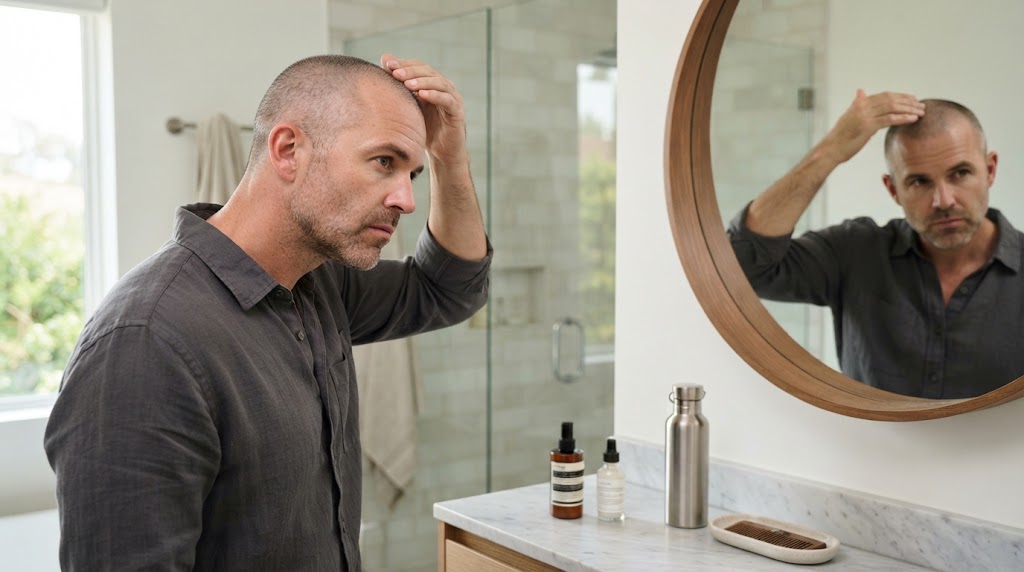
You’ve done the research, watched the before-and-after videos, and you’re wondering whether your scalp, skin and hair loss pattern actually suit this procedure, or whether you’re the exception nobody mentions in the marketing. This article answers that directly. By the end, you’ll know exactly which factors make someone a strong candidate for shaved head SMP, which conditions rule it out, and what to check on your own scalp before you book a consultation.
Most people asking whether they’re a good candidate for shaved SMP are a good candidate. Scalp micropigmentation suits the vast majority of men and women with male or female pattern baldness, alopecia areata, alopecia totalis, scarring alopecia, or scalp scars from previous transplant surgery. The real question isn’t whether SMP works for hair loss in general. It’s whether your specific skin, scalp health and lifestyle line up with what the procedure needs to heal properly and look right for years.
The skin and hair loss patterns that suit shaved SMP well
Having worked on thousands of scalps over 42 years in this industry, the pattern is consistent: skin tone and the extent of hair loss matter less than people assume, but skin condition matters enormously. Pigment sits at the epidermal-to-upper-dermal layer, roughly 1.5 to 2 millimetres deep, so what matters is how that skin heals and holds colour, not how much hair has been lost.
Male pattern baldness affects at least half of men by age 50, and it’s the most common reason clients come in for a shaved look. Female pattern hair loss, affecting around one in three women, tends to be diffuse thinning rather than a receding hairline, and it responds just as well to SMP when a client chooses to shave the head or already wears hair very short. Alopecia areata and alopecia totalis, where hair loss is patchy or total, are also strong candidates because SMP recreates uniform follicle density across the whole scalp rather than trying to match an uneven pattern.
- Fitzpatrick skin types I through VI can all be matched with the right pigment blend, though very fair or very dark skin needs a practitioner experienced in tonal matching to avoid a result that looks flat or too dark once healed.
- Mature skin and more advanced hair loss tend to hold pigment longer, in our experience, than younger clients with oilier, faster-turnover skin.
- Scarring from previous hair transplants or injury is one of the best uses of SMP: the pigment camouflages the scar tissue and blends it into the surrounding shaved scalp.
Every client at Foli Sim, regardless of how much or how little hair loss they’re dealing with, goes through three sessions. That’s not negotiable based on severity. Density is built in layers, starting lighter and increasing dot density across the three appointments, and skipping a session compromises how natural and durable the final result looks.
Scalp conditions and health factors that complicate or rule out SMP
This is where honesty matters more than reassurance. Active scalp acne, a psoriasis flare, active eczema, or a scalp affected by an unmanaged skin condition are all reasons to wait, not necessarily reasons to say no forever. Pigment needs to sit in calm, stable skin to heal evenly. Treating on top of inflamed or broken skin risks patchy pigment retention and a poor healing outcome.
A tendency towards keloid scarring is a genuine contraindication that needs a proper conversation with a practitioner before proceeding. Keloid-prone skin can react to the micro-injury of the needle in ways that regular skin doesn’t, and this needs to be assessed individually rather than assumed from a general skin type.
| Factor | Generally suitable | Needs assessment or caution |
|---|---|---|
| Scalp skin condition | Calm, stable, no active flare-ups | Active psoriasis, eczema, acne, or unhealed wounds |
| Scarring tendency | No history of keloid or hypertrophic scarring | Known keloid-prone skin |
| Hair loss pattern | Any pattern: androgenetic, alopecia areata, totalis, scarring, post-transplant | None; pattern itself rarely excludes candidacy |
| Medications | No blood-thinning or immune-suppressing medication currently | On blood thinners, retinoids, or immunosuppressants |
| General health | Good general health, no uncontrolled conditions | Uncontrolled diabetes or autoimmune conditions |
Certain medications also affect suitability, particularly blood thinners, which increase bleeding and bruising during the procedure, and some immune-suppressing medications, which can affect how skin heals and how pigment settles. If you’re on regular medication, this is exactly the sort of thing to raise honestly at your consultation rather than after your first session. Some clients ask about taking over-the-counter painkillers before a session to manage discomfort; this is a conversation to have with your doctor, since a practitioner can’t advise on medication.
Lifestyle factors that affect how well shaved SMP holds up
Suitability isn’t only about your skin on the day of treatment. It’s about how your life afterwards affects the result over the years that follow. Heavy sun exposure without SPF, high-intensity sweating from training, and swimming in chlorinated pools all accelerate pigment fading over time, so clients with very active outdoor lifestyles need to factor consistent scalp SPF into their routine long-term, not just during the 28-day healing window.
Oily skin tends to fade pigment faster than dry skin, and faster cellular turnover generally shortens how long results stay crisp. None of this rules anyone out. It simply means having a realistic conversation about touch-ups. In our experience, most clients return for a touch-up somewhere between four and six years after their initial three sessions, and building that into your expectations from day one avoids any surprise later.
If you’re deciding between SMP and a hair transplant, or between SMP and other density options, that decision often comes down to exactly these lifestyle and skin factors as much as budget or preferred look. A practitioner assessment weighs all of this together rather than looking at hair loss alone.
What happens at a proper candidacy assessment
A genuine assessment looks at your scalp under good light, asks about your medical history and current medications, and talks through your lifestyle honestly, including sun exposure, exercise habits and any scarring history. It’s a conversation, not a sales pitch, and a practitioner who’s serious about long-term results will tell you if now isn’t the right time rather than booking you in regardless.
If a scalp condition is active, the right approach is to treat that condition first and revisit SMP once it’s settled. That’s not a failure of candidacy. It’s simply sequencing the treatment properly so the result lasts as long as it should. Clients across our Melbourne, Perth and Sydney studios go through the same assessment process, because consistency in candidacy checks is what protects the quality of the healed result.
Book a free, no-obligation consultation with Foli Sim to have your scalp properly assessed and get a clear, honest answer on your candidacy before you commit to anything.
Frequently Asked Questions
Am I a good candidate for shaved SMP if I have very light or very dark skin?
Yes. Skin tone from Fitzpatrick type I through VI can be matched with the correct pigment blend. What matters more than tone is finding a practitioner experienced in tonal matching, since very fair or very dark skin needs careful pigment selection to avoid a flat or overly dark healed result.
Who is suitable for scalp micropigmentation if I have alopecia totalis?
People with alopecia totalis are strong candidates for SMP because the procedure recreates uniform follicle density across the entire scalp, which suits total hair loss particularly well. A practitioner assessment confirms skin condition and scarring tendency before any sessions begin.
What are the main SMP contraindications in Australia?
The main contraindications are active scalp conditions such as psoriasis, eczema or acne flare-ups, a tendency towards keloid scarring, and certain medications including blood thinners and immune-suppressing drugs. These don’t always mean permanent exclusion, but they require assessment and often treatment first.
Does keloid-prone skin always rule out shaved SMP?
Not automatically, but it requires a proper individual assessment with a practitioner before proceeding. Keloid-prone skin can react differently to the micro-injury of the needle compared with regular skin, so this needs to be discussed honestly at your consultation rather than assumed from skin type alone.
How many sessions does shaved SMP require regardless of my hair loss level?
Foli Sim requires three sessions for every client, regardless of how mild or advanced the hair loss is. Density builds progressively across the three appointments, starting lighter and increasing gradually, which is what produces a natural, long-lasting result once fully healed.