
What is the right starting point for hair loss in men?
I recommend starting with the cause rather than choosing a product or procedure. Male pattern baldness is common and is linked to follicle sensitivity to DHT, but not every change in hair density has the same explanation. Sudden shedding, patchy loss, scalp inflammation or loss associated with illness should be assessed by a healthcare professional.
A doctor can examine your scalp, review your medical history and decide whether tests or treatment are appropriate. This matters because a cosmetic camouflage treatment can alter how the scalp looks, but it cannot diagnose, prevent or treat an underlying disease.
Your aim also affects the choice. If you want to slow progression or encourage some regrowth, discuss medical treatment with your doctor. If you want to reduce the appearance of visible scalp now, a cosmetic option may be more relevant. I explain the differences carefully during a consultation rather than suggesting that one approach suits every man.
You can read more about the safety of hair loss treatments before making a decision.
Can medication be an effective treatment of hair loss in men?
Minoxidil and finasteride are two established medical options discussed for male pattern baldness. Minoxidil may support thicker-looking growth for some men. Finasteride works by reducing the conversion of testosterone to DHT, which can slow the miniaturisation process in suitable patients.
These medicines are not right for everyone, and results require continued use. They can also have side effects, so I would not advise starting, stopping or combining them without speaking with your doctor. A doctor can discuss your health, other medicines, expectations and the balance between possible benefit and risk.
Medical treatment may be particularly worth discussing when hair loss is still progressing. It does not provide an instant cosmetic change, and the response varies. If you have already lost substantial density, medication may not recreate the appearance of a full head of hair on its own.
When is a hair transplant worth considering?
A hair transplant moves follicles from a donor area, commonly at the back or sides of the scalp, to areas affected by hair loss. Techniques include FUE, where follicles are removed individually, and FUT, where a strip is removed and divided into grafts. A transplant can restore growing hair, but it is surgery and needs careful assessment.
Suitability depends on your donor supply, the pattern and stability of your loss, your expectations and the quality of the proposed hairline. Hair loss can continue in untreated areas after a transplant, so your surgeon should explain how future progression may affect the result.
Some men choose scalp micropigmentation after a transplant to disguise donor scarring or reduce the contrast around thinning areas. Others prefer SMP instead of surgery because it involves no incisions or anaesthesia. Our SMP versus hair transplant comparison explains the different purposes of each option.
How does scalp micropigmentation help men?
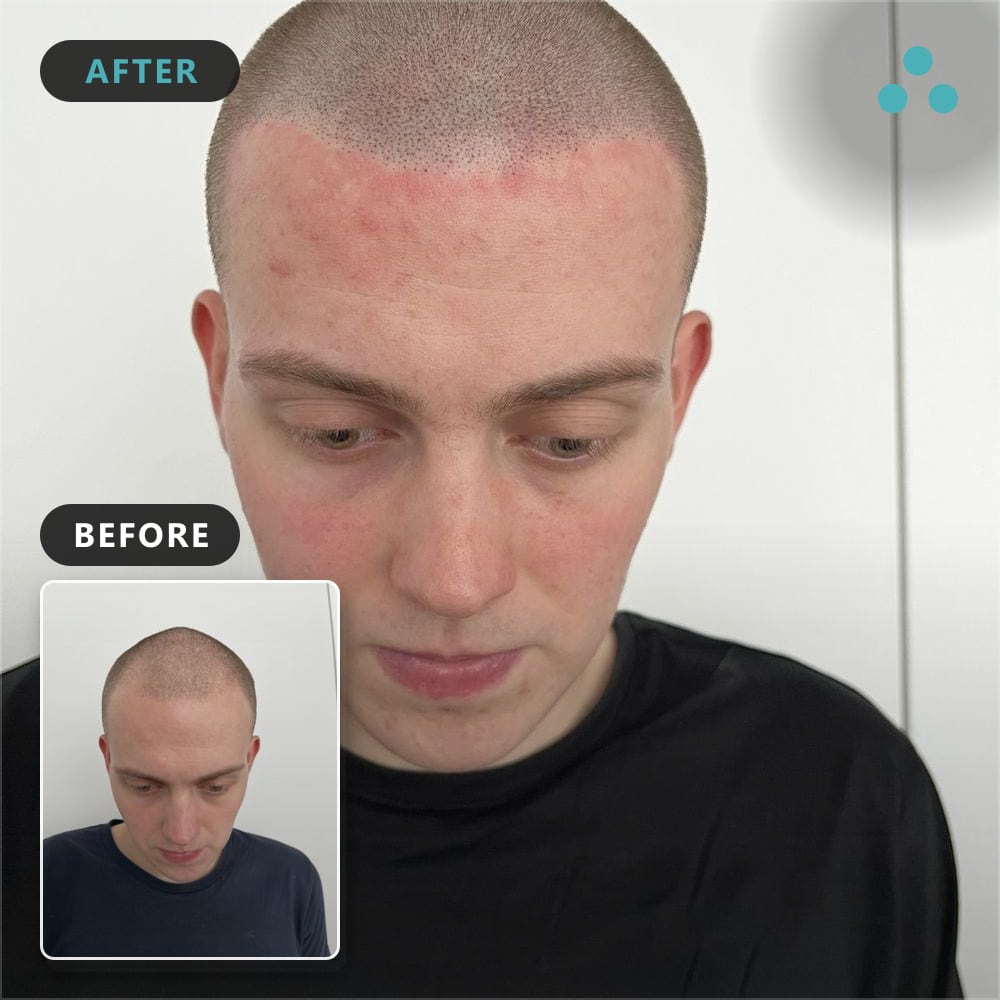
Scalp micropigmentation, or SMP, is a cosmetic tattoo treatment. I place carefully matched pigment dots into the scalp to mimic the visual impression of closely shaved hair. This reduces the contrast between hair and scalp, which can make thinning, recession, bald areas and some scars less noticeable.
SMP does not grow hair, change natural hair growth or damage existing follicles. It is best understood as visual camouflage. Men with advanced loss often choose a fully shaved appearance. Men with some remaining hair may keep it at fine stubble length, using clippers or a trimmer every few days so the natural hair and pigment blend consistently.
The design is important, particularly at the hairline. I assess your facial structure, age, existing hair and preferred style before we agree on a soft, natural-looking hairline. A hairline that is too straight, low or dense can look artificial, so I take time to make it believable at conversational distance and close up.
A full SMP treatment commonly involves a few sessions, depending on the area and the amount of work required. I build the result gradually, allowing the scalp to settle between appointments rather than trying to create the final density in one sitting. See our page about scalp micropigmentation for men for more detail.
How long does a hair tattoo last, and what is recovery like?
SMP is semi-permanent. It commonly lasts several years before a refresh is considered, although sun exposure, skin ageing, lifestyle, skin type and immune activity affect fading. Pigment does not simply wash away with shampoo. At the same time, it is important to understand that at least some pigment remains in the skin, so choosing an experienced practitioner matters if removal is ever needed.
After each session, keep the scalp dry and avoid washing, wetting, shaving, sweating, heavy exercise, hot showers, steam rooms and sun exposure for the period I advise. I will give you a full aftercare timeline, including when to start moisturising and using SPF once healed.
The scalp may look darker immediately afterwards. Redness generally settles over the following days, while the colour continues to settle over about a month. Do not pick at flaking or scabs. Contact your healthcare provider if you develop fever, pus or drainage, severe pain, marked redness or swelling.
How should men choose a treatment and practitioner?
Compare the treatment with your actual objective. Medication is aimed at the biology of hair loss. Transplant surgery aims to restore growing hair. SMP and a hair tattoo create a controlled visual effect. None should be presented as a universal cure.
For SMP, review healed work rather than only fresh photographs. Pay particular attention to hairline design, dot size, pigment colour and how the result blends with different skin tones. Ask about dedicated SMP training, hygiene, sterile equipment, consultation, aftercare and what happens if you later want removal or a change.
Before booking, disclose allergies, skin conditions, medicines and any history of keloid scarring. Active scalp acne, eczema, psoriasis flare-ups and a tendency to form keloids may mean treatment should be postponed or avoided. At Foli Sim, we do not use anaesthetic, and I explain the process and comfort expectations before proceeding.
I am Kate Dawes, Founding Director and Leading Senior Practitioner at Foli Sim. I have worked in the hair industry for 42 years and specialise in scalp micropigmentation for hair loss, scars and density concerns. Foli Sim has studios in Perth, Melbourne and Sydney, with my practice based in Perth. I will give you a realistic view of what SMP can and cannot achieve. Our prices are published on the website.
If you are unsure which option fits your pattern of hair loss, you are welcome to book a consultation and discuss it without pressure.
Frequently asked questions
Can SMP be used if I still have thinning hair?
SMP can be placed between existing hairs to reduce the visible contrast of scalp show-through. The remaining hair should usually be kept at a consistent short length so it blends with the pigment. The amount of density work needed depends on your hair colour, skin tone, pattern and preferred hairstyle.
Will SMP look like real growing hair?
SMP creates the appearance of follicle shadow or short stubble. It does not produce hair that can grow, move or be styled. The most convincing result comes from matching the pigment and dot pattern to your natural colouring, then choosing a hairline and grooming length that suit the result.
Can I have SMP after a hair transplant?
Many men consider SMP after transplantation to reduce the appearance of donor scarring or make areas of reduced density less noticeable. The scalp must be suitable for treatment and fully recovered. Your transplant surgeon and SMP practitioner should be told about the procedures you have had.
Does SMP hurt more than a traditional tattoo?
Discomfort varies with the person, treatment area and session length, and is generally comparable to or less than a regular tattoo. Foli Sim does not use anaesthetic and advises against it. I discuss comfort, breaks and expectations during the consultation.
Can SMP cover a receding hairline without shaving completely?
SMP can sometimes be blended with closely cropped hair, but a fully shaved style is generally easier to keep consistent when hair loss is advanced. If you keep hair, regular trimming is important. I assess the contrast between your existing hair and scalp before recommending a finish.
What happens if my hair loss continues after SMP?
SMP does not stop progression, so a changing hair pattern may alter the balance of the design. Some men discuss medical treatment with their doctor alongside SMP. If the loss changes substantially, a later consultation may be needed to consider a refresh, additional camouflage or a revised shaved style.
Can scalp micropigmentation be removed?
Laser removal may be possible, but it is not an instant or risk-free correction. Outcomes depend on pigment, depth, skin and the original application. Incorrectly placed or overly deep pigment can make removal more difficult. This is why practitioner experience and a conservative, agreed design matter before treatment.