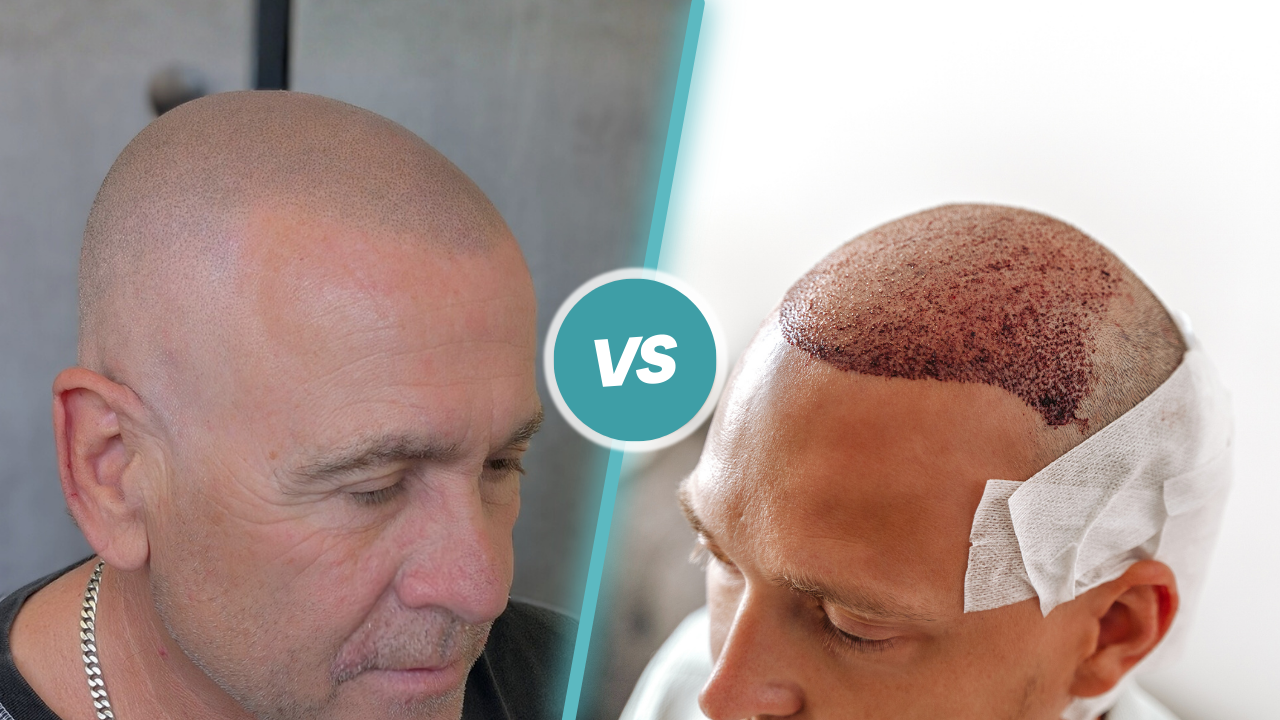
If you’re dealing with hair loss and trying to figure out which direction to go, you’ve probably landed on two main options: scalp micropigmentation (SMP) or a hair transplant. Both are legitimate solutions, and both have their place, but they’re very different treatments with very different outcomes, costs, and recovery experiences.
Having spent years running Foli Sim across our Perth, Melbourne, and Sydney studios, I’ve spoken to thousands of people who’ve wrestled with exactly this decision. This article breaks it all down so you can make an informed call.
What Is Scalp Micropigmentation?
Scalp micropigmentation is a non-surgical cosmetic procedure where a skilled SMP practitioner uses specialised equipment to deposit tiny pigment impressions into the scalp. These impressions replicate the look of hair follicles, creating the appearance of a closely shaved, full head of hair. It’s sometimes called a hair tattoo, scalp tattoo, or follicle simulation, though SMP is a more precise and specialist technique than conventional tattooing.
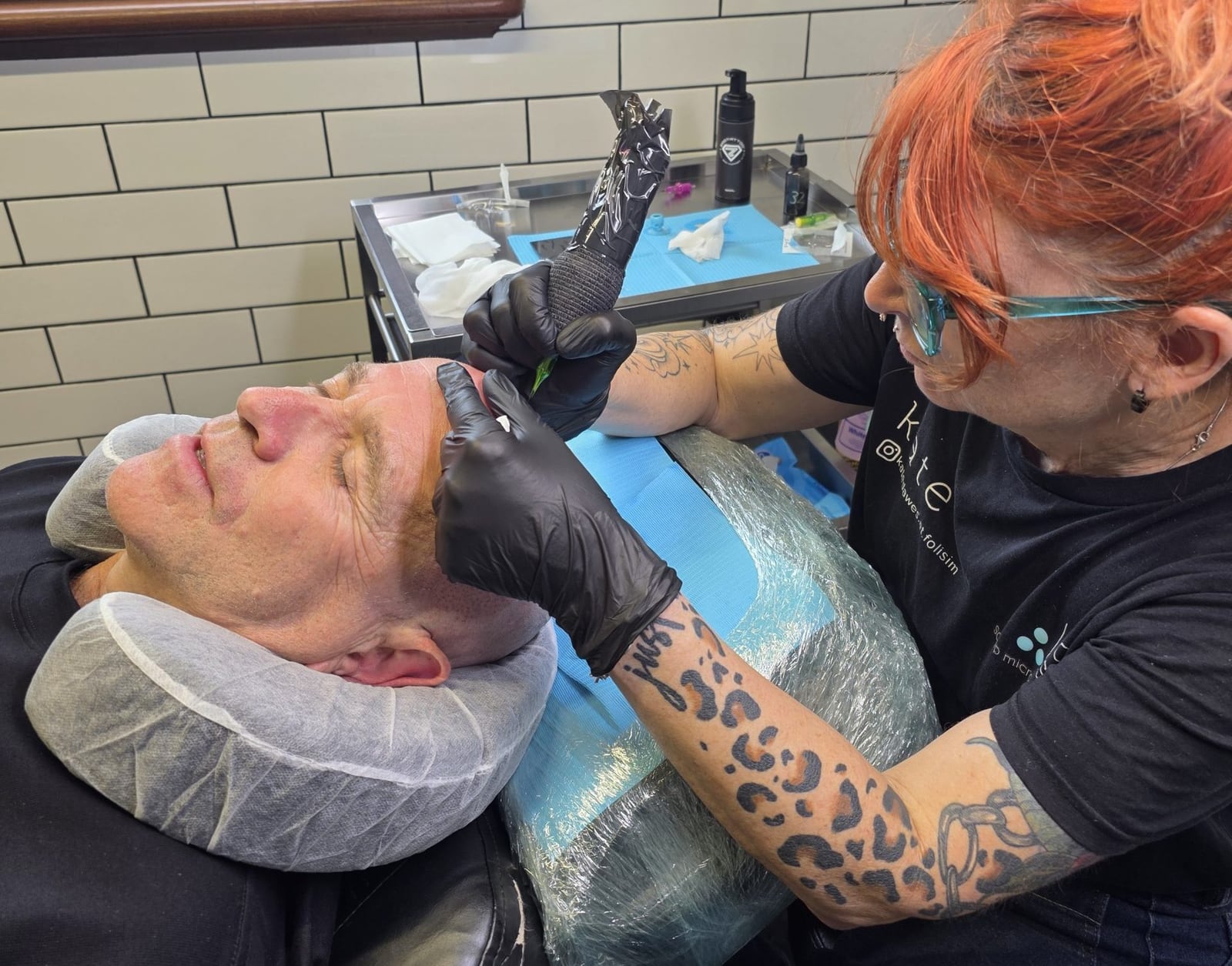
SMP works for a wide range of hair loss conditions, including male pattern baldness, alopecia, thinning hair in women, and scarring from previous hair transplants or injuries. The results are immediate, realistic, and low-maintenance. There’s no surgery, no downtime, and no ongoing medical treatment required.
What Is a Hair Transplant?
A hair transplant is a surgical procedure that relocates live hair follicles from a donor area (typically the back or sides of the scalp) to areas affected by hair loss. The two most common techniques are Follicular Unit Transplantation (FUT), which involves removing a strip of scalp, and Follicular Unit Extraction (FUE), where individual follicles are harvested one by one.
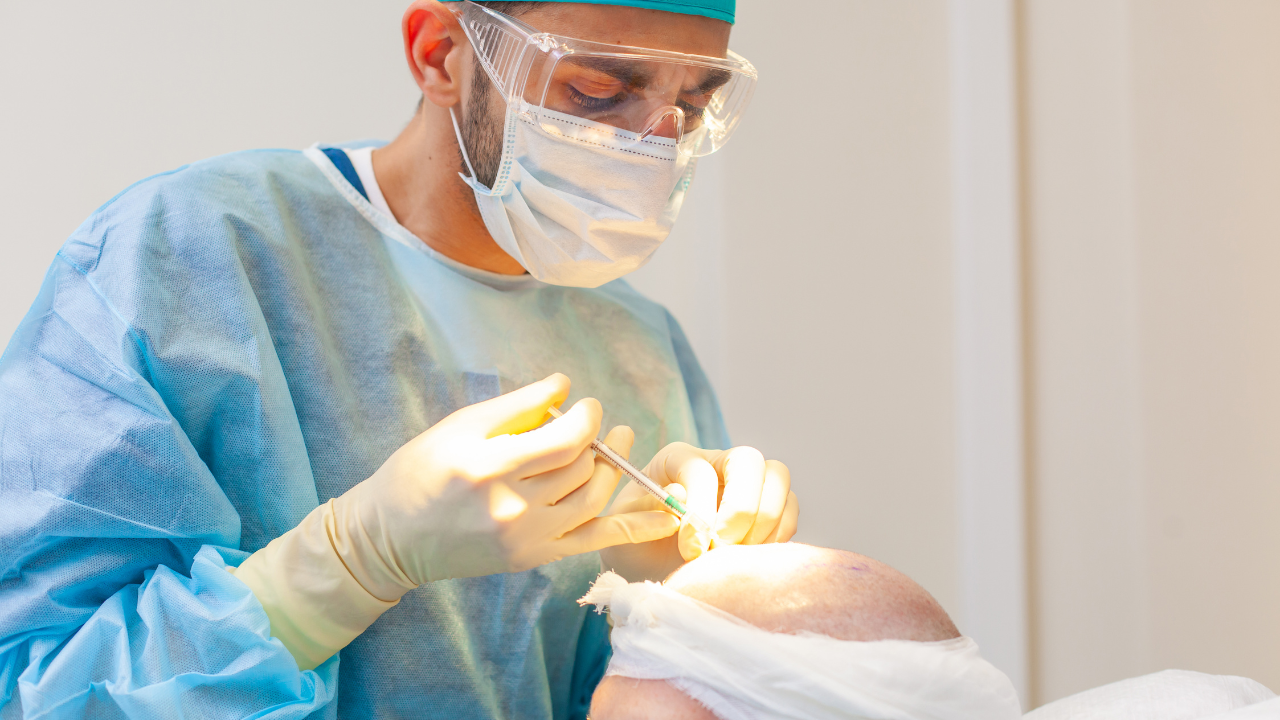
A hair transplant does grow real hair, which is the main appeal. However, the results depend heavily on the quality and quantity of your donor hair, the skill of the surgeon, and how your body responds post-procedure. It’s also worth understanding that transplanted hair can still thin over time as the underlying hair loss condition continues to progress.
SMP vs. Hair Transplant: A Side-by-Side Comparison
Let’s cut through the noise and look at the most important factors side by side.
Cost
This is usually the first question people ask, and rightly so. Hair transplants in Australia typically cost between $10,000 and $30,000 or more, depending on the number of grafts required and the clinic you choose. That’s a significant financial commitment, and it often doesn’t include follow-up treatments if the results aren’t what you hoped for.
SMP at Foli Sim is considerably more accessible. As a general guide, based on the degree of hair loss:
- Mild hair loss: approximately $500 to $1,200
- Medium hair loss: approximately $1,500 to $2,500
- Advanced hair loss: approximately $2,500 to $3,500
These are approximate ranges. Every client is assessed individually, and we provide a personalised quote during your free consultation. We also offer interest-free payment plans through ZipMoney, which makes SMP genuinely accessible for most people. You can find out more about our payment plan options here.
Recovery and Downtime
A hair transplant is a surgical procedure, and that means real recovery time. After FUT surgery, most people need one to two weeks off work, and the full results can take 12 to 18 months to become visible. There’s swelling, scabbing, and a shedding phase (often called “shock loss”) where transplanted hair falls out before regrowing. For many people, that’s a significant disruption to daily life.
With SMP, there’s no surgical recovery. Most clients return to normal activities the same day or the next day. The treated area needs to be kept dry for a few days, and you’ll need to avoid direct sun exposure during the healing period, but that’s about it. The results are visible immediately after your first session.
Number of Sessions
SMP is delivered across multiple sessions to build density, refine the hairline, and allow the pigment to settle naturally into the scalp. At Foli Sim, all clients, including those with mild hair loss, require 3 sessions. Sessions are spaced 10 to 14 days apart to allow proper healing between appointments. Your practitioner will assess progress at each session and refine the result as needed.
A hair transplant is typically performed in a single surgical sitting, though additional procedures are sometimes needed if coverage is insufficient or hair loss continues to progress after the initial surgery.
Results and Realism
This is where the two treatments diverge most significantly. A hair transplant, when successful, grows real hair. You can style it, grow it longer, and it behaves like natural hair. However, achieving a natural-looking hairline requires an experienced surgeon, and the density achievable depends entirely on your donor supply.
SMP creates a highly realistic simulation of a shaved head with a defined hairline. When done well, it’s completely indistinguishable from a freshly razored scalp. The key phrase there is “when done well.” The quality of SMP is directly tied to the skill and experience of the practitioner. At Foli Sim, our practitioners specialise exclusively in SMP, which is why our results consistently look natural and refined.
Longevity and Maintenance
Hair transplants are considered permanent in the sense that transplanted follicles continue to grow. However, the surrounding native hair will often continue to thin, which can result in an uneven or patchy appearance over time. Additional procedures or ongoing hair loss treatments may be needed as the years go on.
SMP pigment naturally softens over time, typically requiring a touch-up after three to six years, depending on your lifestyle and skin type. At Foli Sim, every treatment comes with a 12-month quality guarantee. Any touch-up needed within that period is included at no additional cost. Ongoing maintenance is minimal and affordable compared to the long-term costs associated with hair transplant revision or hair loss medications.
Pain and Comfort
Hair transplant surgery is performed under local anaesthesia, which means the procedure itself is typically painless, but the post-operative period involves discomfort, tightness, and sensitivity that can last several days to weeks.
SMP involves the use of a specialist device to deposit pigment into the upper layers of the scalp. Discomfort levels are generally very low, and the vast majority of our clients are comfortable throughout the entire procedure without any additional pain management. Pain tolerance varies between individuals, and some areas of the scalp are more sensitive than others, but it’s rarely described as anything beyond mild discomfort. For those who feel they need additional pain relief, oral pain medication available over the counter in Australia is an option. We’d always suggest speaking with your doctor or pharmacist about what’s appropriate for you personally.
Suitability
Hair transplants are not suitable for everyone. If you have limited donor hair, advanced hair loss, or certain medical conditions, you may not be a good candidate. Younger patients are often advised to wait, as it’s difficult to plan a transplant when hair loss is still actively progressing.
SMP is suitable for almost anyone experiencing hair loss, regardless of age, stage of loss, or skin type. It’s also an excellent option for people who have already had a hair transplant and want to improve density, camouflage scarring, or fill in areas where grafts didn’t take. We see a lot of clients in this exact situation at Foli Sim, and the combination of the two treatments can produce outstanding results.
Can SMP and Hair Transplants Be Combined?
Absolutely, and it’s more common than you might think. Many clients come to us after a hair transplant that didn’t quite deliver the density or coverage they were hoping for. SMP can be used to:
- Fill in areas between grafts to create the appearance of greater density
- Camouflage FUT strip scars or FUE donor area scarring
- Restore or redefine a hairline that has continued to recede post-transplant
- Blend transplanted hair with the surrounding scalp for a more uniform look
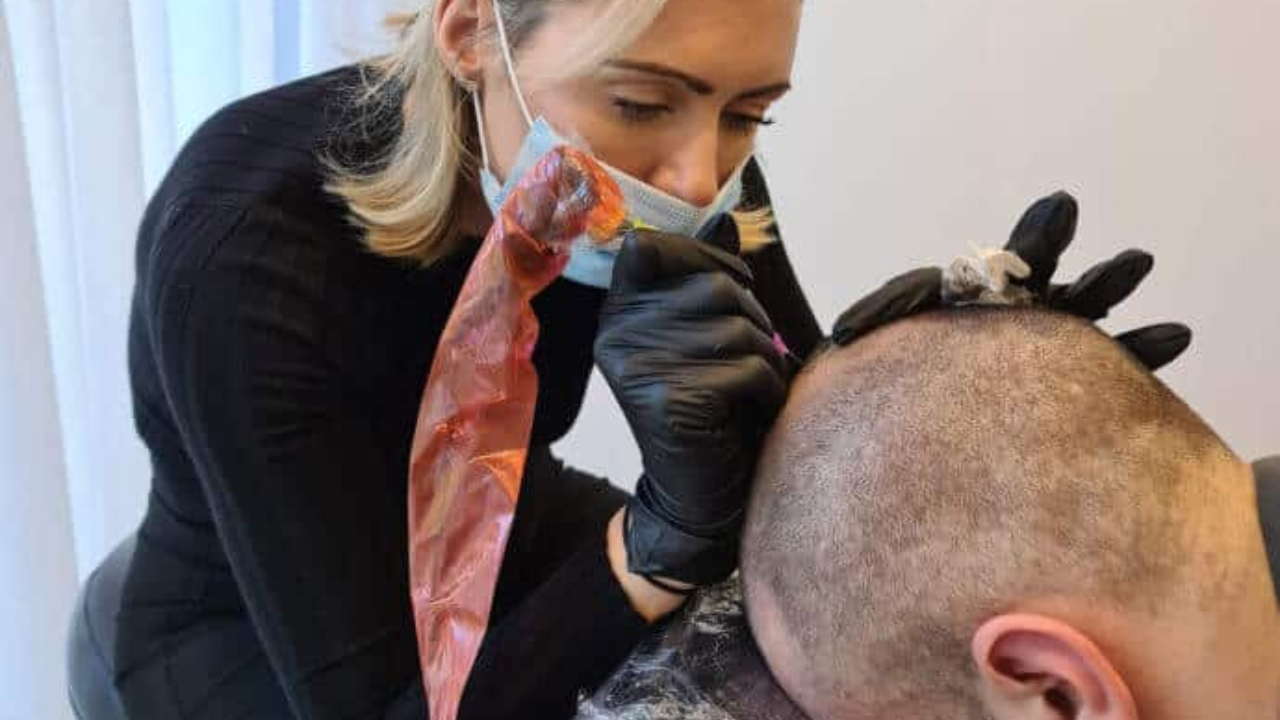
If you’ve had a transplant and you’re not happy with the outcome, SMP is worth a serious look. We offer hair transplant enhancement SMP as a dedicated service at Foli Sim, and we’ve helped many clients feel confident about their appearance after disappointing surgical results.
Which One Is Right for You?
There’s no single right answer because it depends entirely on your circumstances, priorities, and what outcome you’re looking for. Here’s a straightforward way to think about it.
SMP is likely the better fit if you:
- Want immediate, predictable results without surgery or extended recovery
- Are looking for a more affordable, accessible solution
- Have advanced hair loss or limited donor hair
- Prefer a low-maintenance lifestyle
- Are comfortable with or prefer the shaved head aesthetic
- Want to camouflage transplant scarring or improve density after surgery
A hair transplant may be worth exploring if you:
- Want to grow and style longer hair
- Have sufficient donor hair and early-to-moderate hair loss
- Have the budget and are prepared for the recovery process
- Have realistic expectations about what a transplant can achieve
From where I sit at Foli Sim, I see people every week who wish they’d discovered SMP sooner. Not because it’s the right answer for everyone, but because it genuinely solves the problem for the vast majority of people dealing with hair loss, at a fraction of the cost and with none of the surgical risk or recovery time. That said, I’m not here to tell you what to do. My job is to make sure you have the information you need to make the right decision for yourself.
Why Choose Foli Sim for SMP?
Foli Sim is a family-owned SMP clinic with studios in Perth, Melbourne, and Sydney. We focus exclusively on scalp micropigmentation, which means our practitioners aren’t generalists doing a bit of everything. They’re specialists who have performed thousands of procedures and continue to refine their technique with every client they treat.
We offer free consultations at all three locations, as well as phone and video consultations for those who can’t visit in person. If you’d prefer, you can send us a few photos via WhatsApp or email and we’ll provide a written quote. There’s no pressure, no obligation, and no hard sell. Just honest advice and exceptional results.
If you’re ready to explore your options, book your free consultation or give us a call on 1300 668 490. You can also find full pricing details on our SMP costs page.
Frequently Asked Questions
Q1: Is SMP a better option than a hair transplant?
It depends on what you’re looking for. SMP delivers immediate, predictable results at a much lower cost, with no surgery and no recovery time. It’s suitable for virtually all stages and types of hair loss. A hair transplant grows real hair that can be styled, but it’s expensive, requires sufficient donor hair, and results can take 12 to 18 months to fully appear. For many people, particularly those with advanced hair loss or a tighter budget, SMP is the more practical and reliable solution. For others, especially those with early-stage hair loss who want to keep longer hair, a transplant may be worth considering. The two treatments can also be combined, with SMP used to enhance density or camouflage scarring after a transplant.
Q2: How many SMP sessions will I need?
At Foli Sim, all clients require 3 sessions, regardless of the degree of hair loss. This applies even for mild hair loss. Sessions are spaced 10 to 14 days apart to allow the scalp to heal and the pigment to settle properly between appointments. The first sessions build the foundational density and coverage, while later sessions refine the hairline, adjust tones, and perfect the overall result. Your practitioner will assess progress at each appointment and make any necessary refinements. In some cases, a fourth session may be recommended, and this will be discussed with you during your treatment if applicable. There are no surprise costs involved.
Q3: Does SMP hurt?
Discomfort levels during SMP are generally very low. The procedure involves depositing tiny pigment impressions into the upper layers of the scalp using specialised equipment, and the sensation is often described as mild at most. The vast majority of Foli Sim clients are comfortable throughout the entire procedure without needing any additional pain management. Comfort levels can vary depending on the individual and the area of the scalp being treated, as some areas are naturally more sensitive than others. If you feel you’d like some additional support, over-the-counter oral pain relief available in Australia is an option, though we’d always recommend speaking with your doctor or pharmacist about what’s right for you before your appointment.
Q4: Can SMP fix a bad hair transplant?
Yes, and it’s one of the most common reasons people come to Foli Sim. SMP is highly effective at improving results after a hair transplant that didn’t deliver the density or coverage expected. Our practitioners can use SMP to fill in gaps between grafts, create the appearance of greater density across the scalp, restore or refine a hairline, and camouflage FUT strip scars or FUE donor area scarring. The combination of a hair transplant and SMP can produce an outstanding overall result, and many clients are surprised by just how much SMP transforms the outcome of their previous surgery. We offer a dedicated hair transplant enhancement SMP service across all three of our Australian studios.
Q5: How long does SMP last compared to a hair transplant?
A hair transplant is generally considered permanent because the transplanted follicles continue to grow hair. However, the native hair surrounding the transplant can continue to thin over time, which may require further procedures or ongoing hair loss treatment to maintain a balanced appearance. SMP pigment naturally softens over the years, and most clients find a touch-up is needed somewhere between three and six years after their original treatment, depending on their skin type, lifestyle, and sun exposure. At Foli Sim, every SMP treatment includes a 12-month quality guarantee, so any touch-up required within that period is provided at no additional cost. Long-term, the maintenance costs associated with SMP are considerably lower than the potential ongoing costs of hair transplant revisions or continued hair loss medications.
Q6: How much does SMP cost compared to a hair transplant in Australia?
Hair transplants in Australia typically cost between $10,000 and $30,000 or more, depending on the number of grafts and the clinic. SMP at Foli Sim is significantly more affordable. As a general guide, mild hair loss is approximately $500 to $1,200, medium hair loss is approximately $1,500 to $2,500, and advanced hair loss is approximately $2,500 to $3,500. Every client receives a personalised quote during their free consultation, as individual factors influence the final cost. We also offer interest-free payment plans through ZipMoney, making SMP accessible for most budgets. You can view full pricing details on our costs page or send us a few photos for a written quote without needing to visit a studio.