
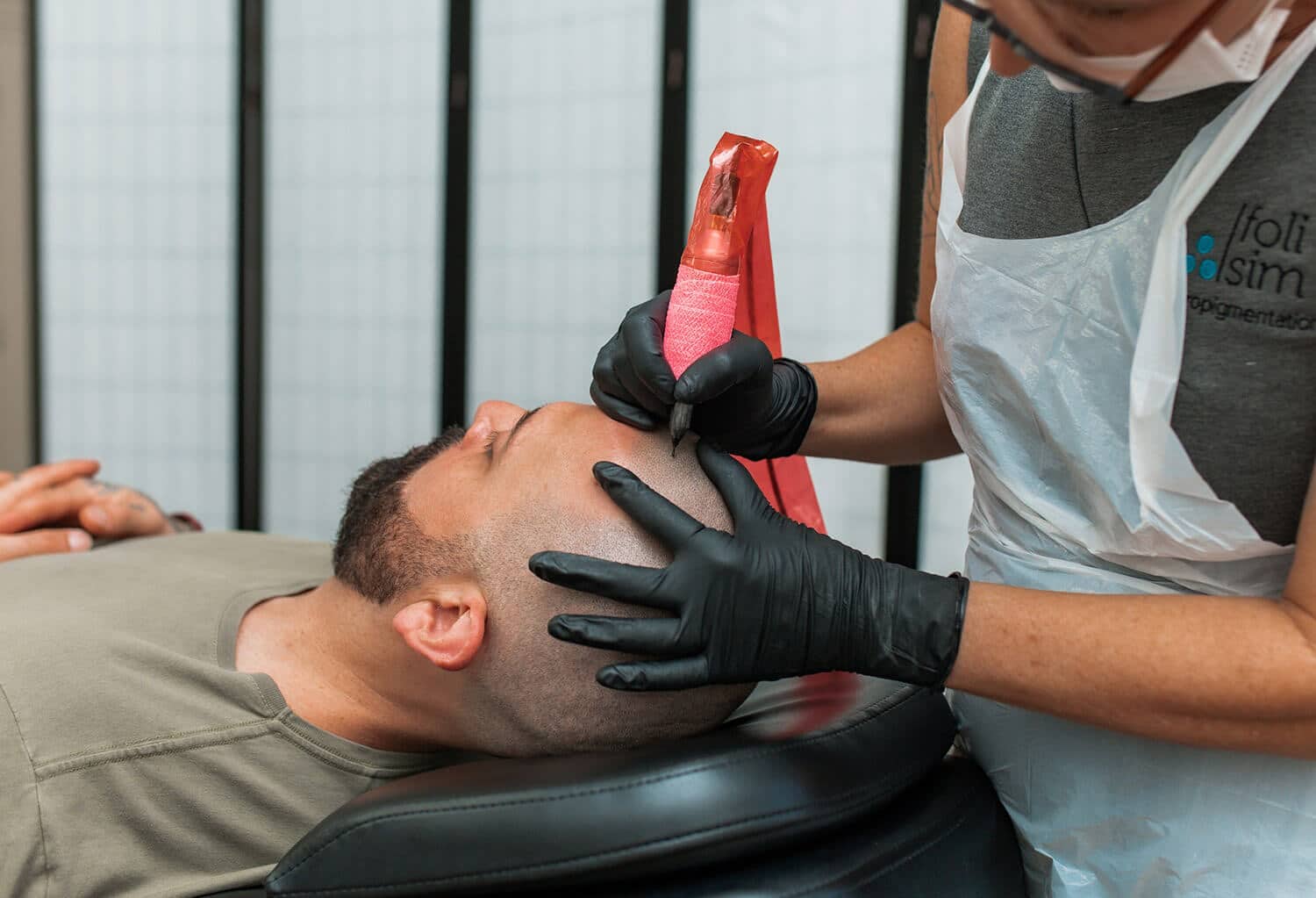
I find the most consistent client feedback is that SMP scar camouflage helps people stop thinking about their transplant scar. Best results typically achieve around 85% concealment on flat, fully healed scars, while raised or textured scars respond less predictably. Treatment always requires three sessions, with each one refining pigment density, tone and blending.
You’ve got a scar from a hair transplant and you want to know whether SMP actually delivers what people say it does. Not the marketing version: the real version. This article pulls together the most consistent themes from verified client experiences with SMP scar camouflage in Sydney, so you can set realistic expectations before you commit to treatment.
1. The result is rarely invisible, but it is genuinely transformative
The most consistent thing clients say after SMP scar camouflage is that they stopped thinking about their scar. That’s different from the scar disappearing entirely. Best results typically achieve around 85% concealment on flat, fully healed scars with consistent skin texture and colour, and clients who understand this going in tend to be the most satisfied.
Scar tissue behaves differently to healthy scalp skin. It holds pigment unpredictably, which is why experienced practitioners are not just recommended here: they’re essential. The difference between a skilled hand and an inexperienced one shows clearly in the final result.
2. FUE dot scars are the easiest to conceal and clients notice it
Clients who had FUE (follicular unit extraction) procedures consistently report the smoothest camouflage outcomes. FUE leaves small circular punch marks scattered across the donor area, and because these scars are already dot-shaped, SMP pigment can be placed to blend almost seamlessly with the surrounding follicle impressions.
FUT strip scars, the long linear scar left by the strip method, are more common overall and still respond well to SMP, but the process is more nuanced. Clients with FUT scars note that camouflage is most effective when the scar is fully flat and the surrounding skin tone is consistent. Significant texture variation will affect the outcome.
3. Three sessions is the standard, and clients are glad they committed to all of them
A recurring theme in client feedback is surprise at how much the result improves between sessions. SMP scar camouflage always requires 3 sessions: not two, not one top-up. Each session allows the practitioner to build pigment density, adjust tone, and refine the blend with surrounding areas.
Clients who tried to cut the process short at two sessions often returned for the third after realising the result was incomplete. The cumulative effect of all three sessions is what produces the finished look clients consistently describe as life-changing.
4. Scar age and condition matter more than most clients expect
One of the clearest patterns in before and after scar SMP outcomes is the relationship between scar maturity and result quality. Clients whose scars were fully healed, typically at least 12 months post-transplant, reported more consistent pigment retention and smoother blending than those who treated scars too early.
Raised, textured, or keloid-prone scars present the greatest challenge. Pigment doesn’t settle into irregular scar tissue the same way it does into flat skin. Honest practitioners set this expectation clearly before the first session, and clients appreciate that candour far more than an overpromise.
5. Confidence recovery is the result clients talk about most
Strip back all the technical language and the most common sentiment across SMP scar camouflage reviews is the same: people feel like themselves again. For many clients, a visible transplant scar had become a source of self-consciousness that shaped how they wore their hair, which hats they kept in rotation, and whether they felt comfortable at the beach or the gym.
After SMP, those behavioural workarounds tend to disappear. Clients describe cutting their hair shorter, ditching the cap, and simply not thinking about the back of their head anymore. That shift in everyday confidence is consistently the outcome people find hardest to quantify and most reluctant to understate.
The client experience data points clearly in one direction: managed expectations plus skilled execution equals high satisfaction. SMP scar camouflage works best on flat, healed scars treated by a practitioner with genuine experience across both FUT and FUE scar types. Results aren’t a guarantee of invisibility, but for most Sydney clients, 85% concealment is enough to change how they move through the world.
Frequently Asked Questions
How realistic are the before and after results for SMP scar camouflage?
Before and after scar SMP results are genuinely significant for most clients, but not a guarantee of complete invisibility. Best results achieve around 85% concealment on flat, fully healed scars with even skin tone. Raised or textured scar tissue responds less predictably, so a thorough consultation is essential before treatment begins.
Does SMP work on transplant scars from both FUT and FUE procedures?
Yes, transplant scar SMP results are achievable for both FUT strip scars and FUE dot scars. FUE scars are generally easier to conceal because their shape already mimics the SMP pigment dots. FUT strip scars require more nuanced technique, but a skilled practitioner can produce a strong blend across both scar types.
How many sessions does SMP scar camouflage require?
SMP scar camouflage always requires 3 sessions. Each session builds pigment depth, refines tone, and improves the blend with the surrounding scalp. Attempting to finish in fewer sessions typically produces an incomplete result. The full effect only becomes visible once all three sessions are complete and the skin has settled.
How long should I wait after a hair transplant before getting SMP scar camouflage in Sydney?
Most practitioners recommend waiting at least 12 months after a hair transplant before treating the scar with SMP. This allows the scar to fully mature, flatten, and stabilise. Treating an immature scar too early risks inconsistent pigment retention and a less predictable result. Your practitioner will assess the scar’s condition at consultation.
Is SMP scar camouflage a permanent solution?
SMP pigment is long-lasting but not permanent in the traditional sense. Most clients find the result remains strong for several years before a subtle fade occurs, at which point a refresher session can restore the appearance. Factors including sun exposure, skin type, and aftercare routine all influence how long the result holds.