I use diluted, lighter pigment for fine, fair and blonde hair, because full-strength pigment can heal too dark and look heavy. I test the specific mix on a discreet scalp area first, consider skin undertone, and build density gradually across three sessions. I also use precise dot placement and a soft, natural hairline.
You’ve probably seen SMP photos where the density looks obvious rather than natural, and you’re worried the same thing will happen to your fine or fair hair. This article explains exactly how pigment dilution and shade matching work for lighter hair types, so you know what a properly executed result should look like before you commit to a single session.
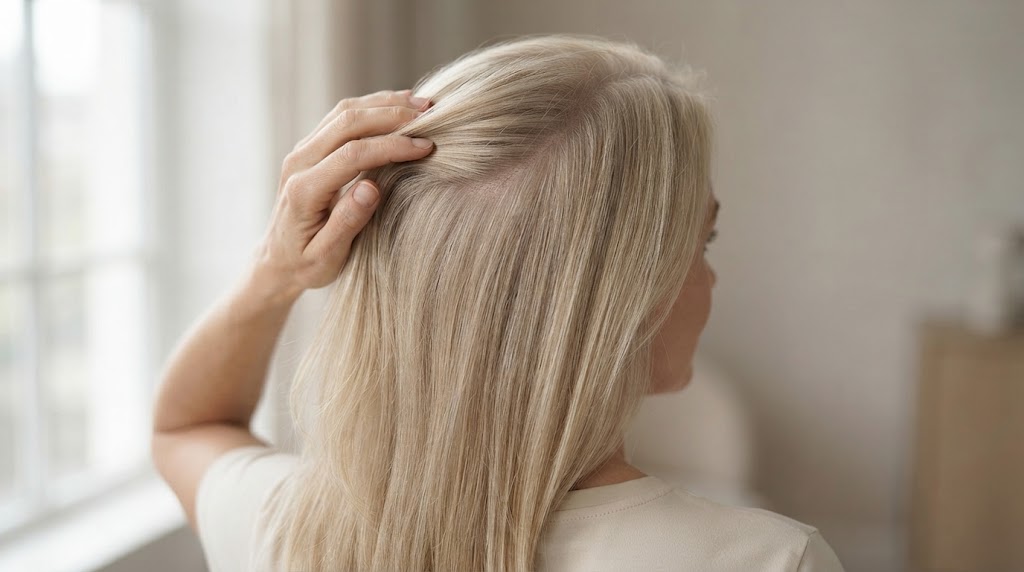
SMP for fine fair hair women depends on one thing above all else: the pigment has to be weaker and lighter than what’s used on darker hair, applied in a way that respects how little natural contrast fair hair actually has against the scalp. Get that wrong and the result reads as a smudge rather than added density. Get it right and it’s genuinely difficult to spot, even up close.
1. Standard pigment strength is almost always too dark for fair hair
Most SMP pigment is formulated with brunette and black hair in mind, because that’s the majority of the market. Applied at full strength on someone with fine, light brown or ash-blonde hair, that same pigment will oxidise and heal noticeably darker than the client’s actual hair colour.
In my 42 years working in hair, I’ve seen this go wrong more often on fair clients than on any other group, usually because the practitioner didn’t dilute the pigment before starting. At Foli Sim, pigment for fair and fine hair is cut with a diluting solution before it ever touches the scalp, sometimes significantly, so the deposited colour sits closer to ash-blonde or light taupe rather than defaulting to a generic dark brown.
2. A test spot tells you the truth before the full treatment starts
You should never have a full first session without seeing how your specific pigment mix heals on your specific skin first. A small test area, usually applied at the start of session one in a discreet section of the scalp, shows exactly how the colour will oxidise over the following days.
Skin undertone changes how pigment settles just as much as hair colour does. A cool, pale undertone can pull a pigment mix slightly differently than a warm undertone will, which is why shade matching isn’t just about the hair, it’s about reading the whole picture. If you want to understand this in more depth, our skin tone matching guide covers how undertone affects final pigment choice for any hair colour.
3. Density has to be built gradually, not delivered all at once
For fine and fair hair, restraint matters more than speed. Foli Sim always works across three sessions, regardless of how mild or advanced the hair loss is, and for fair-haired clients that structure is doing something specific: each session adds a controlled layer of density rather than trying to achieve the finished look in one sitting.
The first session is deliberately conservative. It’s far easier to add more pigment in session two or three than it is to lighten an area that’s gone in too dark. This is standard practice at Foli Sim precisely because fine, fair hair leaves so little room for error.
4. Dot pattern and spacing matter more when there’s less hair to blend with
Fine hair has less volume to visually soften the scalp underneath it, which means the pigment dots themselves need to mimic natural follicle randomness even more precisely than they would on thicker hair. Dot density is increased gradually across the three sessions, moving from a lighter placement in early sessions to a fuller, more established pattern by the final one.
Uneven spacing, dots that are too uniform, or a pattern that’s too dense too early are all far more visible against fine, light hair than against thick, dark hair. This is one of the clearest reasons SMP results vary so much between practitioners: precision shows up, and so does its absence.
5. Grey and fair hair often need to be considered together
Many women with naturally fair hair are also managing early grey coming through, and the two need to be matched as a single, cohesive shade rather than treated separately. Grey hair reflects light differently to pigmented fair hair, so the mix has to account for both if the finished result is going to look even across the whole scalp.
If greying is a bigger part of your picture than fairness alone, our grey and white hair guide goes into more detail on how that specific matching challenge is handled.
6. The result should soften your hairline, not define it
For fair-haired women, the aim at the hairline is softness. A hard, obvious edge draws attention to exactly the area you’re trying to make less noticeable, and it looks far more artificial against light hair than dark hair, where more natural contrast helps disguise a firmer line.
A soft, natural hairline is what the overwhelming majority of Australian clients ask for, and it’s the standard approach at Foli Sim for every hair colour, but it matters even more here. The transition from scalp to hairline should feel gradual, almost imperceptible, rather than like a drawn boundary.
Getting SMP right on fine or fair hair isn’t about using less skill, it’s about using more precision. Dilution, undertone reading, gradual density building and considered dot placement all matter more when there’s less natural hair colour to hide behind.
Frequently Asked Questions
Does SMP look too dark on blonde or light brown hair?
It shouldn’t, if the pigment is correctly diluted beforehand. Full-strength pigment mixed for darker hair will heal too dark on blonde or fair hair, but a practitioner who dilutes pigment specifically for lighter hair types achieves a shade that matches naturally rather than reading as heavy or flat.
How many SMP sessions does a woman with fine fair hair need?
Three sessions are required, regardless of how mild or advanced the hair loss is. Each session builds density gradually, which is especially important for fine and fair hair, where adding too much pigment too quickly is far harder to correct than adding more later.
What is a pigment test spot and why does it matter for fair hair?
A test spot is a small area treated first to see exactly how a specific pigment mix heals against your skin tone and hair colour. For fair-haired women it’s essential, because pigment oxidises differently on lighter skin and hair than the standard mixes used for darker clients.
Can grey hair and fair hair be pigment matched together?
Yes, and they often need to be considered together rather than separately. Grey hair reflects light differently to naturally fair hair, so the pigment mix has to account for both to produce an even, cohesive result across the whole scalp.
Will SMP give me a sharp hairline or a soft one?
A soft, natural hairline is the standard approach, and it’s what the vast majority of Australian clients ask for. This softness matters even more for fair-haired women, since a harder edge shows up more obviously against lighter natural colouring.
Ready to talk it through?
Foli Sim in Perth offers a personal consultation to answer your questions and recommend the right approach for you. Get in touch with Foli Sim to book your consultation.