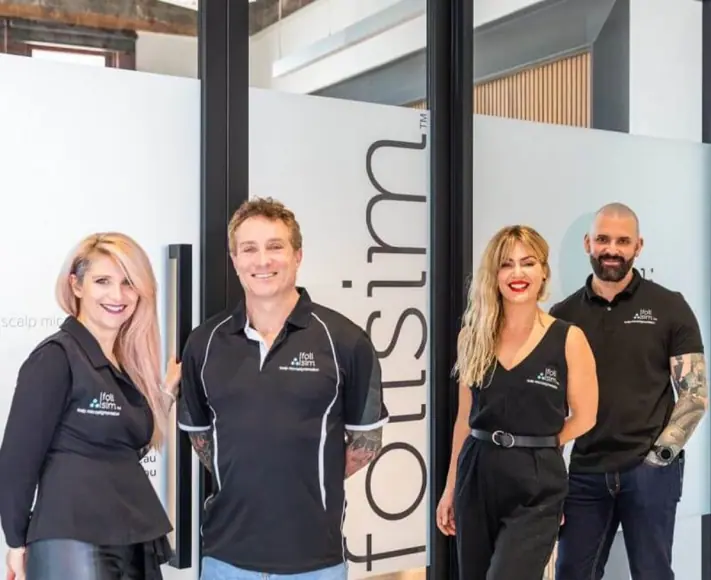
Hi, I’m Kate Dawes, co-Founder of Foli Sim. I’m excited to share how scalp micropigmentation (SMP) is helping many Melbourne hair transplant clients regain their confidence after hair surgery.
The Reality of Hair Transplant Scars
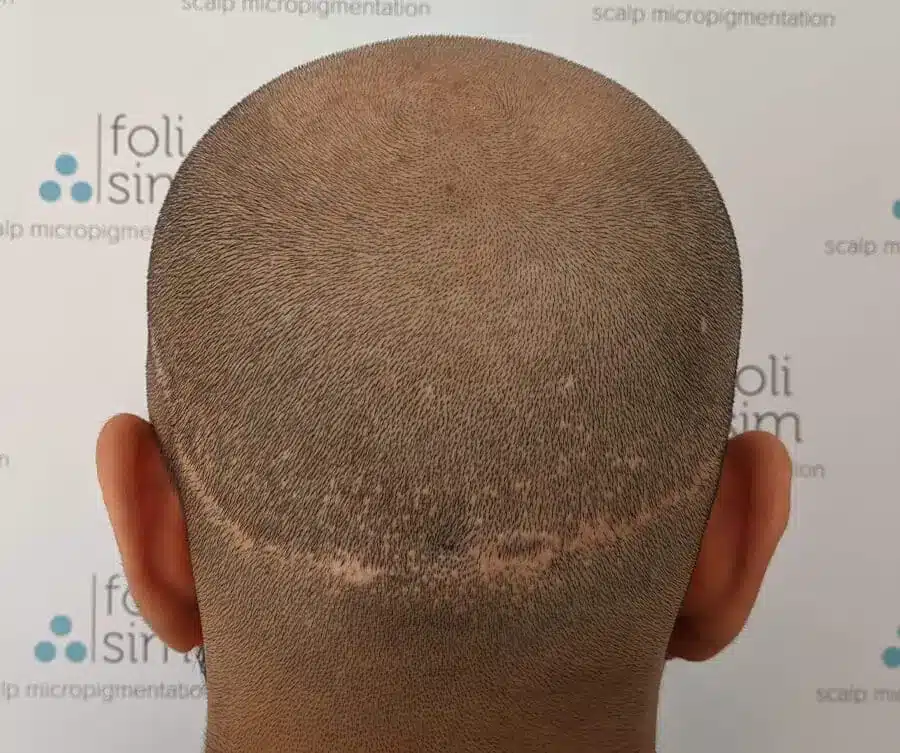
Hair transplant techniques have come a long way. However, scarring is sometimes an unavoidable side effect, particularly with older methods like Follicular Unit Transplantation (FUT).
FUT, also known as strip harvesting, involves removing a strip of skin from the back of the head. This leaves a linear scar. Even Follicular Unit Extraction (FUE), which extracts individual follicles, can leave tiny dot-like scars.
These scars can be visible, especially with shorter hairstyles, causing self-consciousness. This is where SMP can make a huge difference.
How SMP Camouflages Scars
SMP works by depositing tiny dots of pigment into the scalp. This creates the illusion of closely shaven hair follicles.
When applied over hair transplant scars, SMP can effectively camouflage the area. It reduces the contrast between the scar tissue and the surrounding hair.
The result is a more natural and even-looking scalp, allowing you to wear your hair with confidence.
Factors Affecting SMP for Scar Camouflage
Several factors can influence the success of SMP for scar camouflage:
- Scar Type and Size: The size, shape, and texture of the scar will affect the treatment approach.
- Skin Tone: Matching the pigment to your natural skin tone is crucial for a seamless blend.
- Hair Density: The density of existing hair around the scar will influence the SMP density required.
- SMP Artist’s Skill: Choosing an experienced and skilled SMP artist is essential for achieving natural-looking results.
What to Expect During the SMP Process
During your initial consultation, we’ll assess your scar and discuss your expectations. We will also explain the SMP process in detail.
The SMP procedure typically involves multiple sessions. This allows us to build up the density gradually and achieve the most natural-looking result.
We use specialized equipment and techniques to ensure precise pigment placement and minimize discomfort.
Benefits of SMP for Hair Transplant Scars
SMP offers several benefits for individuals with hair transplant scars:
- Improved Appearance: SMP can significantly reduce the visibility of scars.
- Increased Confidence: By camouflaging scars, SMP can help you feel more confident about your appearance.
- Non-Surgical Solution: SMP is a non-invasive procedure with minimal downtime.
- Long-Lasting Results: SMP results can last for several years with proper care.
Alternatives to SMP
While SMP is an effective solution for camouflaging hair transplant scars, it’s essential to consider all available options.
These may include surgical scar revision or laser treatments. However, these options are more invasive and may not be suitable for everyone.
Why Choose Foli Sim in Melbourne?
At Foli Sim, we understand the impact that hair loss and scarring can have on your self-esteem.
We take a professional and medical approach to SMP. Our team has extensive experience in helping clients achieve their desired look.
We are committed to providing personalized care and natural-looking results.
Take the Next Step
If you’re considering SMP for hair transplant scar camouflage in Melbourne, we invite you to schedule a consultation with us.
We can assess your individual needs and determine if SMP is the right solution for you. Let us help you regain your confidence and achieve the look you deserve.
Frequently asked questions
What types of hair transplant scars can SMP camouflage?
I can use SMP to camouflage linear scars left by Follicular Unit Transplantation and tiny dot-like scars that can result from Follicular Unit Extraction. By placing tiny pigment dots into the scalp, I aim to reduce the contrast between scar tissue and the surrounding hair, creating a more even-looking scalp.
How does SMP camouflage a hair transplant scar?
I deposit tiny dots of pigment into the scalp to create the illusion of closely shaven hair follicles. When applied over a hair transplant scar, SMP reduces the contrast between the scar tissue and surrounding hair. This can create a more natural and even-looking scalp, particularly with shorter hairstyles.
What happens during the first SMP consultation?
During the initial consultation, I assess your scar and discuss your expectations. I also explain the SMP process in detail. This helps determine whether SMP is the right solution for your individual needs and allows us to plan an approach focused on precise pigment placement and a natural-looking result.
How many SMP sessions are usually involved for scar camouflage?
The SMP procedure typically involves multiple sessions. I build up the density gradually rather than completing the result in one step. This approach allows me to work towards the most natural-looking result while applying the pigment precisely over the scar and reducing its contrast with the surrounding hair.
Will SMP make my hair transplant scar invisible?
I describe SMP as a way to effectively camouflage a hair transplant scar, rather than promising that it will make the scar disappear. The pigment dots reduce the contrast between the scar tissue and surrounding hair, helping create a more natural and even-looking scalp.
Are there alternatives to SMP for hair transplant scars?
I explain that available options may include surgical scar revision or laser treatments. These alternatives are more invasive and may not be suitable for everyone. During a consultation, I can assess your individual needs, discuss your expectations and help determine whether SMP is the right solution for you.