
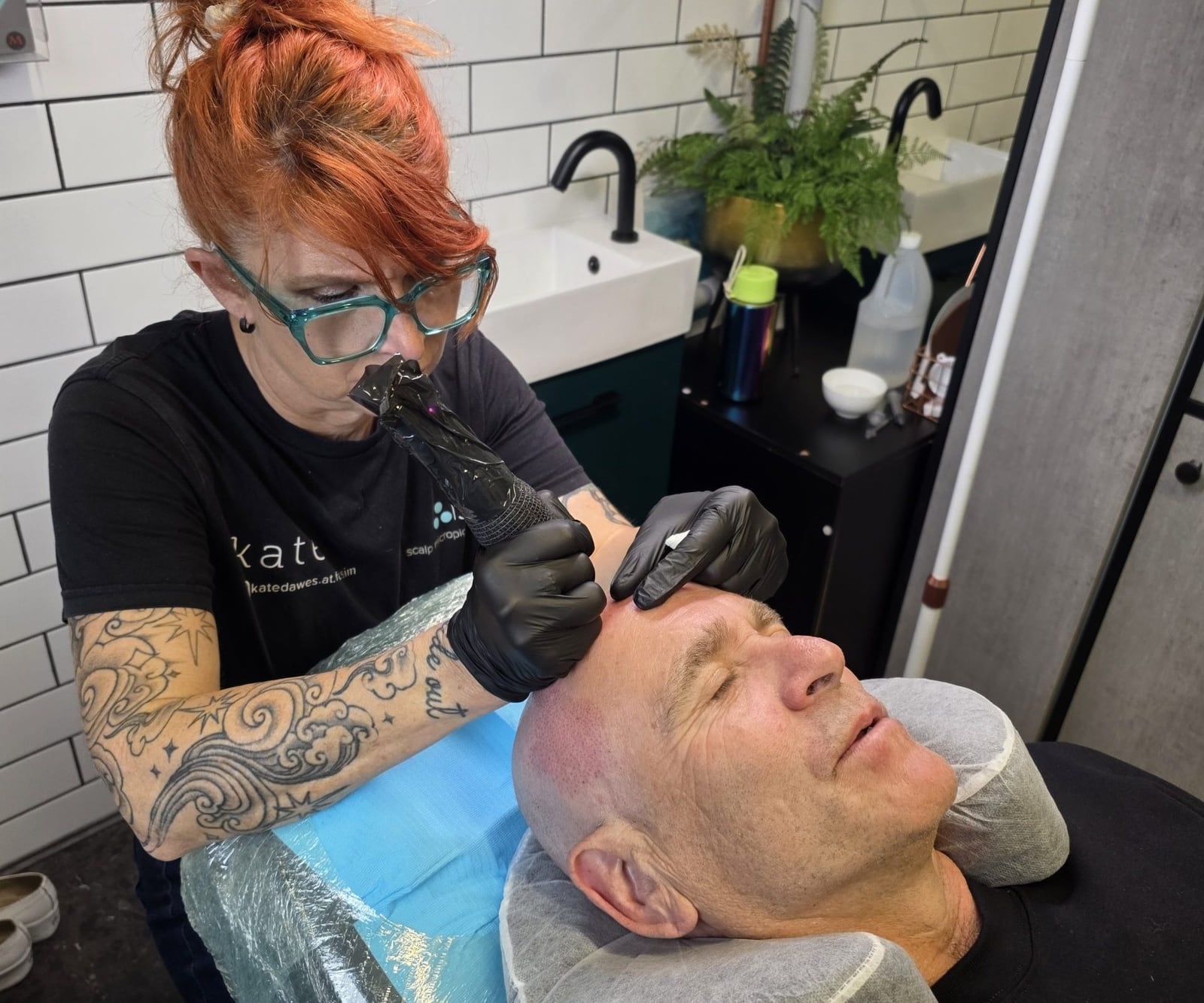
I consider SMP worth the money for men who want low-maintenance visual density rather than hair regrowth. It reduces the contrast between skin and hair, avoids daily styling and can last roughly four to eight years. The decision depends on accepting three sessions, future touch-ups, ongoing hair loss and the need for an experienced practitioner.
You’ve read enough about scalp micropigmentation to know roughly how it works. What you actually want to know is simpler: is it worth the money, the sessions and the commitment, or will you regret it in a few years? That’s what this article breaks down honestly, without the sales pitch.
The short answer is that SMP is worth it for men who understand exactly what it does and doesn’t do. It’s a cosmetic treatment that deposits pigment into the scalp to mimic the look of hair follicles, reducing the contrast between skin and hair so thinning or baldness reads as intentional, close-cropped density instead of visible scalp. It does not regrow hair, and it won’t stop hair loss that’s still progressing. Once you’re clear on that distinction, the pros and cons become much easier to weigh against your own situation.
What SMP actually delivers for thinning and balding men
In my 42 years working in the hair industry, the men who are happiest with SMP are the ones who came in wanting camouflage, not a cure. That’s the honest frame for this decision.
Every client at Foli Sim goes through three sessions, regardless of how advanced their hair loss is. That’s not upsold or negotiable at our studio: it’s what the pigment layering process needs to build density that looks convincing under different lighting, from a soft natural hairline through to a fully shaved-look crown. Each session builds on the last, adding dot density and refining tone, so the result at session three looks nothing like the flatter, less convincing version after session one.
Healed results last roughly four to eight years before they noticeably fade, based on the pattern we see across thousands of Australian clients. Some men, particularly those with more sun exposure or oilier skin, will see touch-up territory closer to the four-year mark. Others stretch past six or seven years. Either way, SMP is a lower maintenance decision than most people expect walking in: no daily styling, no product regime, no waiting years to see whether the treatment is working.
The honest downsides nobody skips past
SMP is not hair regrowth, and it never will be. If your goal is to see actual hair coming back through your scalp, this isn’t the treatment for you; you’re looking at a different category of solution entirely, and it’s worth discussing medical options with a doctor before booking anything cosmetic.
It also isn’t a one-and-done, forever fix. Pigment fades gradually as skin cells turn over and the dermal layer holding the ink shifts with sun exposure and general skin ageing. That means touch-ups every four to six years are a realistic, ongoing part of ownership, not a rare exception. If you’re not prepared for that as a recurring cost and appointment, it changes the value equation.
There’s also no undoing a bad result quickly. If a practitioner uses the wrong needle depth or gets the tone wrong, correcting it takes time and further sessions rather than a simple fix. This is precisely why so many men who research this thoroughly end up reading through real accounts of SMP regrets before booking: the disappointing outcomes almost always trace back to inexperienced practitioners, not the technique itself.
Weighing the pros and cons side by side
Laid out plainly, here’s how the trade-offs stack up for most men considering this decision.
| Pros | Cons |
|---|---|
| Looks natural within days of full healing, roughly 30 days after the final session | Does not regrow hair or treat the underlying cause of hair loss |
| Low day-to-day maintenance once healed: no products, no styling routine | Requires touch-ups every four to six years to maintain density and tone |
| Works across male pattern baldness, alopecia and scar camouflage | Results depend heavily on practitioner skill and needle depth accuracy |
| Far less invasive and lower cost than surgical hair transplant options | Not reversible quickly if the initial work is done poorly |
| Three-session process gives a controlled, gradually built result | Sun exposure and oily skin can accelerate fading, shortening intervals between touch-ups |
Working out if the cost makes sense for you
Cost is where most men start their research, but it’s the wrong place to start the decision. The right question is longevity: what you’re paying for is roughly four to eight years of low-maintenance density, not a single afternoon’s work.
Total cost is typically broken down across the three sessions rather than charged as one lump figure, which makes budgeting more manageable and lets you assess results as they build. If you want the specific breakdown by session and coverage area, our detailed cost guide walks through exactly what influences the final number, including scalp size, hair loss pattern and touch-up frequency.
Set against a transplant, which involves surgery, a longer recovery and a considerably higher price point, SMP tends to work out as the more accessible option for men who want a fast, non-surgical result. It’s not the right call for everyone, but for men focused on visual density rather than regrowth, the value case is usually strong once you’ve priced in the multi-year lifespan against the upfront session cost.
If you’re still weighing it up, a consultation is the most useful next step. A trained practitioner can look at your specific hair loss pattern, talk you through realistic healing timelines and give you a proper session-by-session cost estimate rather than a generic figure. Book a free, no-obligation consultation with Foli Sim to find out exactly what SMP would look like for you.
Frequently Asked Questions
Is SMP worth it if my hair loss is still progressing?
Yes, but plan for it. SMP camouflages current hair loss rather than stopping future loss, so ongoing thinning around treated areas may need adjustment sessions later. A practitioner can plan pigment placement with likely future progression in mind during your initial consultation.
How many sessions does SMP actually require?
Three sessions are required for every client, regardless of how advanced the hair loss is. Each session builds density and refines tone, spaced several weeks apart, so the final result looks noticeably more convincing than after the first or second session alone.
What are the biggest disadvantages of SMP compared to a hair transplant?
SMP doesn’t regrow hair and needs touch-ups every four to six years, while a transplant can produce permanent growing hair but involves surgery, a longer recovery and considerably higher cost. The right choice depends on whether you want density or actual regrowth.
Does SMP look natural once it’s fully healed?
Yes, when done well SMP looks like natural, closely cropped hair density with a soft, natural hairline rather than an obvious cosmetic treatment. Full healing takes around 30 days, and results depend heavily on the practitioner’s skill and needle depth accuracy.
Who shouldn’t get SMP?
Men with active scalp acne, psoriasis flare-ups, eczema or keloid-prone skin are typically advised against SMP until those conditions are managed. It also isn’t suitable for anyone expecting hair regrowth rather than cosmetic camouflage of existing thinning or baldness.
Ready to talk it through?
Foli Sim in Perth offers a personal consultation to answer your questions and recommend the right approach for you. Get in touch with Foli Sim to book your consultation.