Yes. SMP can make thinning on the crown and top of the head look less visible when you wear your hair in a ponytail or bun. I use density work between existing hairs to reduce contrast between scalp and hair, without creating a shaved-head appearance or treating the cause of hair loss.
Why does thinning show more when hair is tied up?
When hair is worn loose, it can provide some coverage across the top of the scalp. A ponytail, bun or other up-style pulls the hair away from the crown and can expose the scalp more clearly. Bright light can make that contrast even more noticeable, particularly along a widening part or through the vertex.
This does not necessarily mean that your hair has suddenly become thinner. The styling itself may simply make the existing spaces between hairs easier to see. Many women come to me because they feel comfortable with their hair down but become self-conscious when they tie it back.
With female SMP, the aim is usually to soften that visible contrast. I place pigment between existing hairs, so the scalp is less obvious through the areas where density has reduced.
How does female SMP work for crown thinning?
Female scalp micropigmentation is generally density work rather than a shaved-head treatment. Your existing hair can remain long, and I plan the work around the way you normally part, wear and style it.
For thinning on top, I assess the crown, the area around the parting and any changes in density towards the front or sides. The pigment is applied in small impressions that sit at the scalp surface. Viewed through your existing hair, these impressions help create the visual impression of more coverage.
The objective is not to draw a solid patch over the scalp. A convincing result depends on graduated density, careful spacing and a soft transition into the surrounding hair. The treatment needs to work when your hair is loose, tied back and viewed in the lighting situations that matter to you.
You can read more about scalp micropigmentation for women, including why female thinning is commonly approached differently from a traditional shaved style.
Can SMP help with ponytail or bun thinning?
It can, provided the pattern of hair loss and the condition of your scalp are suitable for treatment. I look at where the scalp is visible when you wear your hair up, rather than assessing only how it looks with your hair down.
Bring photographs of your usual hairstyles to your consultation if you can. A ponytail may expose a different area from a high bun, low bun or half-up style. I also want to understand whether you change your parting, because this can affect how broadly the treatment area should be planned.
For some women, the main concern is the crown. For others, it is the widening part that becomes obvious when the hair is pulled back. Some have more diffuse thinning across the top. These patterns can overlap, but they should not all be treated in exactly the same way.
I do not usually aim to create a new, lower hairline when the natural frontal hairline is still present. Instead, I work with your own hairline and focus on reducing the visible gaps where the scalp shows through.
Will SMP treat the reason my hair is thinning?
No. SMP is a cosmetic camouflage technique, not a treatment for hair loss. It does not stimulate regrowth, alter the hair follicle or change the biological cause of thinning. Its role is to make reduced density less visually prominent.
If your thinning has not been assessed, it is sensible to discuss the possible cause with a GP, dermatologist or other appropriate medical professional. This is particularly important if the change is sudden, patchy, associated with scalp symptoms or continuing quickly.
Because SMP works at the surface of the scalp, it can generally sit alongside medical hair-loss care. If you use minoxidil or prescribed treatment, discuss your individual routine with the relevant clinician and tell me what you are using at consultation.
Does density SMP damage the hair I still have?
SMP does not involve incisions, hair transplantation or manipulation of the follicles. It is applied at the scalp surface and does not cause the surrounding hair to shed or create transplant-style shock loss.
That does not mean every scalp is automatically suitable. I need to consider your skin, the pattern of thinning, any scalp conditions and your expectations. If you have active irritation or a history of problematic scarring, tell me before we plan treatment.
At Foli Sim, anaesthetic is not used, and we advise against it. During your consultation, I can explain the procedure, the sensations you may notice and the preparation and aftercare relevant to your plan.
What should I discuss at an SMP consultation?
A useful consultation is about more than deciding where pigment should go. I want to understand what you want to wear your hair like and what situations cause the most concern. Please be open about your usual styles, parting, hair products and any hair-loss treatments.
We will discuss whether density work is appropriate, which areas are likely to be treated and how the result should blend with your remaining hair. Your colour, skin tone and existing density all influence the design. The amount of work required varies, so I assess this rather than giving a general promise.
The number of sessions varies and is assessed at consultation. This allows the plan to respect your existing hair and avoids treating the scalp more heavily than needed.
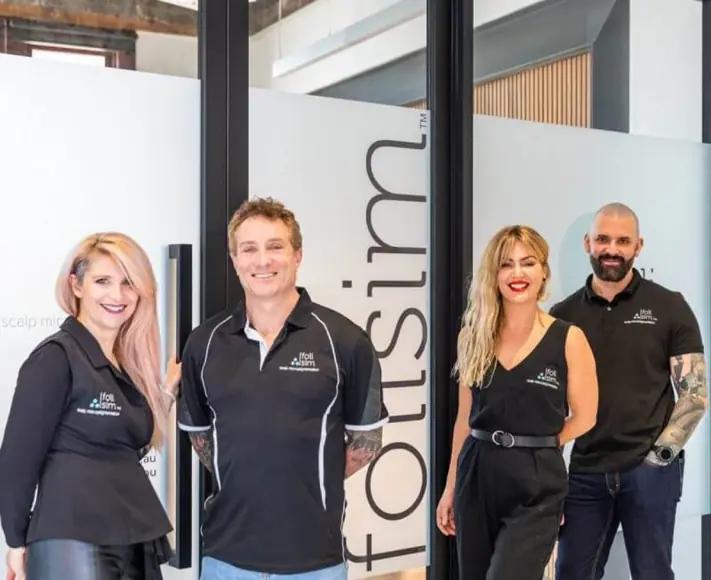
Foli Sim offers female SMP, with studios in Perth, Melbourne and Sydney. I am Kate Dawes, Founding Director and Leading Senior Practitioner, based in the Perth studio. I have worked in the hair industry for 42 years and provide consultations for women considering density work, including hair that remains unshaved.
You can also read our guide to female hair density SMP for more detail about the approach. If you are visiting the Perth studio, our Perth scalp micropigmentation clinic page provides location information.
If you are considering SMP for ponytail or crown thinning, you are welcome to book a consultation so I can assess your scalp and talk through a suitable plan.
Frequently asked questions
Can I still change my hairstyle after female SMP?
Usually, the treatment can be planned to accommodate more than one hairstyle, but you should tell me how you normally wear your hair. Different partings and up-styles may reveal different areas. I assess those patterns during consultation so the design is not based only on one day’s styling.
What if my thinning continues after treatment?
SMP does not stop ongoing hair loss, so future changes in density may alter how the result looks. We discuss this before treatment. If you notice continuing or sudden loss, seek medical advice as well as contacting the clinic about your cosmetic options.
Can SMP cover a widening part as well as crown thinning?
A widening part and crown thinning can be assessed together. The pigment needs to be feathered into surrounding density so it does not form a visible line or block. Tell me if you regularly change your parting, because that can affect the area included in the plan.
Will people be able to see the pigment when my hair is wet?
Wet hair can make any scalp thinning more visible because the strands separate and lie closer to the head. Density SMP is designed to reduce that contrast, but it does not make the scalp disappear. Your result depends on your remaining hair, the treatment area and how your hair behaves when wet.
Is female SMP suitable for every type of hair loss?
No single cosmetic technique suits everyone. Female SMP may be considered for diffuse thinning, visible parts and other forms of reduced density, but suitability depends on your scalp, diagnosis, hair pattern and expectations. I assess these points in consultation rather than recommending treatment from photographs alone.
Can I wear my hair up immediately after treatment?
You will receive individual aftercare guidance, including advice about washing, products and styling while the scalp settles. The appropriate timing can vary according to the work completed and your skin’s response. It is best to plan a little flexibility around appointments rather than scheduling an important event immediately afterwards.