
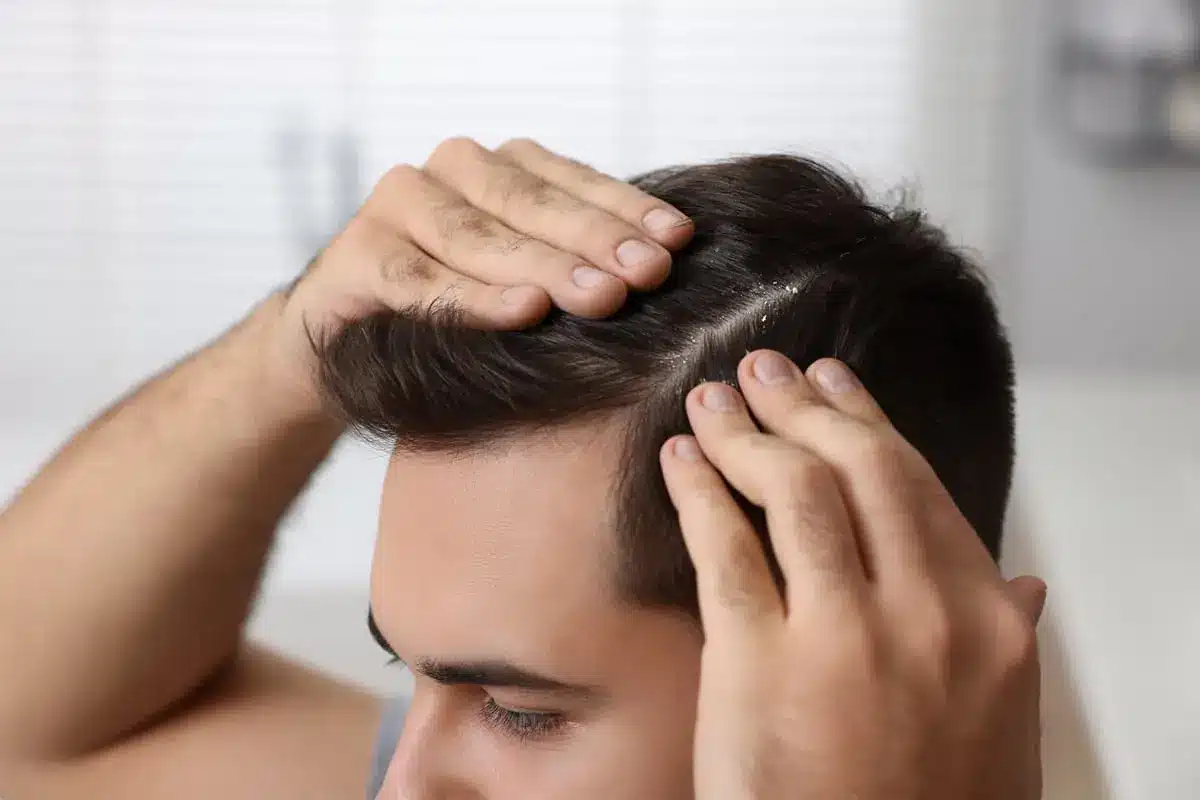
A common concern we’ve been hearing recently is that dandruff is causing people to lose their hair, but the truth is – it’s not the dandruff.
Dandruff is a symptom rather than a diagnosis, but the underlying factors that cause dandruff may also contribute to hair loss or thinning.
Remember, dandruff is very treatable, but always seek medical attention if the problem persists or worsens. Your doctor may even give you a referral to a dermatologist or trichologist if they think specialist intervention is required.
Because dandruff and hair loss can be linked by underlying conditions, it is essential to address these as well as optimise your hair’s environment to prevent further losses or damage. In other words, you need to make scalp health a priority.
In this blog, we answer your question: does dandruff cause hair loss? We take a closer look at this unwanted ‘guest’ which makes its presence known and felt – and we also provide some helpful tips on how to treat dandruff and protect your scalp in order to give your hair the best possible foundation for looking and feeling good.
What causes dandruff?
There is no single cause of dandruff and the reasons for its onset vary from person to person, but it generally relates to an imbalance in oil production in the scalp. Very oily or very dry skin can cause the skin to flake, with resultant itchiness and discomfort.
Other factors which can cause dandruff include:
- Genetics
- Fungal or yeast infections
- Medical conditions such as psoriasis, seborrheic dermatitis and eczema
- Infrequent shampooing and scalp cleansing
- Lifestyle factors such as stress and diet
- Allergic reaction to certain hair products
Dandruff and hair loss: what you need to know
As mentioned earlier, the answer to the question as to whether dandruff causes hair loss is NO.
However, as the two can be linked, it is really important to address and treat the underlying causes of dandruff in order to prevent any scalp damage that could exacerbate hair loss.
With dandruff, the scalp can become irritated and inflamed – even painful – and in severe cases, can trigger excessive scratching which can result in scarring and permanent damage to the scalp. Vigorous scratching or rubbing can also damage the hair follicles as well as the hair shaft which can cause breakages and a loss in hair density.
Tips to protect your scalp
Our Foli Sim scalp health experts have suggested the following ways to minimise the likelihood of dandruff, prevent hair damage and maintain a healthy scalp:
1. Use appropriate hair cleansing techniques
Hair should be washed regularly, but not excessively. The frequency of your hair washing regime depends on a number of factors including the climate, whether you exercise or swim regularly and your particular hair and skin type – but we recommend washing hair around three times a week. Regular shampooing can also prevent any buildup of dead skin cells.
Always follow the product instructions. For example, if you are using a medicated shampoo for dandruff, you may need to leave it on your scalp for a period of time in order for it to work effectively.
Massage your shampoo and conditioner onto the scalp to increase blood flow to the follicles and to stimulate your body’s natural healing mechanisms.
Scalp exfoliation is another excellent technique for maintaining a healthy scalp. It removes dead skin cells and product buildup, unclogs the pores, stimulates the growth of follicles and provides overall nourishment for healthier hair and a healthier scalp. For these reasons, many of our customers use the Foli Sim Scalp Purifying Scrub on a weekly basis.
Water temperature is also important. Wash hair in lukewarm water as hot water can cause scalp and hair dryness.
2. Use the right products
Is your choice of shampoo and moisturiser giving your scalp the best chance of staying hydrated and healthy? Prioritise quality over price.
We recommend sulphate-free products which contain natural ingredients such as aloe vera, jojoba oil and tea tree oil. These are also better-suited to sensitive scalps and will nourish and moisturise both your skin and hair.
3. Eat a balanced diet
Diet plays a key role in scalp health.
Try and aim for a balanced diet that’s rich in vitamins and minerals, particularly those nutrients that strengthen your immune system and which contribute to hair health such as vitamins A, B2 (riboflavin), B3 (niacin), B7 (biotin), B9 (folate), B12, C, D and E, iron, selenium and zinc. Recommended foods include lean meats, fatty fish such as salmon, eggs, spinach, berries, yoghurt, avocados and nuts.
4. Stay hydrated
Like all skin, your scalp needs adequate moisture to stay healthy. You can ensure it stays hydrated from the inside by drinking plenty of water and hydrated from the outside through the use of targeted serums or moisturisers such as our popular Foli Sim Mattifying Scalp Cream.
5. Consider your lifestyle choices
Are you very stressed? Are you getting sufficient exercise? Are cigarettes or alcohol on your menu? Lifestyle factors are a huge contributor to our overall well being – including our scalp health.
Let’s look at stress for example. Stress plays havoc with our body’s immune responses and when the primary stress hormone, cortisol, is released, it suppresses some of our body’s systems including the growth processes. When this happens in excess, it can disrupt the normal hair growth cycle and impact scalp health.
It’s helpful (and healthy) to participate in stress-reducing activities on a regular basis such as meditation, breathwork, yoga, gardening or going for a walk or swim. Even setting aside some quiet time every day without the distraction of external stimuli like social media can be very helpful in regulating and resetting your emotions.

A final word on dandruff, hair loss and scalp health
These three things are different – but they’re all linked. That’s why our Foli Sim experts recommend an integrated approach that tackles the underlying causes of dandruff and/or hair loss, treats the symptoms and future-proofs scalp and hair health through innovative products, cleansing regimes, diet, hydration and lifestyle choices.
If you have concerns about dandruff and hair loss, we’re here to help. Contact us today and enjoy a free, no-obligation consultation with our trusted experts in hair and scalp health.
Frequently asked questions
What is the main relationship between dandruff and hair loss?
I explain that dandruff itself does not cause hair loss. However, the underlying factors that cause dandruff may also contribute to hair loss or thinning. An irritated, inflamed or painful scalp can lead to scratching, rubbing and possible damage to the follicles, hair shaft and scalp.
Can scratching dandruff damage my hair?
I advise avoiding vigorous scratching or rubbing because an irritated, inflamed or painful scalp can be damaged in severe cases. Scratching may result in scarring and permanent scalp damage, while vigorous scratching or rubbing can damage the hair follicles and hair shaft, causing breakages and reduced hair density.
How often should I wash my hair if I have dandruff?
I recommend washing hair regularly, but not excessively. The appropriate frequency depends on factors such as the climate, exercise or swimming habits, and your hair and skin type. In general, we recommend washing hair around three times a week, as regular shampooing can help prevent dead skin cell buildup.
Should I use lukewarm water when washing my hair?
I recommend washing hair in lukewarm water because hot water can cause scalp and hair dryness. I also suggest considering whether your shampoo and moisturiser support scalp hydration and health, and prioritising quality over price when choosing these products.
What ingredients are recommended for a sensitive scalp?
I recommend sulphate-free products containing natural ingredients such as aloe vera, jojoba oil and tea tree oil. These products are better-suited to sensitive scalps and can nourish and moisturise the skin and hair. Always follow the product instructions, particularly when using a medicated dandruff shampoo.
Can stress affect dandruff and hair health?
I explain that stress can affect immune responses and that cortisol, the primary stress hormone, suppresses some body systems, including growth processes. Excess stress can disrupt the normal hair growth cycle and affect scalp health. Regular meditation, breathwork, yoga, gardening or walking may help regulate emotions.