
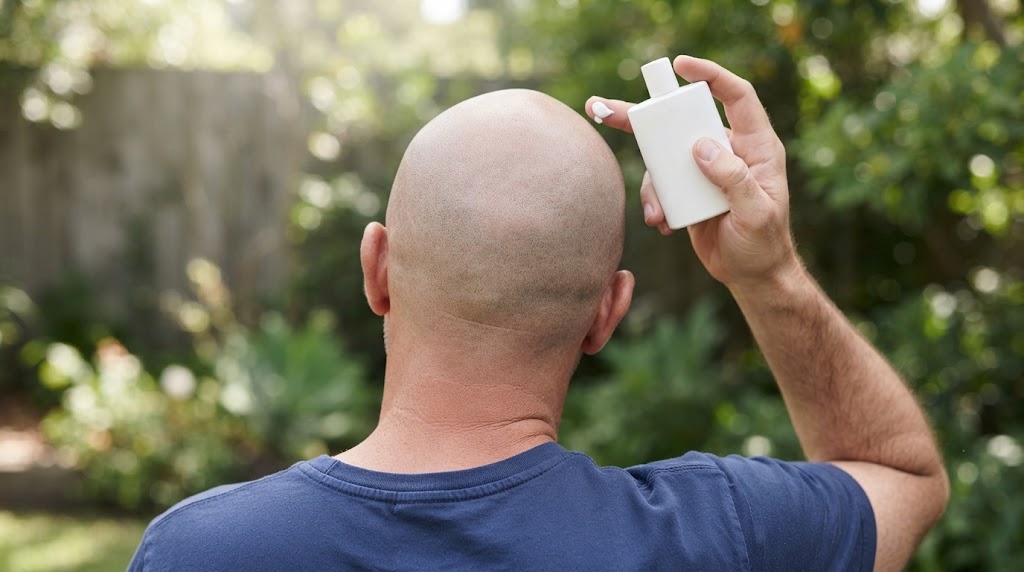
I recommend daily SPF 30 to 50 once the initial healing window has passed, moisturising the scalp a few times a week with a fragrance-free product, and avoiding harsh exfoliants. I also recommend booking a touch-up before fading becomes obvious, usually every four to six years, depending on skin type and sun exposure.
You’ve done the healing, the redness has settled, and your scalp finally looks the way you pictured it. Now the real question is how you keep it looking that sharp without booking a full retouch every year. Here’s exactly what protects your result for the long haul, and what quietly wears it down.
How to look after SMP long term comes down to a short, consistent routine: sun protection, scalp moisturising, and timing your touch-up before fading becomes obvious. Skip these and pigment breaks down faster than it needs to. Get them right and you can stretch a result out for years past the first healing month.
1. Treat sun exposure as your number one enemy
UV light is the single biggest reason SMP fades over time. Sun breaks down pigment particles sitting in the upper dermis, and unlike the fading that happens naturally as skin cells turn over in the first month, this kind of fading is preventable.
Kate Dawes, Founding Director and Senior Practitioner at Foli Sim, recommends a daily SPF 30 to 50 on the scalp once you’re past the initial healing window. It’s not a summer-only habit. Overcast days and winter sun still carry UV, and a scalp with no hair covering it takes a direct hit every time you’re outdoors without a hat or sunscreen.
Clients who are diligent with SPF consistently get more years out of their result before needing a touch-up. Clients who spend a lot of time outdoors unprotected, such as tradespeople, keen surfers and regular golfers, tend to see visible softening sooner, sometimes years ahead of schedule.
2. Keep the scalp moisturised, not just clean
Dry skin flakes, and flaking scalp skin takes tiny amounts of pigment with it over time. A simple fragrance-free, non-comedogenic moisturiser applied a few times a week keeps the skin supple and reduces that gradual pigment loss.
This matters more for some skin types than others. Naturally oily skin tends to hold pigment differently to dry skin, and clients with drier scalps often notice more surface flaking if they skip moisturising altogether. It’s a small habit, but it’s one of the easiest ways to protect the investment you’ve already made in your sessions.
3. Avoid harsh exfoliants and abrasive scrubbing
Once you’re past the 30-day healing period, your scalp behaves like normal skin again, which means it’s tempting to treat it that way entirely. Resist the urge to exfoliate it the way you might your face or body.
Physical scrubs, retinol-based products, and any harsh chemical exfoliant applied directly to the scalp can accelerate pigment breakdown. Washing with a gentle, low-chemical shampoo and patting rather than scrubbing the scalp dry protects the pigment sitting just beneath the surface.
4. Watch for the early signs it’s time for a touch-up
SMP results typically last four to eight years before they need refreshing, though this varies depending on skin type, sun exposure and how closely someone follows their aftercare routine. The fading is gradual, not sudden, which is exactly why it’s easy to miss until someone points it out.
The signs to look for: the pigment starting to look slightly softer or greyer than it did initially, less contrast between the pigmented area and surrounding skin, or patchiness in specific zones like the crown or hairline. None of these mean something’s gone wrong. It’s simply the natural pattern of pigment sitting in skin that’s constantly regenerating.
For a full breakdown of how long results last and what influences that timeline, Foli Sim’s Perth studio talks clients through this at every consultation, and it’s worth understanding before your first session, not just before your touch-up.
5. Book your touch-up before the fade is obvious, not after
Waiting until a result has faded significantly means the touch-up has more work to do: more pigment to rebuild, more time in the chair. Booking a touch-up while the existing pigment is still moderately visible means a shorter session and a more seamless blend.
Most Foli Sim clients return every four to six years for a refresh. Kate Dawes’ approach is to assess density and colour depth at each check-in rather than working to a fixed calendar date, because sun exposure and skin type mean two clients who had their original sessions in the same month can be due for a touch-up years apart.
6. Don’t skip the basics you learned in the first 30 days
Long-term care builds directly on the habits from initial healing: no swimming pools for 28 days after any session, gentle washing without harsh product, and SPF as soon as the scalp can tolerate it. If you’re touching up years later, the same healing rules apply all over again for that fresh pigment.
The difference is that once you’re fully healed, these habits shift from strict short-term restrictions into simple ongoing maintenance. It stops being a recovery process and becomes part of your regular grooming routine, no different to applying sunscreen on your face each morning.
None of these habits are complicated, and none require special products or ongoing appointments beyond your scheduled touch-up. What they demand is consistency. A scalp that gets daily SPF and regular moisturising will simply hold its result longer than one that doesn’t, and that difference compounds year after year.
Frequently Asked Questions
How to look after SMP long term without a complicated routine?
Apply SPF 30 to 50 to the scalp daily, moisturise a few times a week with a fragrance-free product, and avoid harsh exfoliants. Book a touch-up every four to six years as pigment naturally softens. These three habits cover almost all long-term SMP maintenance.
What causes SMP to fade over time?
UV exposure is the main long-term cause of fading, breaking down pigment sitting in the upper dermis. Skin cell turnover, sun exposure, oily skin, and certain medications can all speed this up, while consistent SPF use and moisturising slow it down considerably.
How often do I need an SMP touch-up?
Most clients need a touch-up every four to six years, though this varies with skin type and sun exposure. Booking before fading becomes obvious, rather than after, means a shorter session and a more seamless result than waiting until pigment has visibly softened.
Can I use normal skincare products on my scalp long term?
Gentle, fragrance-free moisturisers are fine and recommended. Avoid harsh exfoliants, retinol-based products, or abrasive scrubs directly on the pigmented area, as these can accelerate pigment breakdown. Stick to simple, low-chemical products once you’re past initial healing.
Does SMP require ongoing maintenance like a tattoo?
SMP needs far less upkeep than people expect, mainly daily sun protection and occasional moisturising rather than any special treatment. Beyond that, the main maintenance event is a touch-up every four to six years to refresh pigment that has naturally softened.
Ready to talk it through?
Foli Sim in Perth offers a personal consultation to answer your questions and recommend the right approach for you. Get in touch with Foli Sim to book your consultation.