
Why does hair look thinner in some seasons?
Many people notice more hair on their brush, pillow or in the shower at particular times of year. Some people notice more shedding at particular times of year, though the reasons vary between individuals.
That does not necessarily mean you are developing permanent baldness. Normal daily shedding varies between people, and a few extra strands are not, by themselves, a reliable sign of a problem. The appearance of thinning can also change with humidity, sunlight, hair texture and the way you wear your hair.
For example, bright light can make the scalp more visible through the parting or crown. Hair may also sit differently when it is dry, oily, wet or tied back. These changes can make existing spaces between hairs more noticeable without a sudden change in follicle numbers.
Why is my hair thinning beyond seasonal shedding?
Seasonal shedding is only one possibility. Hair can become finer or less dense because of hereditary hair loss, hormonal changes, illness, stress, nutritional deficiencies, some medicines or conditions affecting the thyroid, immune system or scalp.
Hair loss after pregnancy, surgery or illness can follow a different pattern from gradual hereditary thinning. Patchy loss may have different causes again. Tight hairstyles, extensions and repeated chemical treatments can also place stress on the hair and follicles.
If you are asking, “why is my hair thinning?”, I would look at the pattern, speed and duration of the change rather than relying on the season alone. If your hair is thinning with a widening part, progressive recession, reduced crown coverage or ongoing shedding, it deserves proper assessment.
Menopause can also affect density and hair texture. If that may be relevant to you, my guide to hair loss during menopause explains some of the causes and options to discuss with a health professional.
When should I see a doctor about thinning hair?
I recommend arranging medical advice if the change is sudden, persistent, patchy or accompanied by scalp discomfort, scaling or other symptoms. It is particularly important not to assume that a seasonal pattern explains a substantial or unexplained reduction in density.
Before treating suspected female pattern hair loss, I arrange blood tests to exclude other diseases, metabolic conditions and hormone imbalances that can produce a similar but differently patterned result. A doctor or hair loss specialist can help identify whether the shedding is temporary, ongoing or related to an underlying condition.
It is useful to take photographs in consistent lighting and from the same angles. This gives you a clearer record than memory alone. Avoid comparing one photograph taken under bright overhead light with another taken in softer light, as the scalp can appear very different.
Can scalp micropigmentation help if hair is thinning?
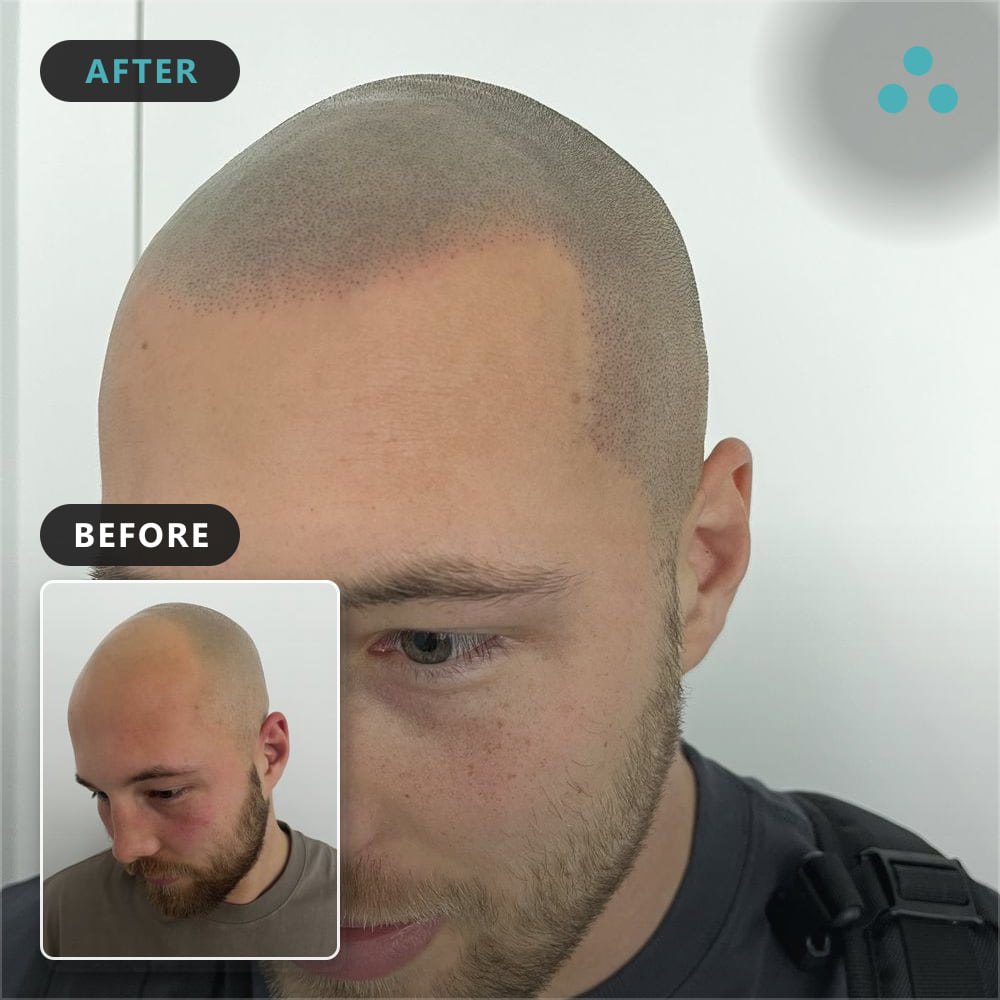
Scalp micropigmentation, or SMP, is a cosmetic camouflage treatment. It does not regrow hair, alter natural growth or treat the cause of hair loss. Instead, carefully matched pigment reduces the contrast between the scalp and remaining hair, which can make reduced density less visually prominent.
Whether it is suitable depends on the pattern of hair loss, the amount of hair remaining, your scalp condition and the look you want to maintain. I assess the scalp and discuss realistic expectations before recommending anything. If the change may still settle, waiting can sometimes make more sense than treating immediately.
If you would rather keep your hair than shave, density SMP can be considered when there is enough existing hair for the pigment to sit between. The result should not look like a painted scalp. Some scalp showing through remains a normal and realistic outcome.
If hair loss has progressed further, a closely cropped or shaved style may create a more coherent result. Fine stubble usually needs regular trimming every few days, while a more advanced loss pattern may suit a fully shaved look better.
What should I expect if I enquire about SMP?
At consultation, I review your hair loss pattern, scalp health, medical history, expectations and usual hairstyle. I also consider whether there is an active scalp condition, a history of keloid scarring, immune compromise, diabetes or medication that may affect treatment suitability.
SMP is normally planned over more than one appointment so the pigment can be built gradually. The first session is kept lighter so the healed result can be assessed before further detail is added. The exact number and length of sessions varies with the treatment area and the amount of work required.
After each session, the scalp must be kept dry and protected from sweating, hot showers, steam rooms and sun exposure for the period advised by the practitioner. After the final treatment, avoid swimming, saunas and steam rooms for 28 days, stay out of direct sun for 28 days, and use SPF 30 to 50 afterwards.
SMP is not permanent in the sense of remaining unchanged. Pigment gradually fades through skin turnover, immune activity and UV exposure, so maintenance may be needed. I explain longevity and future touch-ups honestly rather than presenting the treatment as a cure for hair loss.
For further background, you can read my hair loss advice and SMP overview. I am based at the Foli Sim studio in Perth, and Foli Sim also has studios in Melbourne and Sydney. If you are considering an appointment in Perth, the Perth scalp micropigmentation studio page has location information.
If you are unsure whether your change is seasonal, medical or suitable for camouflage, you are welcome to book a consultation so we can assess it properly.
Frequently asked questions
How long does seasonal hair shedding usually last?
There is no single timetable because shedding depends on the cause and the individual hair cycle. If you notice a clear increase that continues rather than settling, or if overall density keeps reducing, do not assume it is seasonal. Arrange an assessment with a doctor or hair loss specialist.
Can weather make hair appear thinner without causing hair loss?
Humidity, dry air, rain, sweat and changes in styling can alter how hair separates and reflects light. Wet or oily hair often clumps together, exposing more scalp, while bright sunlight can emphasise the parting. These visual changes can make existing thinning easier to notice.
Does washing my hair more often cause thinning?
Washing does not usually cause follicles to stop producing hair. It can make naturally shed hairs appear at once because they are released during shampooing. However, harsh products, aggressive brushing, heat and tight styling may contribute to breakage or traction, which can make hair look less full.
Should I take supplements if my hair is thinning?
I would not start supplements without discussing the situation with a qualified health professional. Hair changes can have different causes, and taking unnecessary nutrients may not help. A doctor can decide whether testing is appropriate and whether a confirmed deficiency or another health issue needs attention.
Can stress cause hair to look thinner later on?
Significant stress, illness, surgery or other physical strain can affect the hair cycle, and shedding may become noticeable after the original event rather than immediately. Because several conditions can look similar, ongoing or substantial shedding should be assessed rather than attributed to stress alone.
Does scalp micropigmentation stop hair loss?
No. SMP creates the appearance of greater visual density or a closely shaved head, but it does not change the hair-growth cycle, stimulate follicles or treat an underlying condition. If your hair is still changing, I discuss that uncertainty and the possibility of future maintenance during consultation.
Can SMP be done while hair loss is still changing?
It may be possible in some circumstances, but timing matters. If the pattern is new, sudden or medically unexplained, assessment should come first. I also need to consider whether further loss could alter the balance of the result. A consultation helps determine whether treatment now or waiting is more sensible.