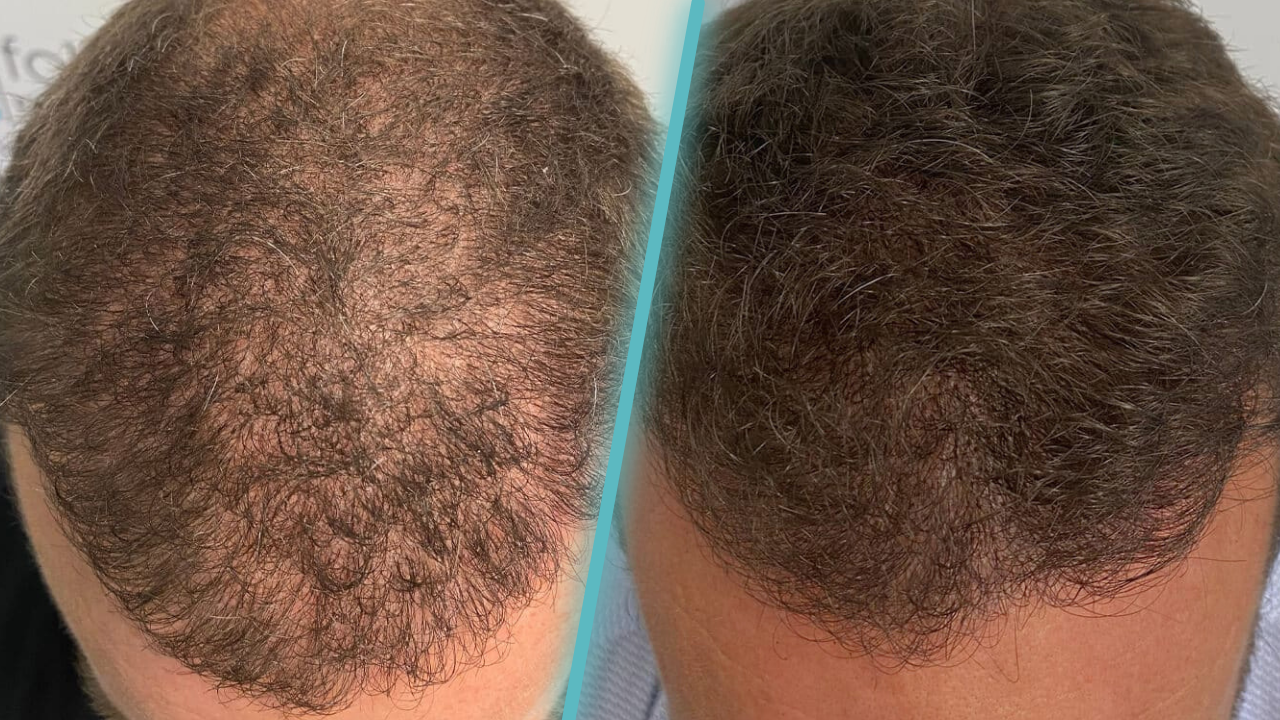
I recommend three sessions for male density SMP, regardless of how mild or advanced the hair loss is. The first establishes the pattern, the second builds density and corrects areas that heal lighter, and the third refines the hairline and overall finish. I allow at least 7 to 14 days between sessions for healing.
You’ve done the research and you keep seeing different numbers: some sites say two sessions, others say four. You want a straight answer before you book anything. Here’s the reality: for male density SMP, it’s always 3 sessions, no matter how advanced your hair loss is, and there’s a clear reason why each one matters.
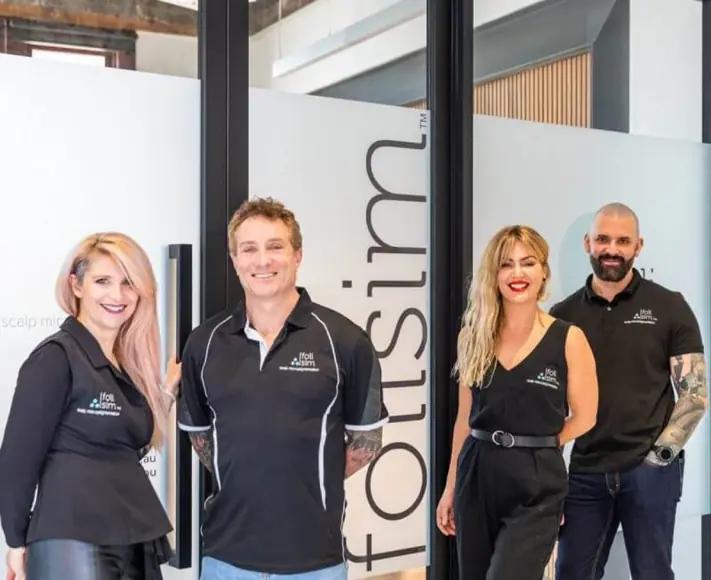
Kate Dawes, Founding Director and Senior Practitioner at Foli Sim, has spent 42 years in the hair industry and has delivered scalp micropigmentation results for thousands of Australian clients. Her view on this is unambiguous: skipping to a single session, or trying to rush the process into two, produces flat, unnatural-looking pigment that fades unevenly. Three sessions isn’t a sales tactic; it’s how layered pigment actually settles into skin.
1. Session one lays the foundation, it doesn’t finish the job
Your first appointment is about establishing the pattern, not the final density. The practitioner maps out where pigment dots will sit, working with your natural hair direction and existing hairline rather than imposing something rigid on top of it.
Pigment density in this first pass is deliberately conservative, often in the range of 40 dots per square centimetre. Fresh pigment also sits darker than it will look once healed, so session one always looks bolder than the end result. This is expected, not a mistake.
Most first sessions run between 2 and 4 hours, depending on whether you’re treating a receding hairline, crown thinning, or full scalp coverage. Larger areas simply take longer to work through methodically.
2. Session two builds real density and blends tone
This is where the visual difference becomes obvious. Your practitioner returns to the same areas and adds pigment dots between those placed in session one, pushing density up towards 60 to 80 dots per square centimetre depending on your skin tone and the level of coverage you need.
Session two also corrects anything that healed lighter or patchier than expected after the first visit. Skin heals differently across different zones of the scalp, and no practitioner can predict this with total accuracy after just one pass. This is precisely why a single-session approach falls short for most men.
You’ll typically wait at least 7 to 10 days between session one and session two, giving the scalp enough time to heal properly before it’s worked on again.
3. Session three refines, corrects, and locks in the natural look
The final session is about precision, not bulk. By this point, most of the density is already in place, so your practitioner focuses on fine-tuning: softening the transition at the hairline, adjusting any spots that faded slightly differently to the surrounding area, and making sure the overall pattern reads as natural from every angle and in different lighting.
This is also where a soft, natural hairline gets its final shape. Foli Sim builds hairlines with irregular, tapered edges rather than a hard line, because that’s what the vast majority of Australian clients actually want. A soft frame reads as far more convincing than a sharply defined edge, particularly as you move further back from the mirror.
Session three is often the shortest of the three, frequently closer to 2 hours, since it’s refinement work rather than covering large new areas.
4. The gap between sessions isn’t optional, it’s biological
Waiting between sessions isn’t about clinic scheduling. It’s about giving your skin time to complete its healing cycle. The scalp needs roughly 7 to 14 days minimum between each session so the epidermis can settle and the true healed pigment tone becomes visible.
Booking sessions too close together means working on skin that hasn’t shown its final colour yet, which risks over-layering pigment in the same spot. Foli Sim schedules each round with this healing window built in, rather than compressing the process to suit a tighter timeline.
Full healing after your final session takes around 30 days. During that month, pigment continues to settle and any last redness fades completely.
5. Layering across 3 sessions produces a result a single pass can’t
The technical reason 3 sessions outperforms one comes down to how pigment behaves in skin. A single heavy application risks looking uniform and flat, more like a solid shadow than individual hair impressions. Layering dot density gradually across three visits, each building on how the last one healed, creates depth and variation that mimics how real hair follicles actually sit against the scalp.
This is also why touch-ups exist as a separate, later consideration. Most men return for a touch-up somewhere between 4 and 6 years after their final session, once natural fading has become noticeable. That’s a maintenance visit, not a correction of an unfinished job, and it’s a different conversation to the initial 3-session build.
If you’re comparing SMP against a hair transplant, this layered structure is part of what makes SMP the lower-risk, lower-cost option: no graft survival to worry about, no donor area healing, just a controlled cosmetic process delivered over three appointments.
Whatever stage your hair loss is at, whether it’s early thinning at the temples or more advanced loss across the crown, the 3-session structure stays consistent. What changes between clients is dot density, shading depth, and how the hairline is shaped, not the number of visits required to get there. If you’re planning ahead, Foli Sim’s Perth studio, Melbourne studio, and Sydney studio all follow the same three-session framework, so your timeline stays predictable no matter where you book.
If you’re ready to see what this looks like for your own hair loss pattern, book a free, no-obligation consultation with Foli Sim to talk through your specific scalp, density goals, and realistic timeline.
Frequently Asked Questions
How many SMP sessions do men need for male density work?
Male density SMP always requires 3 sessions, regardless of how mild or advanced your hair loss is. Each session builds density and refines the result, with session one establishing the pattern, session two adding depth, and session three correcting and softening the finish.
How long does each SMP session take?
Most sessions run between 2 and 4 hours depending on the size of the area being treated. First sessions and full scalp coverage tend to run longer, while the final refining session is often the shortest of the three.
How much time should I leave between SMP sessions?
You need a minimum of 7 to 14 days between each session so the scalp can heal and show its true settled pigment tone. Booking sessions too close together risks over-layering pigment before you can see how the previous session actually healed.
Will my hairline look sharp and obvious after treatment?
No. Foli Sim builds soft, natural, slightly irregular hairlines rather than sharp defined edges, because this is what the vast majority of Australian clients want. A softer edge reads as far more convincing under normal lighting and at conversational distance.
How long does the healed result from 3 SMP sessions last?
Most men see their result hold well for several years before natural fading becomes noticeable, with touch-ups typically needed somewhere between 4 and 6 years after the final session. This is routine maintenance, not a sign the original work was incomplete.
Ready to talk it through?
Foli Sim in Perth offers a personal consultation to answer your questions and recommend the right approach for you. Get in touch with Foli Sim to book your consultation.