
Scalp Micropigmentation for Women
Scalp micropigmentation for women places tiny pigment dots between your existing hairs to reduce the contrast between scalp and hair, creating the appearance of fuller, denser coverage. This page explains how density work is planned for female hair thinning, whether shaving is required, how pigment is matched to your colour, how long results last and what a private consultation involves.
 Reviewed by Kate Dawes, Co-Founder & Managing Director, Foli Sim; Trichologist (IAT), 30+ years in hair loss · Last reviewed September 2026
Life changing results
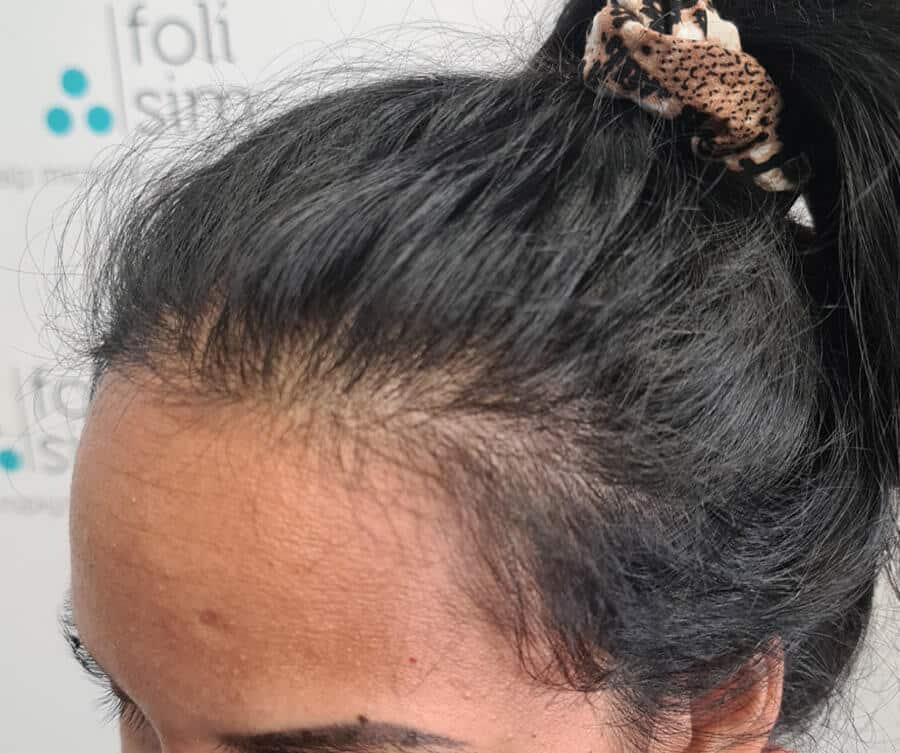
Before
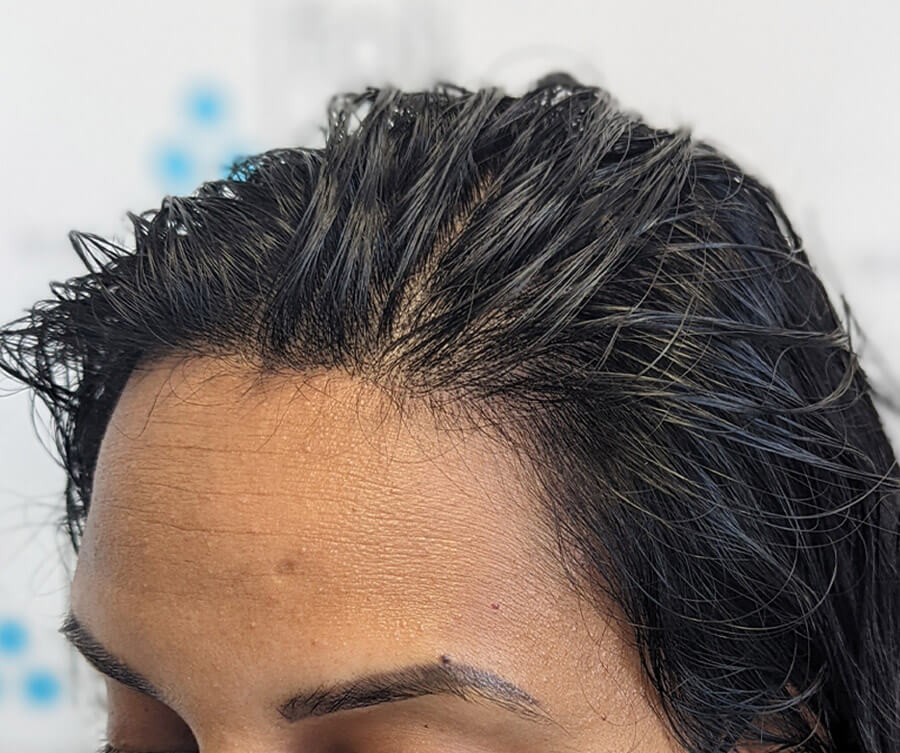
After
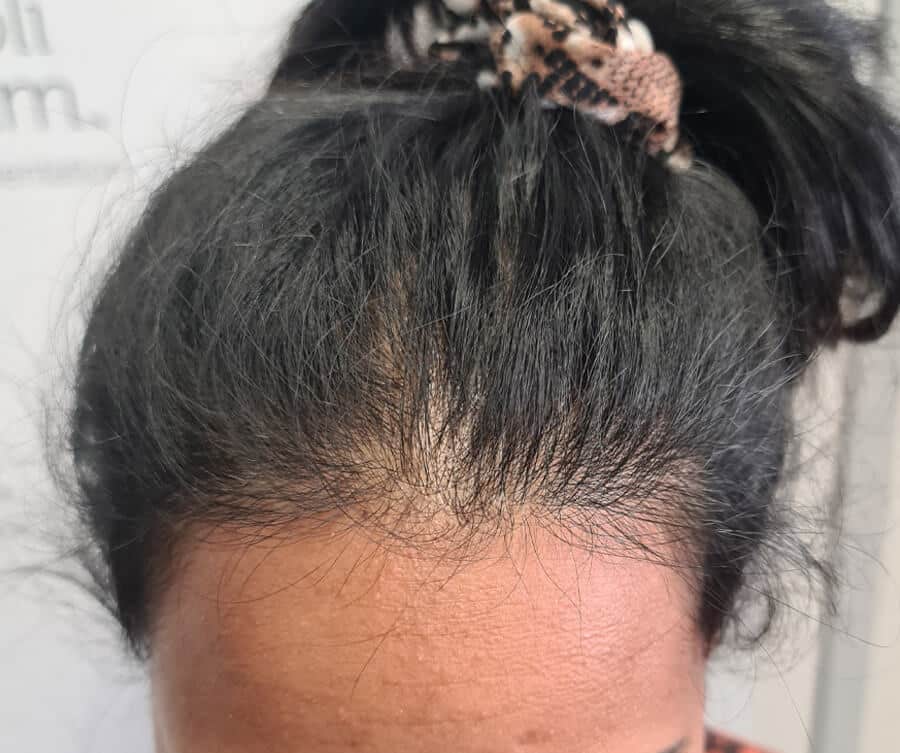
Before
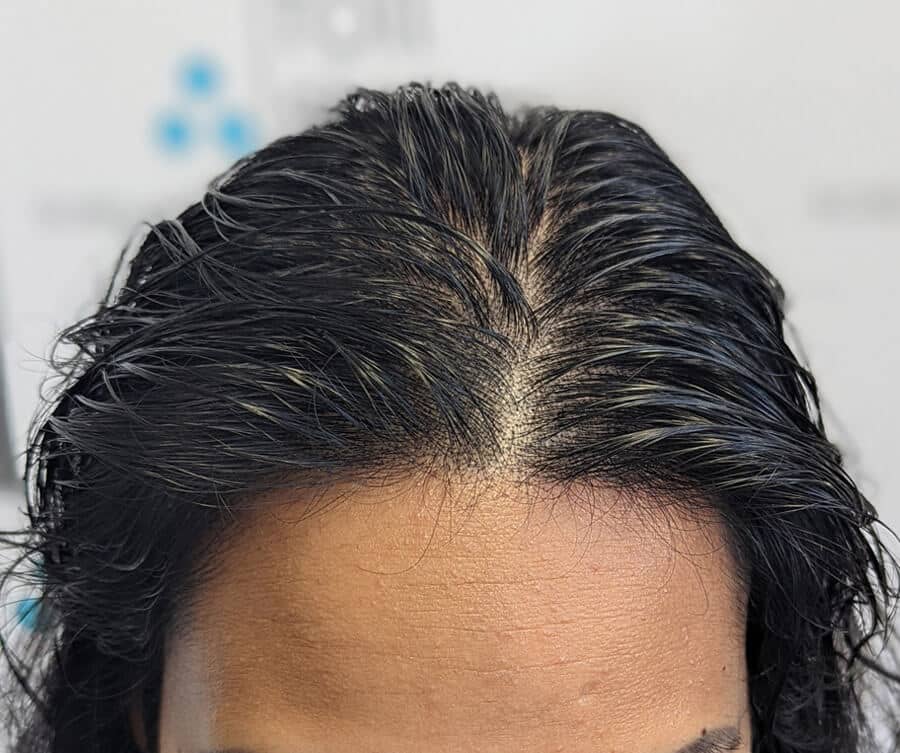
After
What is SMP for Women?
Scalp Micropigmentation (SMP) is a cosmetic treatment that places tiny pigment dots on the scalp with a specialised needle. It is a non-invasive and non-surgical option for hair loss or thinning. The results are customisable to match your preferred style.
Many people link SMP with men, but women also face significant hair loss. SMP offers an effective, long-term solution that helps women regain confidence and feel like themselves again.
During treatment, our artists match the pigment to your natural hair and skin tone. This creates soft and realistic results. We also provide a 12-month satisfaction guarantee from the completion of your 3rd session.
Free Video / Phone Consultation
We offer free video and phone consultations so we can assess your suitability for SMP at home. During your private consultation, a trained team member explains the process, recommends how many sessions you may need, and provides a tailored quote.
We believe Scalp Micropigmentation can support anyone experiencing hair loss, which is why our free consultations are available for your convenience.
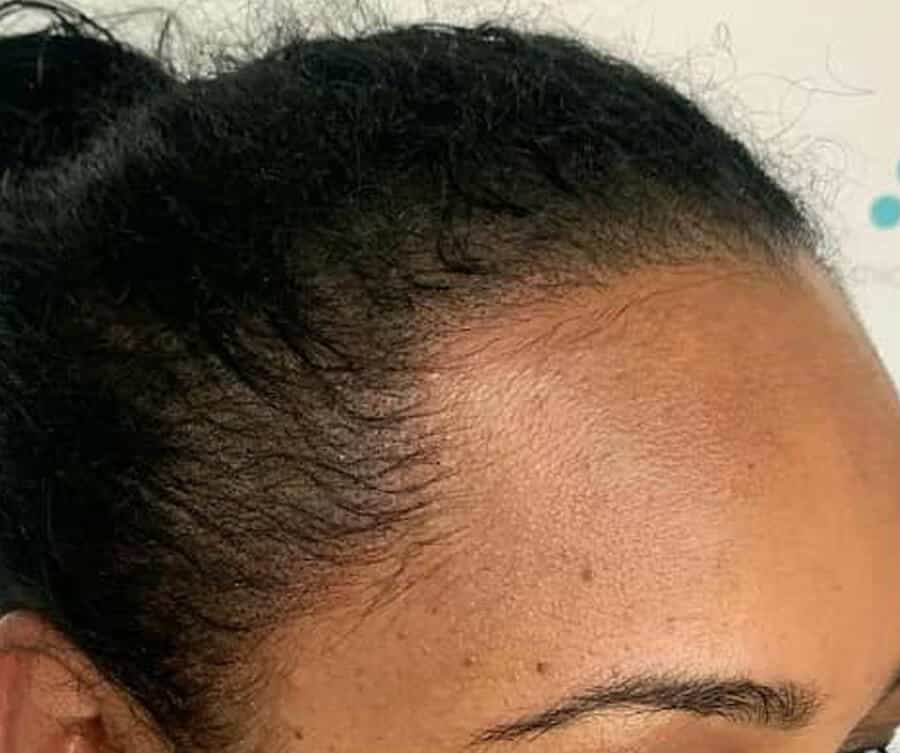
Why Scalp Micropigmentation For Women?
SMP is often linked to male hair loss, but it is just as suitable for women. It can help create the appearance of fuller, denser hair and support a renewed sense of confidence.
The treatment is non-invasive, non-surgical, and requires very little maintenance. There are no strict lifestyle limitations, allowing you to enjoy life without worrying about ongoing upkeep.
Our equipment and pigments are designed specifically for SMP and differ from traditional tattooing. This helps maintain stable colour and prevents unwanted discolouration. We include a 12-month satisfaction guarantee on all completed SMP treatments, from the completion of your 3rd session. Our experienced artists match both pigment and technique to your natural tones to achieve seamless, natural results.
Foli Sim operates studios in Sydney, Melbourne and Perth, each staffed by some of Australia’s most experienced and highly trained SMP artists. All studios are Health Department Certified and follow strict SMP best practices to ensure every client receives treatment of the highest standard.
Through our finance partner, ZipMoney, we offer six months of interest-free finance to make your SMP treatment more accessible. You can read more about our Payment Plans or contact us to speak with a friendly member of our team.
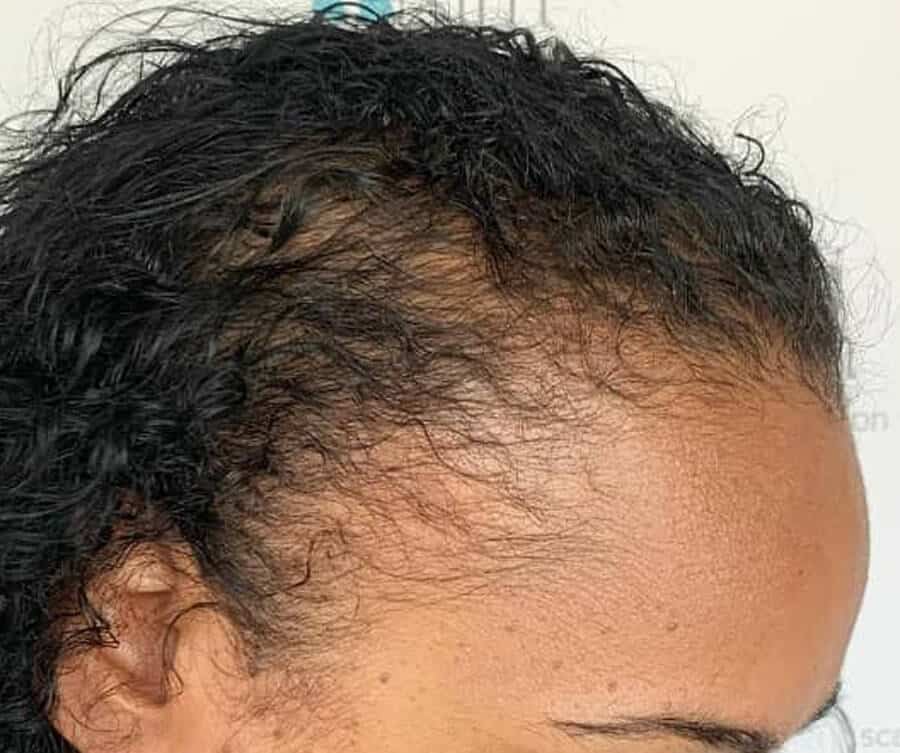
Where scalp micropigmentation for women is applied
Scalp micropigmentation for women is density work rather than hairline work. Your artist places pigment on the scalp between the hairs you already have, so the pale skin beneath stops showing through. Your hair keeps its length, its colour and its style. What changes is the plan: density for female hair loss is mapped around how you actually wear your hair, not around a standard template.
Most women who come to us fit one of three patterns, and each is planned a little differently:
- A widening part line. Whether you wear a centre or side part, and how often you switch, decides how far the work is carried to either side.
- Diffuse thinning across the crown and top. Density is built evenly over the whole area, with the tone kept soft enough to read as the shadow of hair rather than colour on the skin.
- Frontal thinning at the hairline and temples. A woman's hairline is soft and irregular, with fine hairs at its edge, so it is never drawn as a line. Pigment is feathered forward to mimic those baby hairs and density is rebuilt behind them.
Patches of alopecia areata are a different case with their own approach, which we cover on the SMP for alopecia page.
What happens at a session when nothing is shaved?
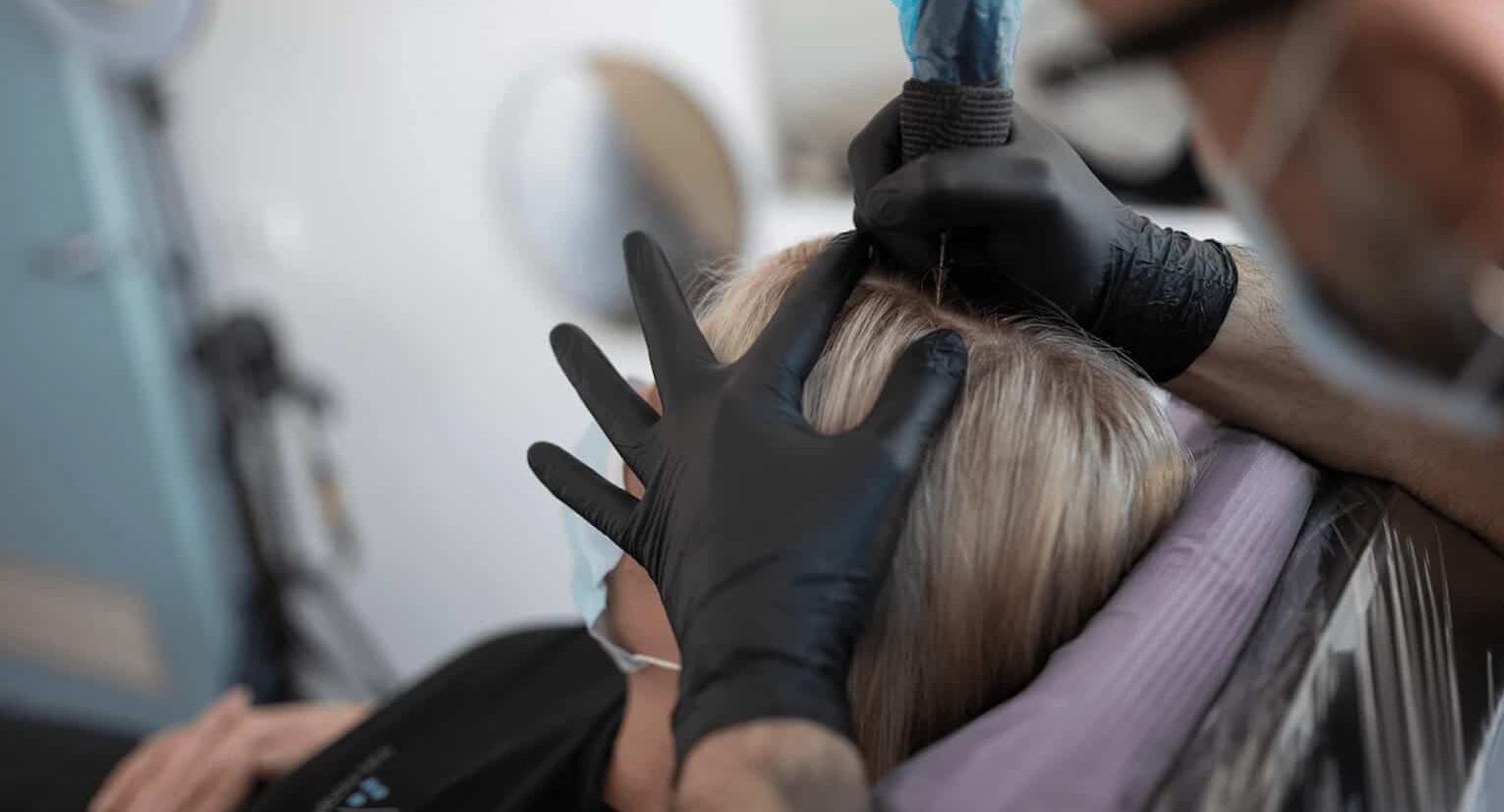
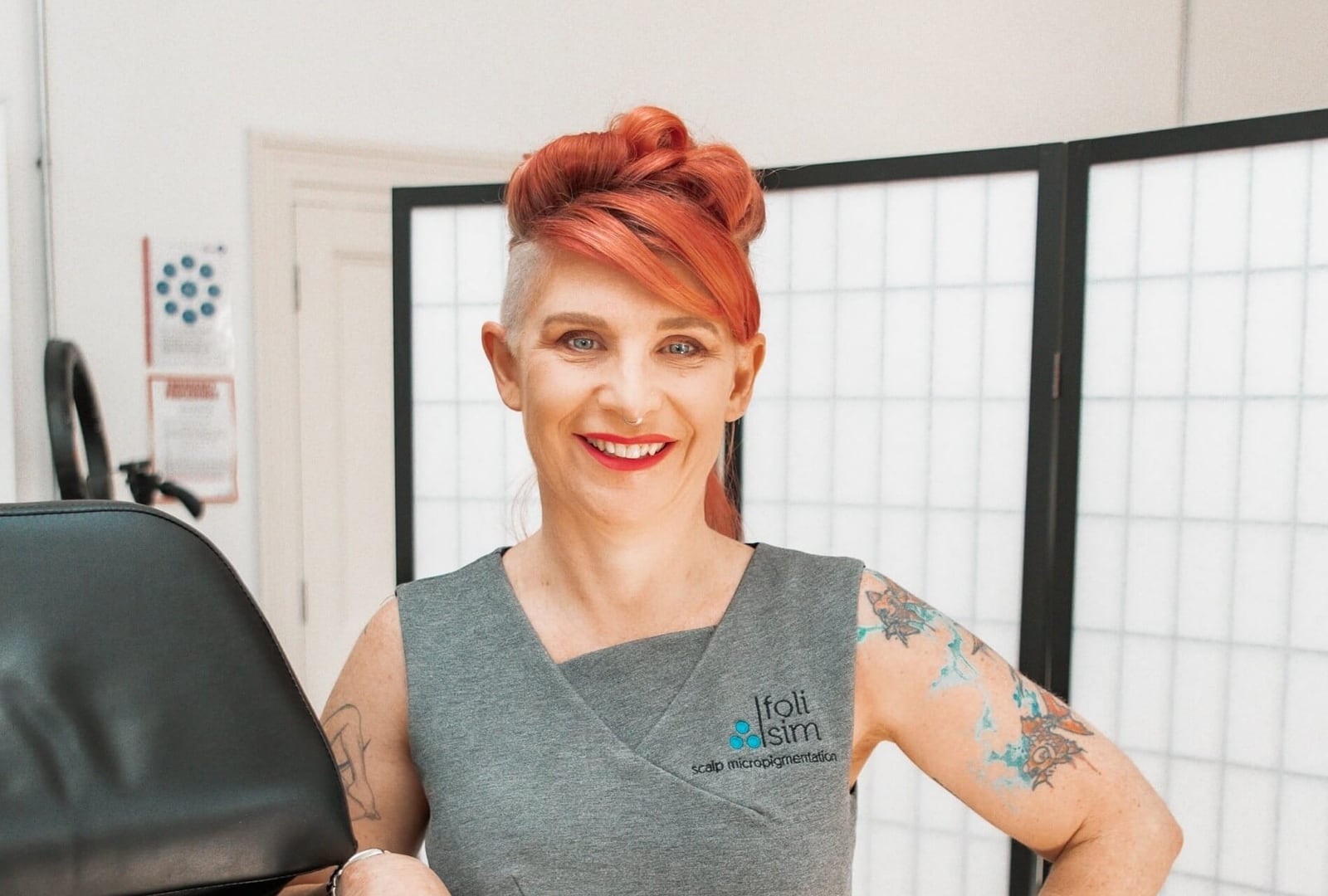
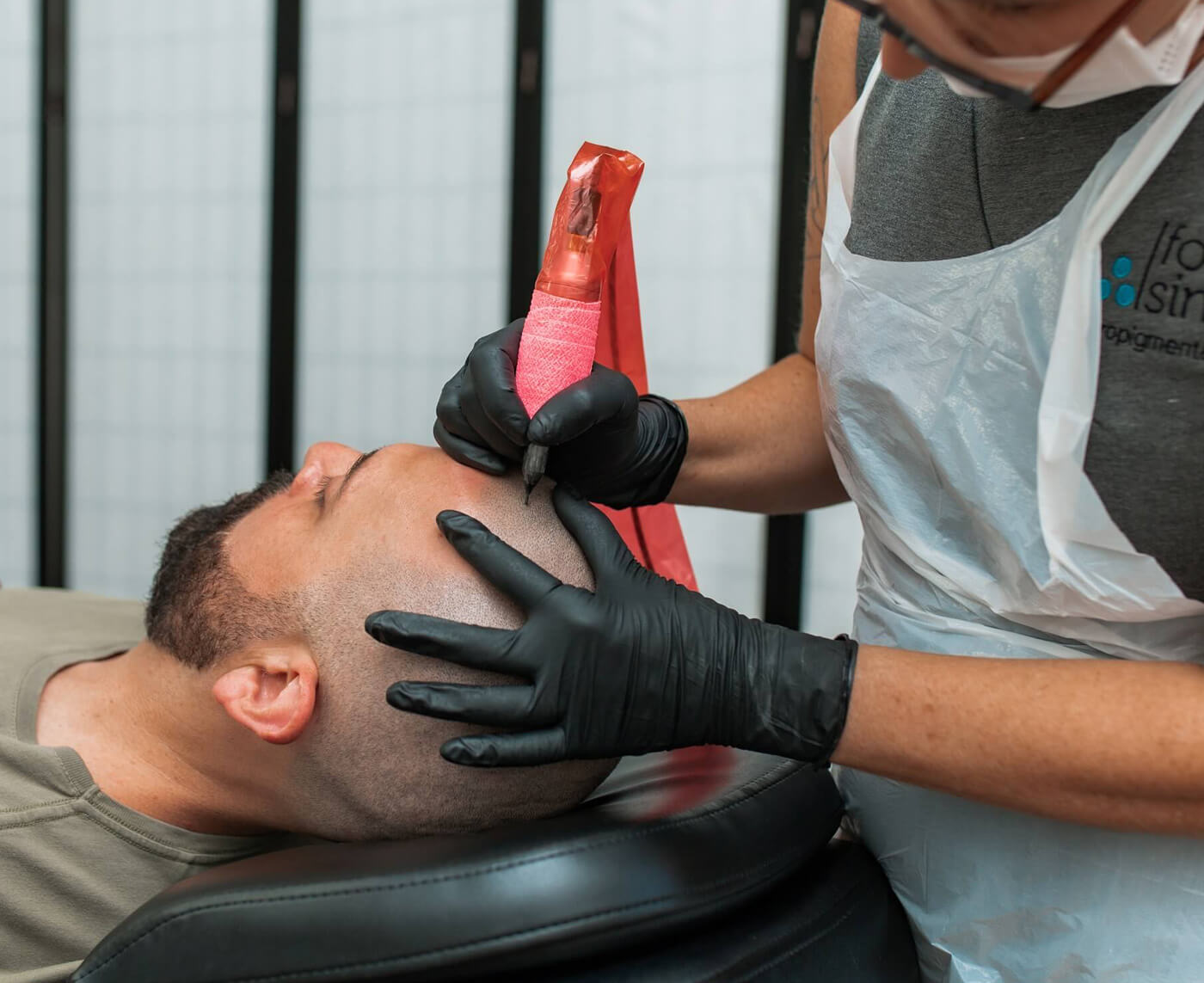
You arrive with your hair as it is on any other day. Nothing is shaved or cut. Your artist sections the hair and clips it back a few centimetres at a time, works the scalp underneath, then moves to the next section. Tiny dots of pigment are placed in the upper layer of the skin to replicate follicles, along the part line or through the thinning area. It is closer in feel to a colour appointment than to anything surgical.
Scalp micropigmentation for women is staged over several visits, so each session adds to the last once your artist has seen how the previous layer settled against your hair. You will be told what to expect in the first few days and how to look after the scalp while it heals; beyond that, there is no special routine.
When the session ends, your hair comes down over the treated area and you leave looking like yourself. Your own hair covers the work, so the healing stage is private to you, and whether anyone else knows is your decision. Plenty of women tell no one. The before and after gallery shows how finished work sits against the scalp; at consultation, ask to see density work on hair like yours.
How to plan a private consultation for female hair loss
Every plan for scalp micropigmentation for women starts with a free, private consultation, in person at our Perth, Sydney or Melbourne studios or by video or phone from home. Your quote follows the consultation or a photo evaluation. The most useful preparation is to think through what your artist will ask:
- How you part and wear your hair day to day, and whether that changes between work, exercise and going out. The treated area is planned around all of it.
- A few photographs in daylight: the parting from above, the hairline from the front for frontal thinning, and the crown from behind. A density plan is drawn from these, as is a free digital simulation if you want to see the effect first.
- When the thinning started and whether it is still changing. Postpartum shedding, for example, is approached differently from thinning that has been steady for years.
- Any diagnosis you have had and anything you are already using for the hair loss itself, so the plan works alongside it rather than around it.
For a view on the hair loss itself and not only its appearance, ask for our founder Kate Dawes, an IAT-registered trichologist with more than 30 years in the Australian hair industry. And if the numbers matter to your decision, our guide to scalp micropigmentation cost explains what shapes a quote for density work.
Frequently asked questions
Yes, and almost all of our female clients keep their hair exactly as it is. Density work is applied between existing hairs, so nothing needs to be shaved or cut. Your artist parts the hair in sections to reach the scalp underneath and works through the thinning areas. You leave with your usual style intact and can wear your hair normally as soon as the initial healing has settled.
When hair thins, the pale scalp shows through and the contrast is what makes hair look sparse. Placing tiny pigment dots on the scalp between your remaining hairs closes that contrast, so light no longer reflects off bare skin and the hair above reads as noticeably thicker. The hair itself is unchanged; what changes is the background it sits against, which is why the effect is visible immediately.
A widening part is one of the most common concerns we treat in women, and it responds well. The exposed scalp along the parting is shaded with graduated pigment so the line no longer stands out as a bright strip, and the density is feathered outwards so there is no visible boundary. If you change where you part your hair, tell your artist at consultation so the treated area is planned generously enough.
Yes. Female pattern loss typically shows as diffuse thinning across the top of the scalp and a widening part, rather than a receding hairline, and density SMP is well suited to that presentation. It does not treat the underlying cause, so if you have not had a diagnosis we would encourage you to see a doctor or dermatologist as well. Cosmetically, SMP can markedly reduce how visible the thinning is. You can also raise it with us: our Director and lead artist, Kate Dawes, is a registered trichologist with the International Association of Trichologists, so get in touch if you would like her view on the hair loss itself.
It can, though timing matters. Postpartum shedding is often temporary and hair frequently recovers on its own, so we usually suggest waiting to see how your density settles before treating. Thinning associated with menopause tends to be ongoing, and density SMP can soften its appearance considerably. At consultation we will talk honestly about whether treating now or waiting makes more sense for your situation.
Well-executed density work holds up in both. Because the pigment sits on the scalp in a follicle-like pattern rather than as a wash of colour, wet hair and tight styles reveal a shaded scalp rather than an obvious block. Your artist will plan the treated area to extend beyond where you normally part or tie your hair so there is no visible edge if your style changes.
Shade matching is done against your scalp as well as your hair. Lighter and grey hair needs a softer, cooler dilution, applied at lower density, because a shade chosen for dark hair would read as too heavy and create contrast rather than remove it. Your artist tests the tone at the start of the first session and builds gradually, which is one reason density work is staged over several visits.
Yes, once the initial healing is complete. We ask you to avoid colouring, harsh chemical treatments and heat directly on the scalp for the first couple of weeks after each session, and to keep the scalp dry for the first few days. After that your usual colouring and styling routine can continue. Do mention upcoming colour appointments at consultation so your session dates can be planned around them.
For many women it is, and it removes the daily management that toppers and wigs require: no fitting, no clips, no worrying about wind or heat, and no ongoing replacement. SMP is not a substitute where you want full length and volume restored, because it addresses the visibility of the scalp rather than adding hair. Some women use both, with SMP reducing scalp visibility around the edges of a topper.
Density work generally follows the same pattern as other SMP: most clients need two to four sessions, spaced around 10 to 14 days apart so the scalp heals and the pigment settles. Because shade is built up gradually and conservatively on finer or lighter hair, your artist may recommend building density slowly across sessions rather than pushing for a full effect on day one. Your plan is confirmed at consultation.
Results are long-lasting rather than permanent. Expect several years before the pigment softens enough to warrant a refresh, with most clients considering a touch-up every few years. Sun exposure, skin type, styling products and the progression of your own thinning all affect the pace. A hat or SPF on high UV days helps considerably. All treatments include a 12-month satisfaction guarantee from the completion of your 3rd session.
We offer free video and phone consultations so you can talk everything through from home, including sending photographs in advance for assessment. A trained team member explains the process, recommends how many sessions you may need and provides a tailored quote, with no obligation to book. Free digital SMP simulations are also available. When you are ready, in-person consultations run at our Sydney, Melbourne and Perth studios.
Explore next
What is scalp micropigmentation
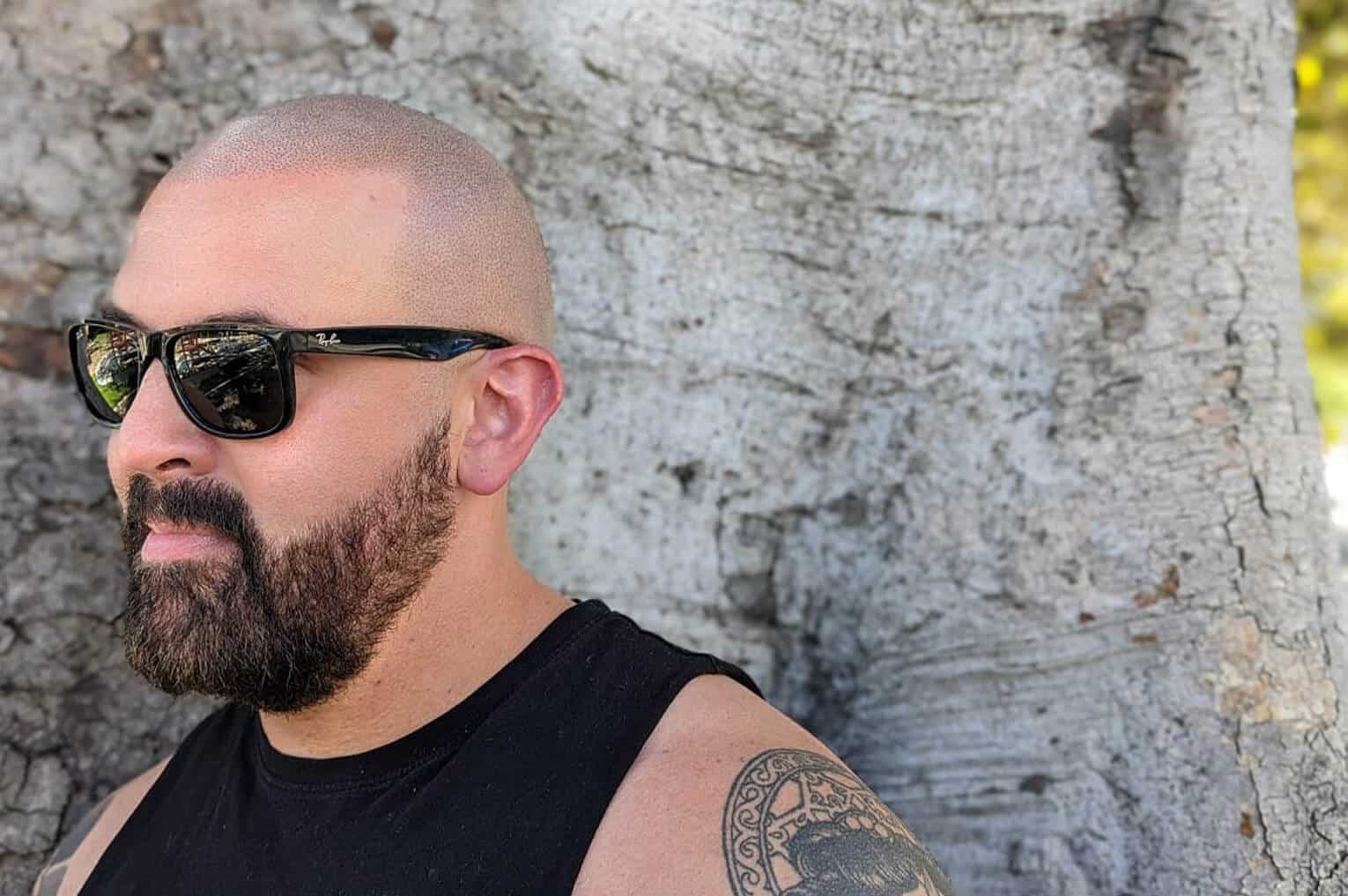
What is scalp micropigmentation? A non-surgical hair tattoo that replicates real follicles.
SMP for alopecia
SMP for alopecia camouflages patchy loss and rebuilds a hairline where hair no longer grows.
Scalp micropigmentation before and after
See real scalp micropigmentation before and after photos from Foli Sim: buzz-cut, thinning hair and scar…
Hair replacement systems
Tired of hair replacement systems? See how SMP compares with toupees and hair pieces, and how Foli Sim…

Scalp micropigmentation cost
What drives scalp micropigmentation cost in Australia: coverage area, number of sessions and scarring.
Kate Dawes SMP artist
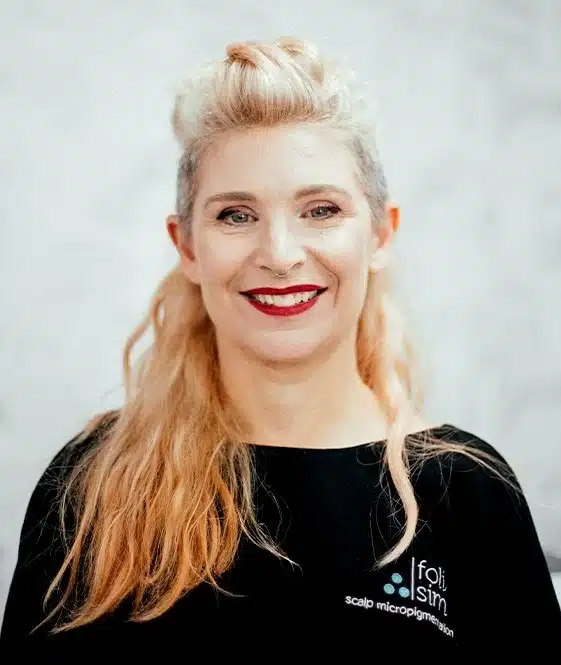
Meet Kate Dawes, Foli Sim's Managing Director, registered trichologist and senior SMP artist in Fremantle…
Book a free consultation
Tell us what you are dealing with and we will talk you through whether SMP is right for you, in person at Perth, Sydney or Melbourne, or by phone or video. No obligation, and no pressure.
Call us
1300 668 490Text or WhatsApp
0425 869 926Book online
Request a consultation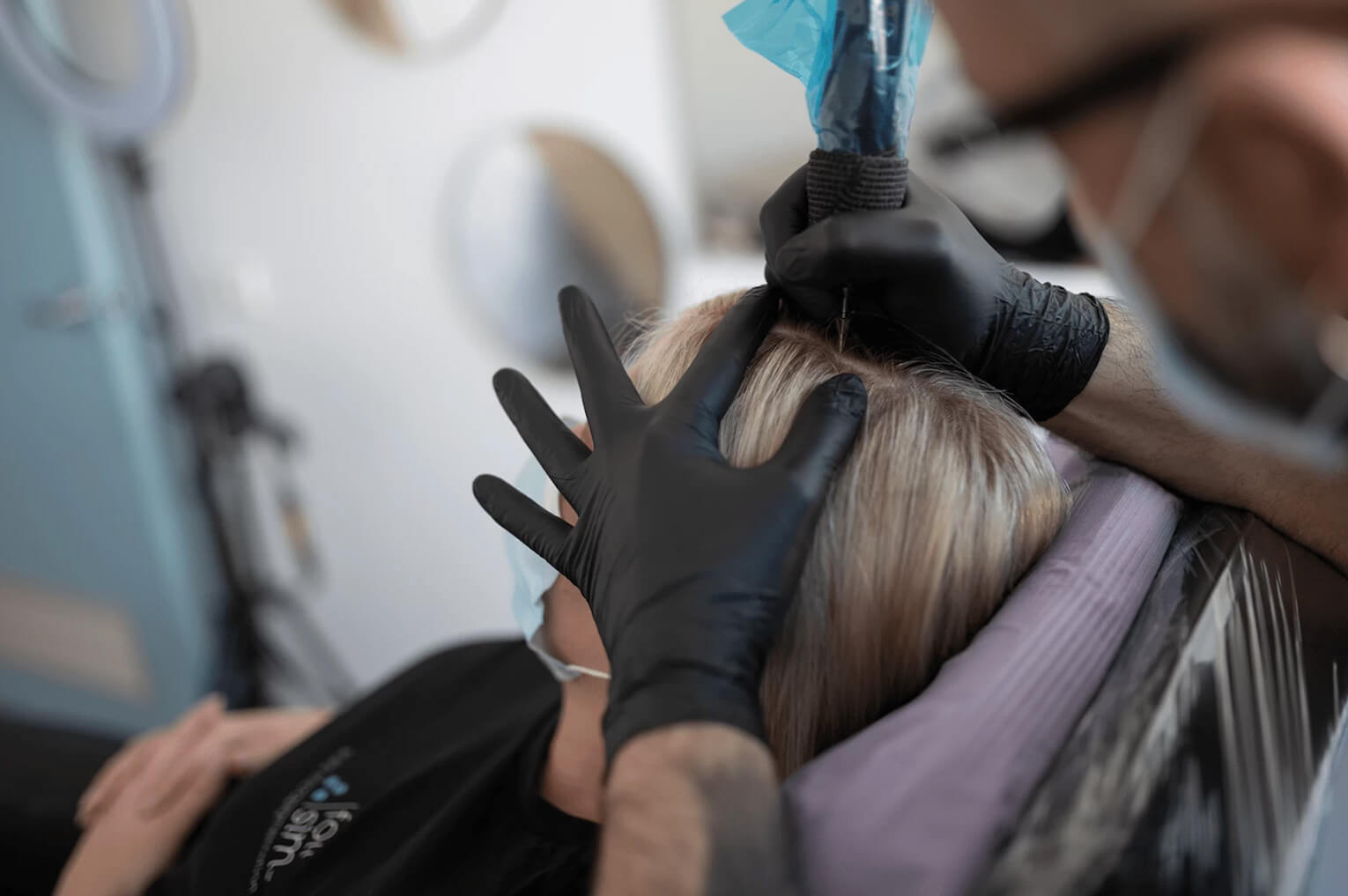
What our clients say
I had my original scalp micropigmentation done by Kelly at the North Melbourne clinic back in 2022, and I’ve been so happy with the results. It made my hair look noticeably thicker right away, and over the years, I’ve had so many people comment on how great and natural it looks. I’m back with Kelly for a touch-up now, and the service and attention to detail are just as top-tier as the first time. Highly recommend Kelly and the Foli Sim team if you're thinking about getting SMP done.
I want to give huge recognition to Shannon for the amazing work and care put in throughout my sessions. Shannon is a true artist with an incredible eye for detail. His professionalism, precision, and reassuring manner made the entire experience comfortable and stress-free. I would highly recommend Shannon and the team at Foli Sim if you are considering SMP.
Had an amazing experience with Nat at the Sydney studio. She made me feel completely comfortable and confident throughout the entire process. Nat is an absolute perfectionist, and the results speak for themselves: everything looks incredibly natural and perfectly tailored to me. Exceptional service from start to finish. For anyone looking for top-tier results, Foli Sim and Nat are the ultimate choice.
Thanks Kelly for a good job done on my SMP. Absolutely recommend Foli Sim. It is a professional service. Kelly is great artist & a nice human being. I wish her all the best for a good life & fulfilling career.
I cannot rate foli sim high enough, Tara did my hair and she absolutely smashed it, not only did we have good banter and laughs while the sessions were going my results speak for themselves! This has changed my life, my confidence!! I’m embarrassed by the before photos, but I can’t not post this to show some female results for Tara ♥️
I underwent a hair transplant that resulted in visible scars on my scalp, and over time, the transplanted hair began to fall out. Subsequently, I chose to shave my head, but the scars from the transplant were prominent, which diminished my confidence. After careful consideration, I contacted Folisim to explore their solutions for my baldness and scarring. Tara and Micheal was my point of contact and thoroughly explained the procedure, including how the scars would be concealed and the results I could expect. She was very patient and supportive throughout the process. As I traveled from a regional town to undergo my SMP treatment, Tara and Michael, were exceptionally accommodating. After the first session, I noticed a significant boost in my confidence as the visible scars on my scalp were effectively masked, giving the appearance of a freshly shaved head with a full head of hair. By the third session, I was amazed to see my original hairline restored so naturally that my colleagues began asking why I was shaving my hair when it appeared so thick and dense. This outcome reflects the high quality of the work Tara provided, which significantly increased my confidence. Had I been aware of Folisim and the SMP procedure earlier, I would have opted against a hair transplant. Overall, I highly recommend Folisim to anyone considering SMP without hesitation.