
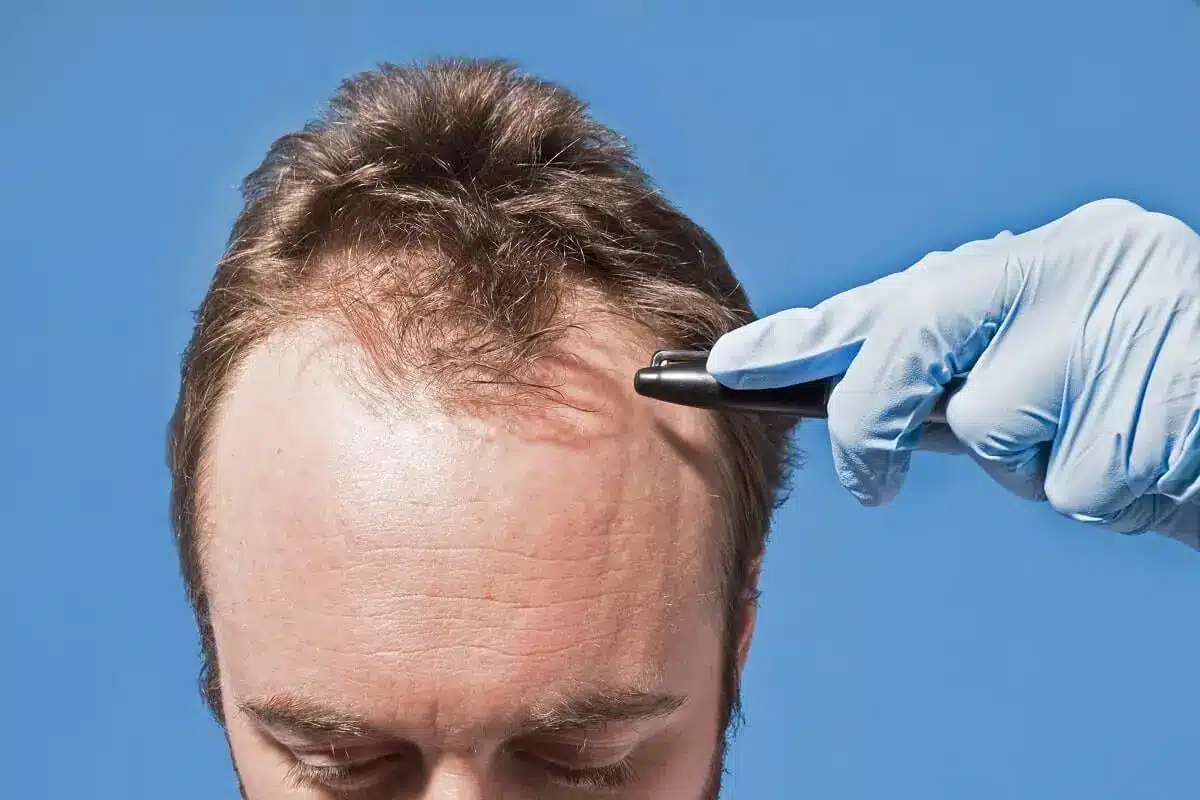
For decades, perhaps even centuries, many have touted the ‘miracle cure’ to hair loss. These so-called solutions never actually solved anything, but that didn’t stop clever marketing and sales tactics attempting to draw in desperate clients looking for a magical fix.
With all of the advancements in science and medicine over the past few decades, one would think that the cure for hair loss is on its way. Cures for hair loss are still in development in 2022, with scientists hard at work researching genetics, age-related, and hormonal factors that contribute to male pattern baldness. However, there are still no known cures for hair loss at the moment.
Hair Loss Cures & Research
How much longer will one have to wait until an effective cure hits the shelves? Will it be feasible as an early adopter or will it be better to wait a few years? Some of the research on hair loss treatments currently being looked at include:
- KROX20: This protein is responsible for telling skin cells to begin growing hair. Research is underway on products that can generate this effect and turn baldness into a fertile scalp for hair regeneration, much like turning a desert into a fertile plain for sowing seeds.
- SCF Gene: This is the Stem Cell Factor (SCF) gene, produced by the KROX20 protein that affects hair colour and in turn, greying hair. Researchers are in the process of identifying possible treatments for balding and hair greying.
- Baldness genetics: Research is underway on methods of early detection for genetic male pattern baldness. By better understanding the nearly 300 genetic indicators of male pattern baldness, early treatment options may be more effective at mitigating hair loss.
- Stem cells: Although in early research stages and with little evidence of success, stem cells may be able to work as a cure for hair loss by re-triggering the growth and reproduction of hair.
Is the Cure for Hair Loss Coming Soon?
Most of the above research on cures for hair loss is still in the early development stages. Even if it hits the news that a new cure is just around the corner, the research will need to be patented and developed into a formulated product and tested in clinical trials that can take years.
In the case that a successful hair loss cure hits the market in the near future, it may also be cost-prohibitive and expensive due to patents on the chemical formula. Moreover, the lack of long-term research on the effects and side effects will be lacking. In short, don’t get your hopes up for a hair loss cure if you’re dealing with pattern baldness right this moment.
Thinking Realistically: Wait for a Cure or Get Treatment Now?
For the foreseeable future, it is best that you turn your attention to hair loss treatment solutions that work in the here and now. Scalp Micropigmentation (SMP) is a hair loss treatment available today; keep in mind that it doesn’t do anything to actually regrow hair, but instead creates the appearance hair. This is achieved by a trained SMP artist applying tiny dots of specialised pigment to your scalp to replicate the look of closely-cut hairs.
SMP can help restore a receding hairline, add density to thinning or balding patches, and camouflage scalp scars. A non-invasive and non-surgical procedure, your SMP artist will precisely colour match the pigment to your natural hair colour and skin tone to make it look as natural as possible. Best of all, it’s suitable for anyone experiencing hair loss or thinning.
Learn More About SMP With Foli Sim
As a leading provider of Scalp Micropigmentation, Foli Sim has state of the art studios located in Sydney, Melbourne and Perth. If you’re interested in learning more about this guaranteed hair loss treatment and how it can help you deal with hair loss, book a free, no-obligation consultation with us at Foli Sim; this can be conducted in-person, phone or via Zoom.
Frequently asked questions
Are there currently any known cures for hair loss?
I explain that there are still no known cures for hair loss at the moment. Scientists are researching genetic, age-related and hormonal factors that contribute to male pattern baldness, but much of the research remains in early development. A treatment reported in the news may still require years of development and clinical trials.
How long could a new hair loss cure take to reach the market?
I explain that a potential cure must first be patented and developed into a formulated product. It would then need to be tested in clinical trials, which can take years. For this reason, even news that a new cure is near does not mean it will be available immediately.
Could a future hair loss cure be expensive?
I explain that if a successful hair loss cure reaches the market, it may be cost-prohibitive and expensive because of patents on its chemical formula. There may also be limited long-term research about its effects and side effects. These are important considerations when thinking about becoming an early adopter.
Does Scalp Micropigmentation regrow hair?
I explain that Scalp Micropigmentation does not actually regrow hair. Instead, a trained SMP artist applies tiny dots of specialised pigment to the scalp to replicate the look of closely-cut hairs. The treatment creates the appearance of hair, rather than changing the underlying hair growth process.
What can Scalp Micropigmentation help with?
I explain that Scalp Micropigmentation can help restore a receding hairline, add density to thinning or balding patches, and camouflage scalp scars. It is a non-invasive and non-surgical procedure, with pigment precisely colour matched to your natural hair colour and skin tone for a natural-looking result.
Who can have Scalp Micropigmentation?
I explain that Scalp Micropigmentation is suitable for anyone experiencing hair loss or thinning. During the procedure, a trained SMP artist applies specialised pigment in tiny dots to the scalp. The pigment is colour matched to your natural hair colour and skin tone to create the appearance of closely-cut hairs.